
Description
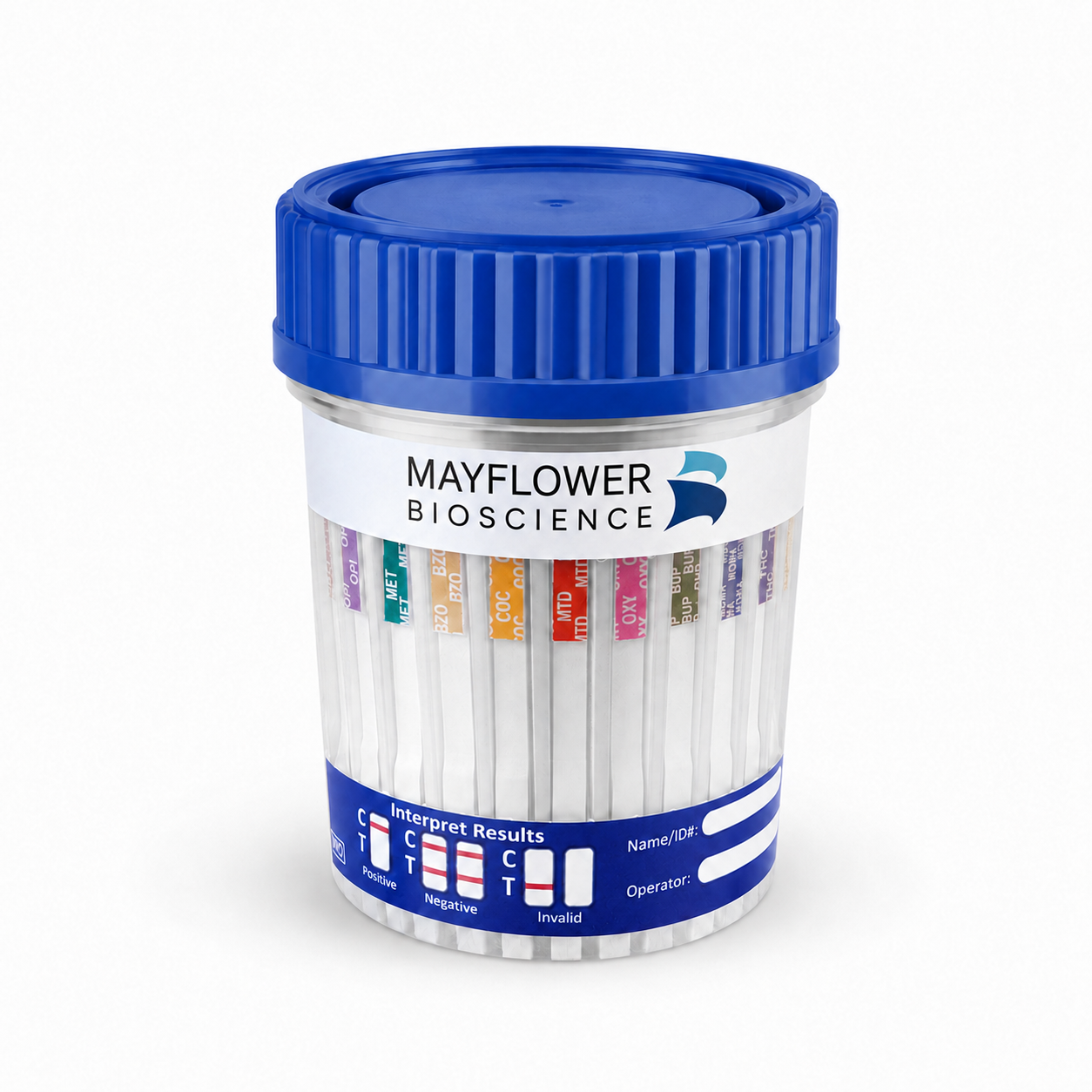
14 Panel Drug Test Cup with PCP, ETG Alcohol & Fentanyl
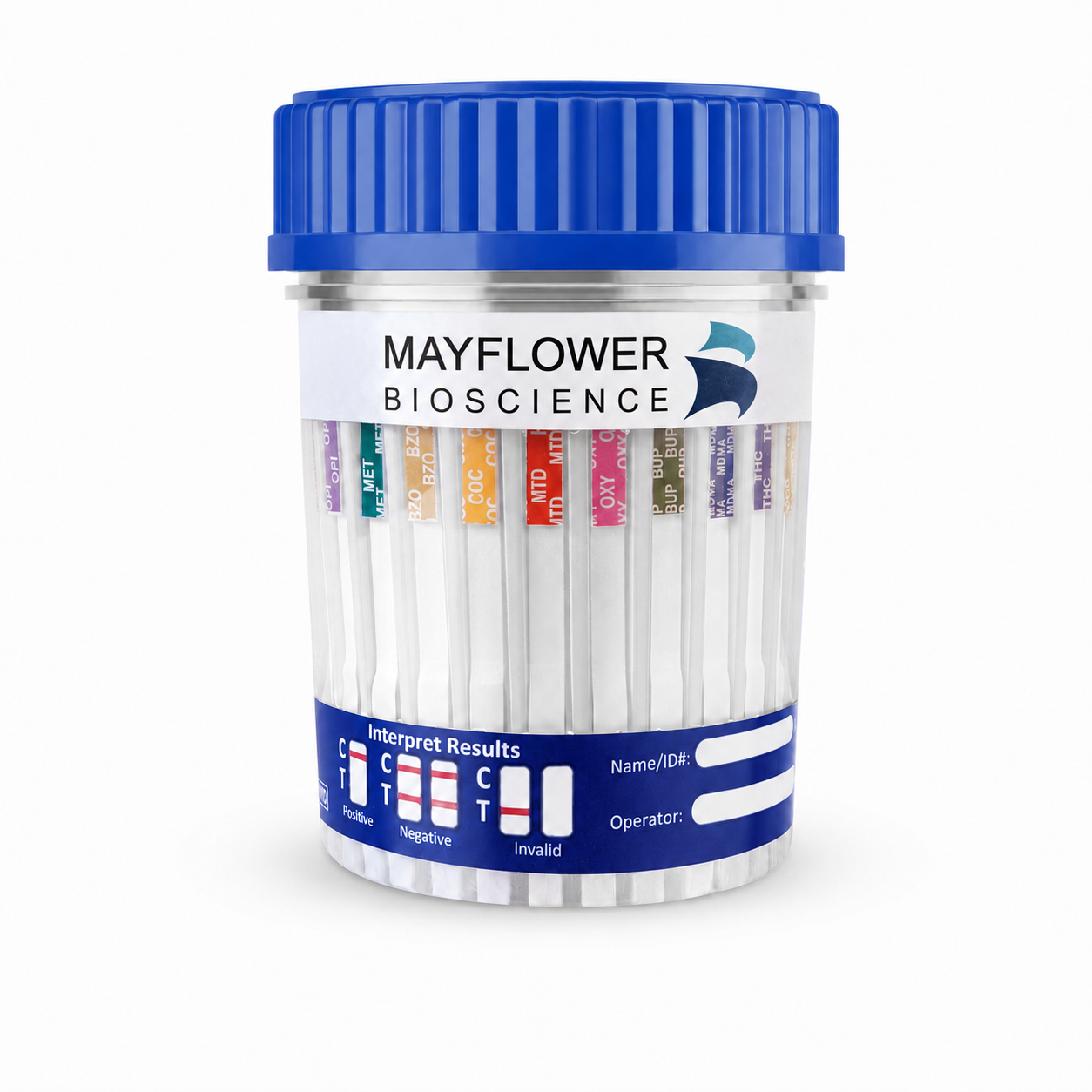
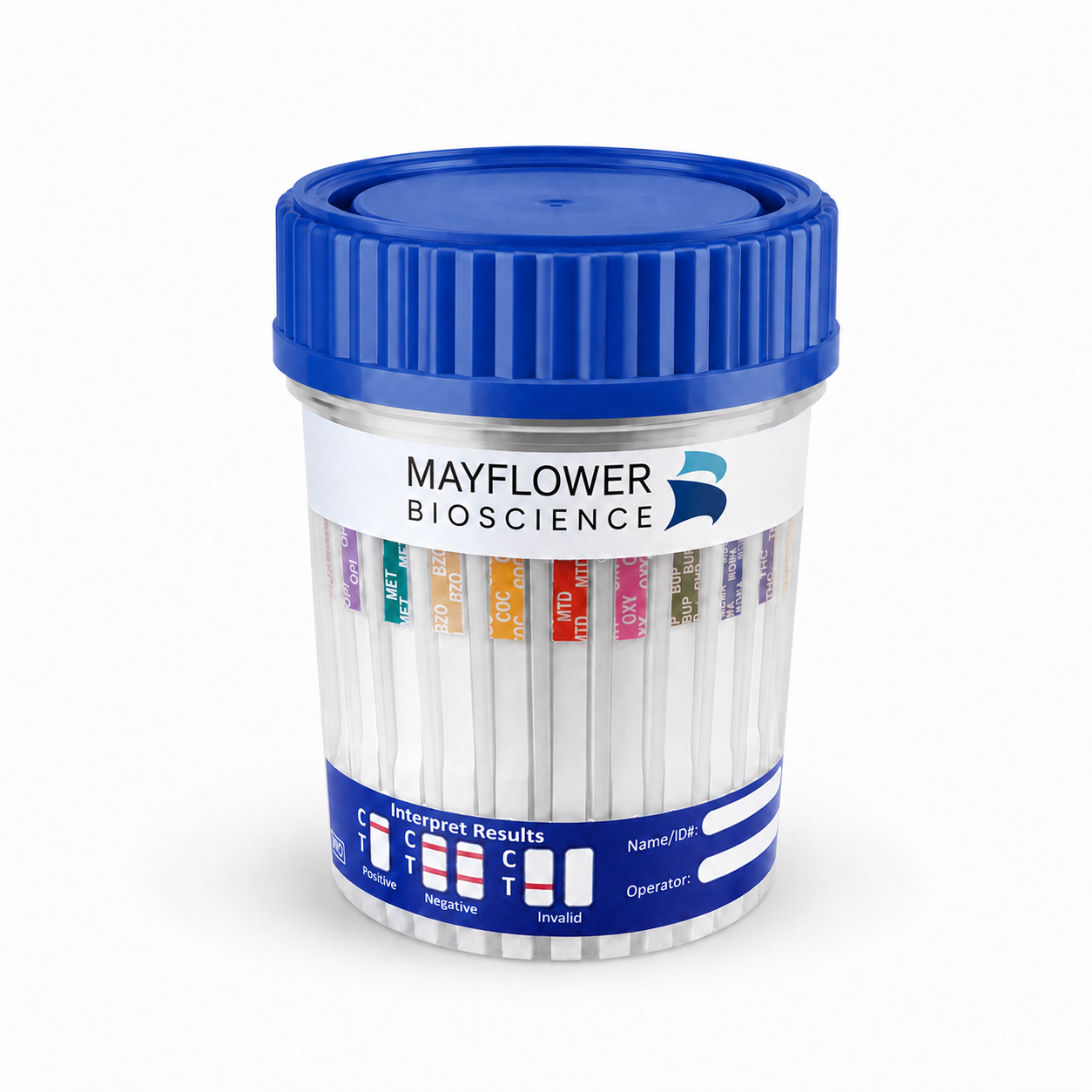
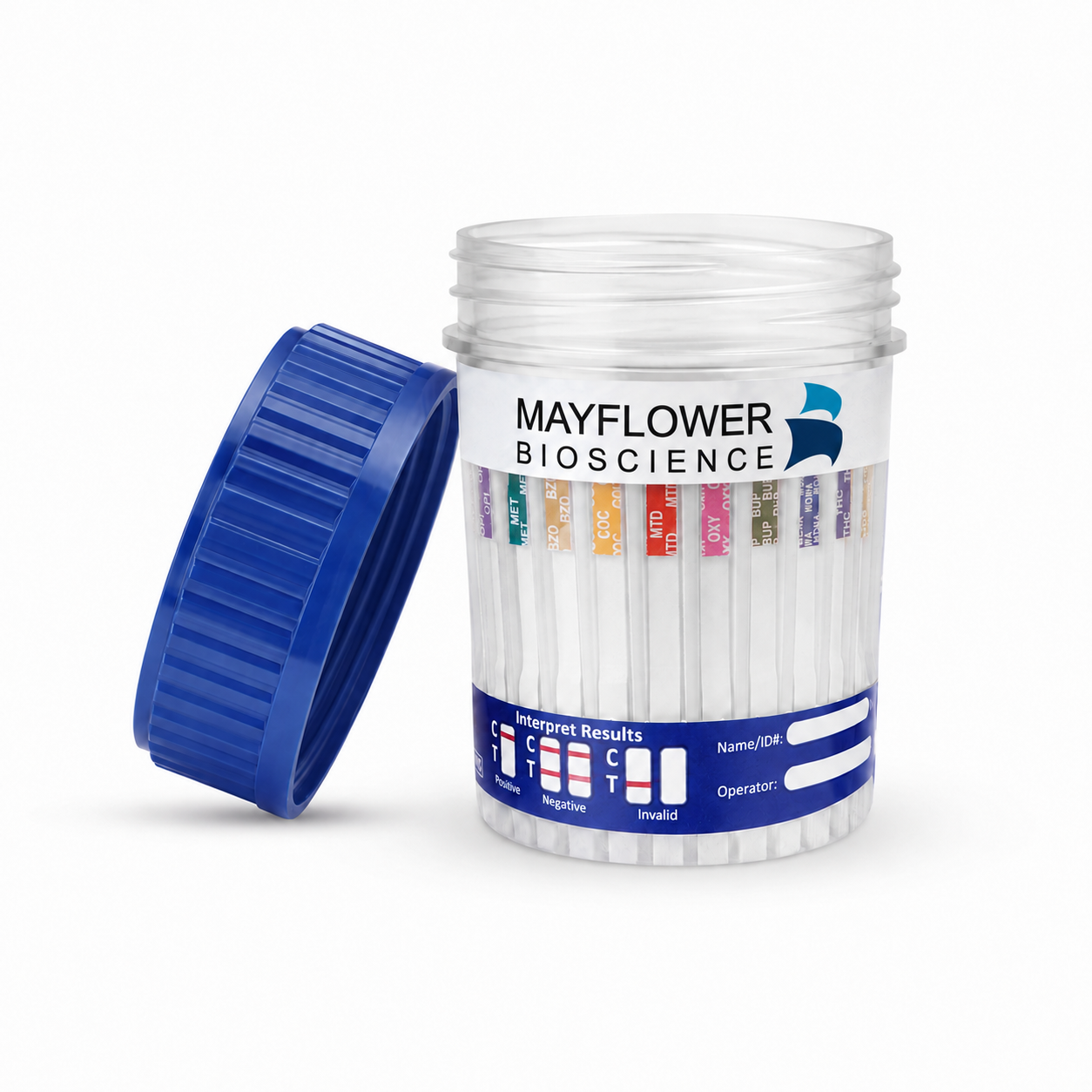
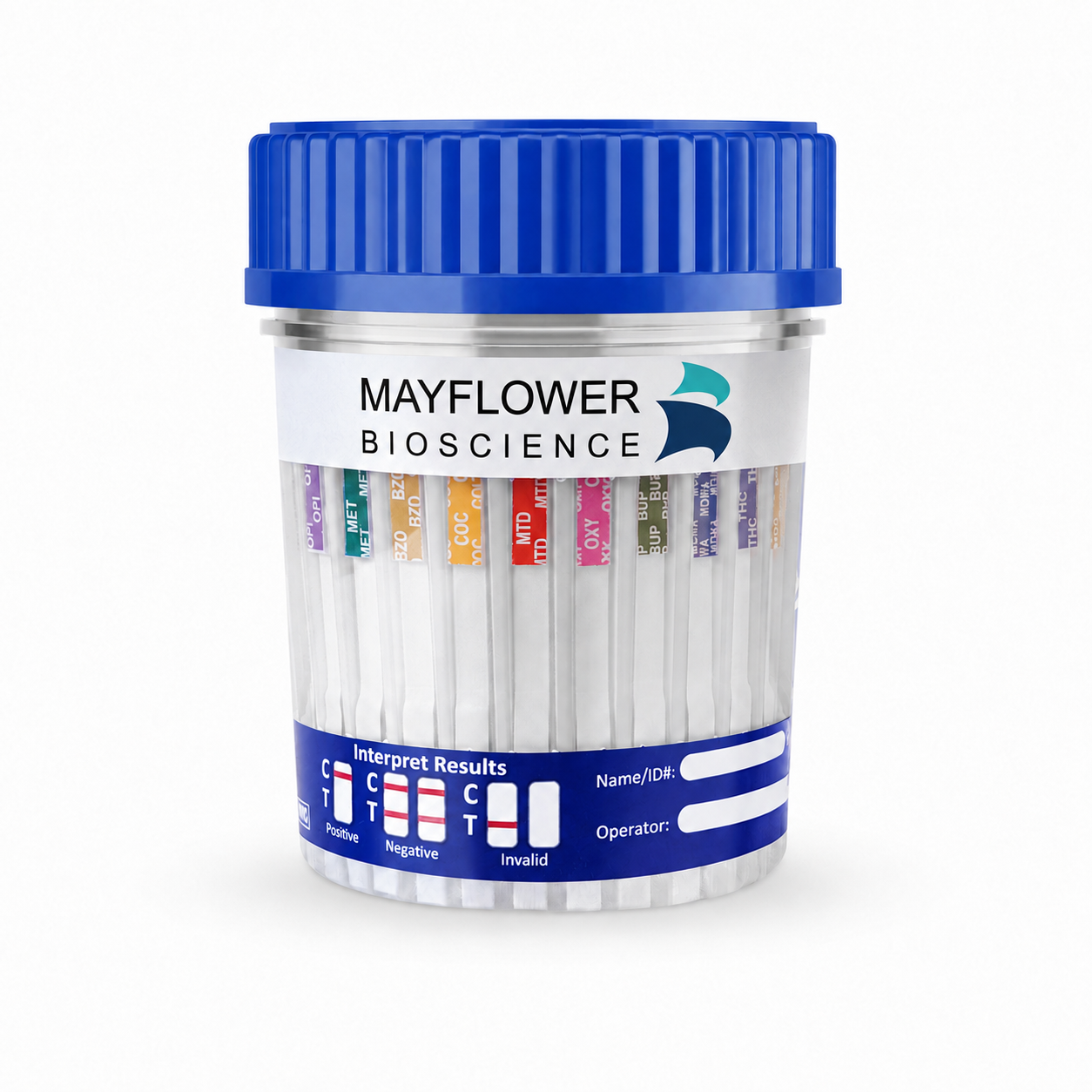
Our 14 Panel Drug Test Cup with PCP, ETG Alcohol & Fentanyl is a professional urine drug screening device designed for organizations that require broader substance detection than a standard multi-panel drug test. This configuration screens for 14 commonly abused drugs and alcohol metabolites in a single integrated urine collection cup, helping identify illicit drugs, prescription medications, synthetic opioids, and recent alcohol consumption during one collection.
Unlike traditional 14 panel drug test cups that often exclude Ethyl Glucuronide (ETG) and Fentanyl (FEN), this forensic-use configuration combines PCP (Phencyclidine), ETG Alcohol, and Fentanyl with other high-risk drug classes, making it suitable for drug courts, probation programs, correctional facilities, rehabilitation centers, behavioral health programs, sober living facilities, law enforcement agencies, and other professional drug testing environments.
Using rapid lateral flow competitive immunoassay technology, the cup delivers preliminary qualitative results in approximately 5 minutes while eliminating the need for multiple individual tests. The integrated leak-resistant collection cup, tamper-evident cap, and built-in temperature strip help simplify specimen collection and improve confidence in urine specimen integrity.
What Does This 14 Panel Drug Test Cup Detect?
This urine drug test cup screens for fourteen targeted drug classes and metabolites during one collection.
| Panel | Drug Detected | Typical Cutoff |
|---|---|---|
| AMP | Amphetamine | 1000 ng/mL |
| OPI | Opiates / Morphine | 300 ng/mL |
| MET | Methamphetamine | 1000 ng/mL |
| BZO | Benzodiazepines | 300 ng/mL |
| COC | Cocaine | 300 ng/mL |
| MTD | Methadone | 300 ng/mL |
| OXY | Oxycodone | 100 ng/mL |
| BUP | Buprenorphine | 10 ng/mL |
| MDMA | Ecstasy (MDMA) | 500 ng/mL |
| THC | Marijuana (Cannabis) | 50 ng/mL |
| BAR | Barbiturates | 300 ng/mL |
| FEN | Fentanyl | 20 ng/mL |
| ETG | Ethyl Glucuronide (Alcohol Metabolite) | 300 ng/mL |
| PCP | Phencyclidine (Angel Dust) | 25 ng/mL |
This expanded panel provides comprehensive coverage for commonly abused street drugs, prescription medications, synthetic opioids, and alcohol metabolite detection in one convenient screening solution.
Complete Drug Panel Configuration
Amphetamine (AMP)
Detects amphetamine-based stimulant drugs commonly prescribed for ADHD as well as illicit amphetamine abuse. Screening helps identify misuse of stimulant medications and illegal amphetamine consumption.
Opiates (OPI)
Screens for morphine-based opiates including heroin metabolites, morphine, and codeine. This panel detects traditional opiate drugs but should not be confused with synthetic opioid testing.
Methamphetamine (MET)
Identifies methamphetamine use, including crystal meth and related stimulant compounds that affect the central nervous system.
Benzodiazepines (BZO)
Detects commonly prescribed sedatives such as Xanax®, Valium®, Ativan®, and Klonopin®. These medications may be monitored in workplace, rehabilitation, or court-ordered drug testing programs.
Cocaine (COC)
Detects benzoylecgonine, the primary metabolite produced after cocaine use. Screening identifies cocaine and crack cocaine exposure.
Methadone (MTD)
Screens for methadone used in medication-assisted treatment (MAT) as well as unauthorized use outside supervised treatment programs.
Oxycodone (OXY)
Specifically targets oxycodone-based prescription opioids such as OxyContin® and Percocet®, which may not always trigger a standard opiate screening panel.
Buprenorphine (BUP)
Detects buprenorphine medications including Suboxone®, Subutex®, and other formulations used for opioid use disorder treatment.
MDMA (Ecstasy)
Screens for MDMA, commonly known as Ecstasy or Molly, together with closely related synthetic stimulant compounds.
Marijuana (THC)
Detects THC metabolites following marijuana or cannabis use, including smoked cannabis, concentrates, and edible products.
Barbiturates (BAR)
Screens for barbiturate sedatives prescribed for seizure disorders or historically used as central nervous system depressants.
Fentanyl (FEN)
Detects fentanyl, an extremely potent synthetic opioid responsible for a significant proportion of opioid overdose cases. Dedicated fentanyl screening provides coverage that traditional opiate panels cannot offer.
Ethyl Glucuronide (ETG)
Detects Ethyl Glucuronide, a direct metabolite produced after alcohol consumption. Unlike breath alcohol testing, ETG remains detectable in urine long after ethanol has left the bloodstream.
Phencyclidine (PCP)
Screens for Phencyclidine, commonly called Angel Dust, a dissociative hallucinogenic drug that affects perception, behavior, and the central nervous system. PCP remains an important drug panel for forensic, correctional, and behavioral health testing programs.
Why Are PCP, ETG and Fentanyl Included Together?
Many standard multi-drug urine test cups focus on traditional drugs of abuse but leave important gaps in modern drug screening. Combining PCP, ETG Alcohol, and Fentanyl creates a broader testing solution capable of detecting three substances that require dedicated immunoassays because they are chemically different from standard drug classes.
Each panel addresses a different compliance concern:
| Drug | Why It Matters |
|---|---|
| PCP | Detects dissociative hallucinogen use that standard stimulant or opioid panels cannot identify. |
| ETG | Detects recent alcohol consumption for up to several days after drinking. |
| Fentanyl | Identifies synthetic opioid exposure that standard opiate tests often miss. |
This combination is particularly valuable in:
- Drug court monitoring
- Probation and parole supervision
- Correctional facilities
- Medication-assisted treatment programs
- Behavioral health facilities
- Sober living homes
- Family court compliance programs
- Government testing programs
- Law enforcement screening
Rather than performing separate alcohol, fentanyl, and PCP tests, organizations can complete comprehensive screening from one urine specimen using one integrated collection cup.
Understanding PCP (Phencyclidine) Detection
Phencyclidine (PCP) is a dissociative hallucinogenic drug originally developed as an intravenous anesthetic before being discontinued because of severe psychological side effects. Today it is abused recreationally and is commonly referred to as Angel Dust.
PCP affects the central nervous system by interfering with NMDA receptors, leading to hallucinations, altered perception, impaired judgment, agitation, confusion, and unpredictable behavior.
Unlike many commonly abused drugs, PCP is highly lipid-soluble, allowing it to accumulate in fatty tissues before gradually being released into circulation. Because of this characteristic, PCP may remain detectable longer than many stimulant drugs.
Typical PCP Detection Window
| Factor | PCP Detection |
|---|---|
| First detectable in urine | Approximately 4–6 hours after use |
| Typical detection window | About 7–14 days |
| Screening cutoff | 25 ng/mL |
The 25 ng/mL cutoff level is widely recognized for urine screening and helps distinguish likely drug use from insignificant environmental exposure while supporting reliable preliminary screening.
Like all immunoassay drug tests, a positive PCP result is considered preliminary until confirmed by a laboratory using Gas Chromatography-Mass Spectrometry (GC-MS) or Liquid Chromatography-Tandem Mass Spectrometry (LC-MS/MS) when required.
Understanding ETG Alcohol Testing
Unlike breath alcohol testing, which measures alcohol currently circulating in the bloodstream, ETG testing detects Ethyl Glucuronide, a metabolite produced after the body processes alcohol.
Because ETG remains in urine after alcohol itself has been eliminated, it provides a significantly longer detection window for monitoring recent drinking.
Why ETG Testing Matters
ETG testing is widely used when organizations need evidence of recent alcohol consumption rather than current intoxication.
Common applications include:
- Court-ordered alcohol monitoring
- Rehabilitation programs
- Probation supervision
- Abstinence monitoring
- Recovery programs
- Behavioral health treatment
- Professional compliance testing
Typical ETG Detection Window
| Consumption Pattern | Approximate Detection |
|---|---|
| Light drinking | Up to 24 hours |
| Moderate drinking | Approximately 24–48 hours |
| Heavy drinking | Up to 48–80 hours |
This extended detection period makes ETG much more useful than breath testing when scheduled or random monitoring is required.
Most professional ETG panels use established cutoff concentrations designed to reduce the likelihood of positive results from incidental alcohol exposure, such as hand sanitizers or mouthwash, while still detecting meaningful alcohol consumption.
Understanding Fentanyl Screening
Fentanyl (FEN) is a synthetic opioid that is significantly more potent than morphine and is prescribed for severe pain management under medical supervision. In recent years, illicitly manufactured fentanyl and its analogs have become a major concern because they are frequently mixed with heroin, counterfeit prescription medications, cocaine, methamphetamine, and other illicit substances.
Unlike natural opiates such as morphine or codeine, fentanyl has a different chemical structure. Because of this, standard opiate drug tests often do not detect fentanyl, making a dedicated fentanyl panel essential for modern forensic drug screening.
Why Standard Opiate Tests Miss Fentanyl
Traditional opiate immunoassays are designed to recognize metabolites produced by naturally occurring opiates. Synthetic opioids like fentanyl require their own antibodies and screening panel for reliable detection.
Adding a dedicated FEN panel allows this 14 panel drug test cup to identify fentanyl exposure that may otherwise go undetected during routine urine drug screening.
Typical Fentanyl Detection
| Factor | Fentanyl Detection |
|---|---|
| First detectable | Approximately 2–6 hours |
| Typical urine detection | 1–3 days (may vary) |
| Screening cutoff | 20 ng/mL |
Because fentanyl detection is increasingly requested in probation programs, rehabilitation facilities, correctional institutions, and behavioral health settings, including a dedicated fentanyl panel provides broader substance coverage than many conventional multi-drug tests.
Drug Detection Window
Drug detection times vary depending on dose, frequency of use, metabolism, hydration, body composition, urine concentration, and individual health factors. The values below represent typical screening windows for urine testing.
| Drug | Abbreviation | Typical Detection Window |
|---|---|---|
| Amphetamine | AMP | 2–4 days |
| Opiates | OPI | 2–3 days |
| Methamphetamine | MET | 2–4 days |
| Benzodiazepines | BZO | 1–7 days (longer for chronic use) |
| Cocaine | COC | 2–4 days |
| Methadone | MTD | 2–4 days |
| Oxycodone | OXY | 1–3 days |
| Buprenorphine | BUP | 1–7 days |
| MDMA | MDMA | 1–3 days |
| Marijuana | THC | 3–30+ days depending on frequency |
| Barbiturates | BAR | 2 days to several weeks |
| Fentanyl | FEN | 1–3 days |
| Ethyl Glucuronide | ETG | Approximately 24–80 hours |
| Phencyclidine | PCP | Approximately 7–14 days |
These detection windows are estimates only and should not be interpreted as guarantees. Laboratory confirmation may be required for legal or forensic decisions.
Drug Cutoff Levels
Cutoff levels represent the minimum concentration of a drug metabolite that must be present before a screening test reports a preliminary positive result.
| Drug | Cutoff Level |
|---|---|
| AMP | 1000 ng/mL |
| OPI | 300 ng/mL |
| MET | 1000 ng/mL |
| BZO | 300 ng/mL |
| COC | 300 ng/mL |
| MTD | 300 ng/mL |
| OXY | 100 ng/mL |
| BUP | 10 ng/mL |
| MDMA | 500 ng/mL |
| THC | 50 ng/mL |
| BAR | 300 ng/mL |
| FEN | 20 ng/mL |
| ETG | 300 ng/mL |
| PCP | 25 ng/mL |
Cutoff concentrations help reduce false positives from insignificant exposure while maintaining reliable screening sensitivity for meaningful drug use.
How the 14 Panel Drug Test Cup with PCP Works
The device uses rapid lateral flow competitive immunoassay technology, one of the most widely accepted methods for point-of-care urine drug screening.
Inside each testing strip are highly specific antibodies designed to react with particular drug metabolites.
The process is straightforward:
- A urine specimen is collected directly into the integrated cup.
- Drug metabolites migrate across each test strip.
- Antibodies bind to the target compounds.
- A visible control line confirms proper test performance.
- Test lines indicate whether drug concentrations are above or below established cutoff levels.
- Preliminary results become available in approximately five minutes.
Because this is a qualitative screening device, it indicates whether a drug is present above the screening threshold rather than measuring the exact concentration in the specimen.
How to Use the Cup
Step 1 — Collect the Specimen
Remove the drug test cup from its sealed pouch and collect the urine sample directly into the collection cup until the required fill level is reached.
Step 2 — Secure the Lid
Immediately tighten the tamper-evident screw cap to help prevent leakage or contamination. Place the cup upright on a flat surface.
Step 3 — Wait for Development
Allow the immunoassay strips to process the urine specimen. Results are generally ready in approximately 5 minutes.
Step 4 — Read the Results
Remove or peel the result label according to the manufacturer’s instructions and interpret the control and test lines within the recommended reading time.
Do not interpret results after the specified maximum reading window.
How to Read Results
Negative Result
Two colored lines appear:
- One line in the Control (C) region
- One line in the Test (T) region
Even a faint test line should generally be interpreted as a negative result.
Preliminary Positive Result
Only the Control (C) line appears.
The absence of the Test (T) line indicates the drug concentration is at or above the screening cutoff.
Positive screening results should be confirmed using GC-MS or LC-MS/MS whenever required for legal, workplace, or forensic purposes.
Invalid Result
No Control (C) line appears.
The test should be discarded and repeated using a new device and a fresh urine specimen.
What Does a Faint Line Mean?
A faint line in the Test (T) region is generally considered a negative result, provided the Control line is visible and the test is read within the recommended time frame. Line intensity does not indicate the amount of drug present.
Product Features
This professional urine drug test cup is designed for rapid, reliable, and convenient multi-drug screening.
Key Features
- Detects 14 drug classes in one integrated collection cup
- Includes PCP, ETG Alcohol, and Fentanyl screening
- Results available in approximately 5 minutes
- Leak-resistant screw cap
- Tamper-evident security seal
- Built-in urine temperature strip
- Clear visual line interpretation
- Integrated collection and testing system
- No additional testing equipment required
- Long shelf life under proper storage conditions
- Suitable for professional forensic screening environments
Why Temperature Verification Matters
A valid urine specimen should fall within the normal physiological temperature range shortly after collection.
The built-in temperature strip helps verify that the specimen was freshly collected and has not been substituted before testing begins.
Temperature verification assists with identifying:
- Substituted urine
- Delayed specimen submission
- Sample tampering
- Improper collection procedures
Although temperature alone cannot detect every attempt to alter a specimen, it serves as an important first step in specimen validity assessment.
Accuracy and Reliability
This rapid urine drug screening cup is manufactured to deliver consistent and dependable preliminary screening performance when used according to the instructions.
Key performance benefits include:
- Up to 99% screening accuracy under controlled conditions
- Rapid visual interpretation
- Reliable antibody-based immunoassay technology
- High specificity for targeted drug metabolites
- Reduced cross-reactivity through established cutoff levels
- Suitable for professional point-of-care screening
As with all immunoassay drug tests, this product provides preliminary analytical results only.
Unexpected positive results should always be confirmed using a laboratory-based confirmation method such as Gas Chromatography-Mass Spectrometry (GC-MS) or Liquid Chromatography-Tandem Mass Spectrometry (LC-MS/MS) before making legal, employment, or clinical decisions.
Who Uses This Product?
The expanded combination of PCP, ETG Alcohol, and Fentanyl makes this drug test cup suitable for organizations that require broader substance detection than traditional urine drug screens.
Common applications include:
- Probation and parole programs
- Drug courts
- Law enforcement agencies
- Correctional facilities
- Juvenile justice programs
- Rehabilitation centers
- Behavioral health clinics
- Substance use treatment programs
- Sober living homes
- Pain management clinics
- Government agencies
- Occupational health and workplace testing programs
- Research laboratories
- Forensic laboratories
What Does “Forensic Use Only” Mean?
This product is labeled Forensic Use Only (FUO).
A forensic use designation means the device is intended for non-clinical testing programs where results support compliance monitoring, investigations, court proceedings, correctional supervision, or other forensic applications.
These screening tests are not intended to diagnose disease or guide medical treatment.
When a preliminary positive result has legal or disciplinary implications, laboratory confirmation using GC-MS or LC-MS/MS is recommended before final action is taken.
Storage Instructions
Proper storage helps maintain test performance throughout the product’s shelf life.
For best results:
- Store between the temperatures specified by the manufacturer.
- Keep the cups sealed in their original packaging until use.
- Protect from excessive heat, freezing temperatures, and direct sunlight.
- Avoid exposure to moisture or high humidity.
- Do not use products beyond the expiration date.
- Allow the test cup and urine specimen to reach room temperature before testing if stored in cooler conditions.
Following recommended storage practices helps preserve antibody stability, membrane performance, and overall screening accuracy.
Why Buy This 14 Panel Drug Test Cup?
This 14 Panel Drug Test Cup with PCP, ETG Alcohol & Fentanyl combines comprehensive drug screening, alcohol metabolite detection, and synthetic opioid testing into a single easy-to-use urine collection device. By integrating fourteen targeted panels, rapid immunoassay technology, a tamper-evident design, and built-in temperature verification, it supports efficient screening while reducing the need for multiple individual tests.
Whether your program monitors substance use in probation, drug courts, correctional facilities, rehabilitation centers, behavioral health programs, pain management clinics, government agencies, or workplace testing environments, this configuration provides broad detection coverage, rapid preliminary results, and professional-grade performance for high-volume urine drug screening applications.
Frequently Asked Questions
What does a 14 panel drug test cup detect?
A 14 panel drug test cup screens urine for fourteen different drug classes in a single test. This configuration detects:
- Amphetamine (AMP)
- Opiates (OPI)
- Methamphetamine (MET)
- Benzodiazepines (BZO)
- Cocaine (COC)
- Methadone (MTD)
- Oxycodone (OXY)
- Buprenorphine (BUP)
- MDMA (Ecstasy)
- Marijuana (THC)
- Barbiturates (BAR)
- Fentanyl (FEN)
- Ethyl Glucuronide (ETG Alcohol Metabolite)
- Phencyclidine (PCP)
By combining illicit drugs, prescription medications, synthetic opioids, and alcohol metabolite testing into one urine collection cup, this panel provides broad screening coverage for forensic drug testing programs.
Does a 14 panel drug test include PCP?
Yes. This configuration includes a dedicated PCP (Phencyclidine) test strip with a 25 ng/mL cutoff level. PCP, also known as Angel Dust, is detected independently from other drugs, improving the ability to identify recent PCP use during urine drug screening.
Does a 14 panel drug test detect alcohol?
Yes—when the cup includes an ETG (Ethyl Glucuronide) panel.
Unlike breath alcohol testing, ETG detects a metabolite produced after alcohol is processed by the body. This allows alcohol use to remain detectable for a much longer period, making ETG useful for abstinence monitoring, court programs, treatment facilities, and compliance testing.
What is ETG on a drug test?
ETG (Ethyl Glucuronide) is a direct metabolite of ethanol (alcohol). Rather than detecting alcohol itself, the test identifies ETG in urine after drinking.
Because ETG remains in urine longer than alcohol remains in breath or blood, it provides a significantly longer detection window for monitoring recent alcohol consumption.
What is PCP on a drug test?
PCP stands for Phencyclidine, a powerful dissociative hallucinogen commonly known as Angel Dust.
A PCP drug test detects the presence of PCP or its metabolites in urine. Since PCP can affect perception, judgment, and motor function, many forensic and correctional testing programs include it as part of comprehensive drug screening.
How long does PCP stay in urine?
PCP is generally detectable in urine for approximately 7 to 14 days, although the exact detection window depends on several factors, including:
- Amount used
- Frequency of use
- Individual metabolism
- Body composition
- Hydration level
Heavy or repeated use may increase the amount of time PCP remains detectable.
How long does ETG stay detectable?
ETG may remain detectable in urine for approximately 48 to 80 hours after alcohol consumption.
Detection time varies according to:
- Amount of alcohol consumed
- Drinking frequency
- Hydration
- Kidney function
- Individual metabolism
ETG testing extends the detection window far beyond traditional breath alcohol testing.
Can fentanyl be detected on a 14 panel drug test?
Yes.
This product includes a dedicated Fentanyl (FEN) panel with a 20 ng/mL cutoff, allowing rapid screening for fentanyl exposure.
Because fentanyl is structurally different from traditional opiates, it requires its own immunoassay test strip for reliable screening.
Does fentanyl show up on a standard opiate test?
No.
Most standard opiate tests are designed to detect morphine-derived compounds such as heroin, morphine, and codeine.
Fentanyl is a synthetic opioid with a different chemical structure, so it generally does not trigger a positive result on standard opiate panels. A dedicated fentanyl test strip is required for screening.
What cutoff level is used for PCP?
This 14 panel drug test cup uses a 25 ng/mL cutoff for PCP.
This screening threshold is commonly used in forensic urine drug testing to balance sensitivity with specificity while reducing the likelihood of false-positive screening results.
What cutoff level is used for ETG?
The ETG panel in this product uses a 300 ng/mL cutoff.
This level is designed to detect recent alcohol consumption while reducing the chance of positive results caused by incidental exposure to products containing small amounts of alcohol.
What cutoff level is used for fentanyl?
The fentanyl panel uses a 20 ng/mL cutoff.
This screening level is intended to identify fentanyl exposure rapidly during preliminary urine drug testing. Any preliminary positive result should be confirmed using a laboratory confirmation method such as GC-MS or LC-MS/MS.
How accurate is a 14 panel drug test cup with PCP?
When used according to the manufacturer’s instructions, rapid immunoassay drug test cups provide up to 99% screening accuracy for preliminary detection.
However, these tests are screening devices, not diagnostic tests. Any preliminary positive or unexpected result should be confirmed by an accredited laboratory using confirmatory analytical methods.
Can medications cause false positives?
Yes. Certain prescription medications, over-the-counter drugs, supplements, or medical conditions may occasionally produce preliminary false-positive screening results.
For this reason, positive screening results should always be confirmed through laboratory analysis before clinical, employment, or legal decisions are made.
What does a faint line mean?
A faint line in the Test (T) region is still considered a negative result, provided the Control (C) line is present.
Line intensity can vary depending on the concentration of drug metabolites in the urine. Any visible test line—even if very light—indicates that the drug concentration is below the screening cutoff.
What is an invalid drug test result?
A drug test is considered invalid when the Control (C) line fails to appear.
An invalid result means the test did not perform correctly and should not be interpreted. Common reasons include:
- Insufficient urine sample
- Testing error
- Damaged or expired device
- Improper storage conditions
A new test should be performed using a fresh device.
Why is there a temperature strip?
The built-in temperature strip helps verify that the urine specimen was freshly collected.
Normal urine temperature should generally fall between 90°F and 100°F (32°C–38°C) within a few minutes after collection.
An abnormal temperature reading may indicate:
- Substituted urine
- Synthetic urine
- Delayed submission
- Sample tampering
Temperature verification supports specimen validity during collection.
What does “Forensic Use Only” mean?
Forensic Use Only (FUO) indicates that the product is intended for non-clinical drug testing programs where results are used for administrative, legal, correctional, or compliance purposes rather than medical diagnosis.
Examples include:
- Drug courts
- Probation and parole
- Correctional facilities
- Law enforcement
- Rehabilitation monitoring
- Government agencies
Positive screening results are typically confirmed by laboratory testing before final action is taken.
Do positive results require GC-MS confirmation?
Yes.
Rapid urine drug test cups provide preliminary screening results only.
Any non-negative result should be confirmed using highly specific laboratory methods such as:
- Gas Chromatography–Mass Spectrometry (GC-MS)
- Liquid Chromatography–Tandem Mass Spectrometry (LC-MS/MS)
These confirmation methods identify specific drug compounds with a much higher level of analytical accuracy.
How should drug test cups be stored?
For best performance, store unopened drug test cups:
- At 36°F–86°F (2°C–30°C)
- In their original sealed pouch
- Away from direct sunlight
- Away from excessive moisture and humidity
- Away from freezing temperatures
- Do not use after the expiration date
Proper storage helps preserve antibody stability and ensures reliable screening performance throughout the product’s shelf life.


Reviews
There are no reviews yet.