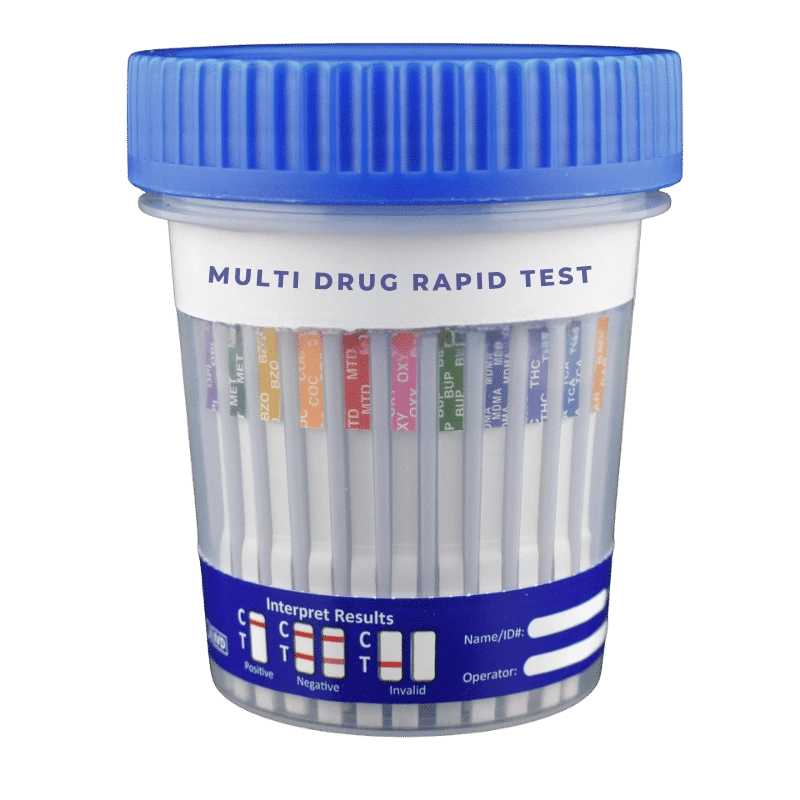

12 Panel Drug Test with Fentanyl: Lab Procurement Guide
A 12-analyte panel that includes fentanyl (FEN) is appropriate for most research and clinical toxicology applications, with one condition: you must confirm in-matrix LOD/LOQ data—targeting ≤0.10 ng/mL LOD for fentanyl and documented, matrix-specific LOQ for each analog—before committing to a lot. Vendor buffer-based LODs routinely underestimate the detection challenge in whole blood or postmortem matrices by an order of magnitude. Your 24-to-72-hour action list:
- Request in-matrix LOD/LOQ documentation (urine, whole blood, and your primary study matrix) from every vendor under consideration.
- Confirm isotopically labeled internal standards (IS) are available for fentanyl and at least the three most prevalent analogs in your study population.
- Ask for the vendor’s lot continuity plan: how many units per lot, current shelf life, and whether a bridging data package is available if a lot change occurs mid-study.
- Verify regulatory status (RUO vs. IVD) and whether the vendor supplies a validation summary or certificate of analysis with each lot.
Pro Tip: Request the vendor’s actual in-matrix spike-recovery data, not just the specification sheet. A vendor who cannot provide this within 48 hours is signaling a validation gap you will pay for later.
Key Takeaways
A 12-analyte panel that includes fentanyl is study-ready only when in-matrix LOD/LOQ, isotopically labeled IS availability, and a vendor lot continuity plan are confirmed before the purchase order is issued.
| Point | Details |
|---|---|
| Confirm in-matrix LOD/LOQ | Require ≤0.10 ng/mL LOD in whole blood for fentanyl; require analog LOQ documentation (typically 0.10–0.40 ng/mL in blood) in your actual matrix; never accept buffer-only sensitivity data. |
| Secure IS before study start | Isotopically labeled IS (fentanyl-d5 minimum) must be budgeted and sourced alongside the kit. |
| Lock in a single lot | Reserve enough units for prevalidation, full validation, study samples, and 20% contingency. |
| Tier your validation rigor | Assign fentanyl and carfentanil to Tier 1; reduce replication on lower-priority analytes to manage workload. |
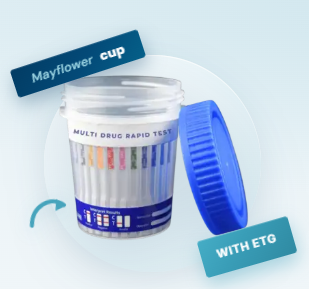
| Mayflowerbio catalog options | The 12-panel cup with ETG and fentanyl ships with lot documentation and US-based technical support. |
Table of Contents
- What specs should you require from a 12-panel fentanyl vendor?
- How do you validate a 12-analyte fentanyl panel for your lab?
- Which platform fits your fentanyl detection needs?
- How do you manage lot continuity for a longitudinal fentanyl study?
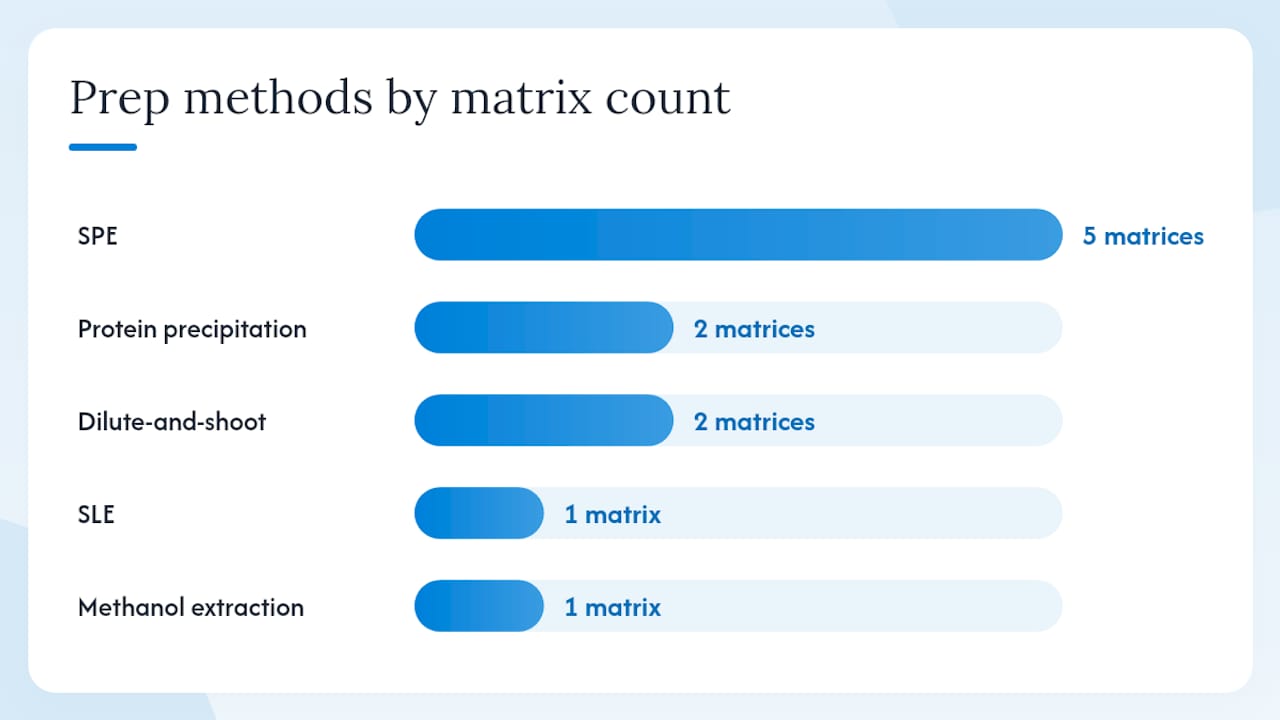
- What sample preparation works best for fentanyl in each matrix?
- What does a realistic procurement and validation timeline look like?
- What labs actually get wrong when buying a fentanyl multiplex panel
- Mayflowerbio supports your multiplex fentanyl panel from procurement to validation
- Sources
- FAQ
What specs should you require from a 12-panel fentanyl vendor?
Screen every quotation against these minimum technical requirements before requesting a formal proposal.
Sensitivity and quantitation:
- In-matrix LOD for fentanyl: target ≤0.10 ng/mL in whole blood, consistent with ISO 15189-validated LC-MS/MS benchmarks reporting LODs and LOQs in blood at levels suitable for clinical validation, consistent with ISO 15189 standards.
- LOQ for fentanyl analogs (acetylfentanyl, carfentanil, furanylfentanyl): documented in your target matrix, not buffer.
- Recovery ≥70% at LOQ with matrix effects (ME) within ±20% of nominal.
Matrix and volume:
- Explicit compatibility data for each matrix you will use: urine, whole blood, plasma/serum, CSF, or hair.
- Sample volume per matrix stated in the product documentation.
Regulatory and documentation:
- RUO or IVD designation clearly stated; IVD required for clinical reporting.
- Lot-specific certificate of analysis (CoA), stability data, and a validation summary.
Standards and IS:
- Availability of isotopically labeled IS (e.g., fentanyl-d5, norfentanyl-d5) as a separate catalog item or bundled.
- Reference to NIST reference material gaps for novel analogs; confirm the vendor has addressed these for your target analyte list.
Lot planning:
- Minimum units per lot sufficient for prevalidation, full validation, and study samples with 20% contingency.
- Vendor commitment to notify you before a lot change and to supply bridging data.
How do you validate a 12-analyte fentanyl panel for your lab?
Fit-for-purpose validation for multiplex ligand binding assays requires demonstrating in-matrix LOD/LOQ, parallelism, recovery, matrix effects, accuracy, and precision per analyte. For fentanyl, the stakes are higher: cross-reactivity with structurally similar analogs can produce false positives, and postmortem matrix effects can suppress signal enough to generate false negatives.
Required experiments:
- Blank matrix: confirm no endogenous interference at the LOD.
- Spike/recovery at LOQ, 3×LOQ, and 10×LOQ: calculate recovery and ME per analyte.
- Dilution linearity/parallelism: serially dilute authentic or spiked samples; parallelism failure in postmortem matrices is a common and underappreciated pitfall.
- Inter- and intra-assay precision: minimum three runs on three separate days, two operators.
- Carryover: inject a high-concentration fentanyl sample followed by a blank; carryover must be <20% of LOQ.
- Stability: freeze-thaw (three cycles), bench-top (4 hours), and long-term frozen.
- Interference/cross-reactivity: test structurally related analogs at clinically relevant concentrations.
- Confirmation workflow: define the LC-MS/MS confirmation trigger and acceptance criteria.
Acceptance criteria per analyte:
| Parameter | Recommended threshold | Rationale |
|---|---|---|
| LOD (in-matrix; fentanyl) | ≤0.10 ng/mL (blood) | Matches ISO 15189 clinical benchmark |
| LOQ (in-matrix; analogs) | 0.10–0.40 ng/mL (blood)* | Clinical validation benchmark (published range) |
| LOQ accuracy | 80–120% of nominal | Standard fit-for-purpose criterion |
| Intra-assay CV | ≤15% (≤20% at LOQ) | Multiplex ligand binding assay guidance |
| Inter-assay CV | ≤20% (≤25% at LOQ) | Allows for day-to-day reagent variability |
| Recovery | 70–130% | Accounts for matrix-dependent extraction losses |
| Matrix effect | ±20% of nominal | Prevents false quantitation from ion suppression |
*Actual LOQ must be documented for each analog in your matrix.
Common pitfalls: relying on vendor buffer LODs (they will not hold in blood or postmortem tissue), ignoring non-parallelism in decomposed matrices, and treating a single-analyte failure as a minor issue. Per multiplex assay guidance, one analyte failing run acceptance can invalidate the entire run if acceptance criteria are predefined at the run level.
Pro Tip: Tier your validation rigor. Assign fentanyl and carfentanil to Tier 1 (full acceptance criteria), and lower-priority analytes to Tier 2 (reduced replication). This cuts validation workload by roughly a third without compromising your primary endpoints.
Which platform fits your fentanyl detection needs?
LC-MS/MS delivers the best specificity and sensitivity for fentanyl analogs. A validated UHPLC-MS/MS workflow covering fentanyl and 22 analogs in blood, urine, and hair achieves LOQs in the low ng/L range. Immunoassay platforms offer higher throughput but carry real cross-reactivity risk across the fentanyl analog class.
| Platform | LOD/LOQ | Matrix tolerance | Throughput | IS requirement | Cost/sample | Best use |
|---|---|---|---|---|---|---|
| LC-MS/MS | Sub-ng/mL | Moderate (prep needed) | Low-medium | Isotopic IS required | High | Confirmation, research |
| Bead immunoassay | ng/mL range | High | High | Not required | Low-medium | Screening, surveillance |
| ECL (e.g., MSD) | pg/mL range | High | Medium | Not required | Medium | Biomarker research |
| Single-molecule | fg/mL range | High | Low | Not required | Very high | Ultra-sensitive discovery |
Multiplexing on any MS platform requires compromises in extraction, separation, and ionization compared with single-plex methods. For immunoassay platforms, antibody pair selection and buffer optimization are the primary sources of cross-reactivity and sensitivity loss in multiplex fentanyl panels.
Pro Tip: For a 12-analyte panel that includes fentanyl, run LC-MS/MS confirmation on every immunoassay-positive fentanyl result until you have established your lab’s false-positive rate in your specific matrix. The analog cross-reactivity profile of most commercial antibodies is not fully characterized for all novel fentanyl derivatives.
How do you manage lot continuity for a longitudinal fentanyl study?
Secure a single lot covering your entire study before you start. A mid-study lot change without bridging data is the single most common source of unexplained analyte drift in longitudinal toxicology datasets.
Lot planning steps:
- Calculate total samples: prevalidation (n=60–80), full validation (n=120–160), in-study QC (10% of study samples), and a 20% contingency buffer.
- Confirm shelf life against your study end date, with at least three months of margin.
- Obtain the vendor’s lot-specific CoA and stability data before purchase.
- Negotiate a lot-hold agreement or reserve purchase option for a second lot of the same formulation.
- If a lot change is unavoidable, run a bridging study: analyze a minimum of 20 QC samples (low, mid, high) from both lots on the same day, apply Deming regression or equivalence testing, and document a linear correction factor if the slope deviates more than 10% from unity.
Pro Tip: Allocate 10% of your prevalidation samples specifically to lot-bridging runs. Running them early means you have a correction factor ready before the study starts, not after a lot expires mid-enrollment.
What sample preparation works best for fentanyl in each matrix?
Match your extraction method to your target LOD and platform. Protein precipitation is adequate for urine on immunoassay platforms; LC-MS/MS in blood or postmortem tissue requires supported liquid extraction (SLE) or solid-phase extraction (SPE) to manage matrix effects.
| Matrix | Recommended prep | Key notes |
|---|---|---|
| Urine | Protein precipitation or dilute-and-shoot | Simple; watch for glucuronide hydrolysis if targeting metabolites |
| Whole blood | SLE or SPE | High protein binding; spike IS immediately after collection |
| Plasma/serum | Protein precipitation + SPE | Lower matrix effect than whole blood; confirm recovery at LOQ |
| CSF | Dilute-and-shoot or SPE | Low protein; dilution factor must not push fentanyl below LOQ |
| Hair | Methanol extraction + SPE | Requires decontamination step; document wash procedure |
| Postmortem tissue | SPE with phospholipid removal | Severe matrix effects; parallelism testing is mandatory |
Published case series confirm that fentanyl analog concentrations vary widely across matrices and cases, reinforcing the need to validate LOQ in each target matrix rather than extrapolating from urine data to blood.
Spike your isotopically labeled IS (fentanyl-d5 minimum; add norfentanyl-d5 and acetylfentanyl-d5 if those analogs are in scope) immediately after sample aliquoting, before any extraction step. This is the only way to correct for variable extraction efficiency across postmortem samples.
Pro Tip: For postmortem whole blood, run a parallelism check on five authentic case samples before committing to your extraction protocol. Non-parallelism in decomposed matrices is common and will not appear in any vendor’s validation package.
What does a realistic procurement and validation timeline look like?
Expect 8–12 weeks from purchase order to study-ready status for a new kit adoption. You can compress this to 6–8 weeks if the vendor supplies prevalidation data you can use as a starting point for a focused verification study.
- Weeks 1–2: Issue PO, confirm lot reservation, receive kit and reference standards.
- Weeks 2–4: Prevalidation: blank matrix, spike/recovery, LOD/LOQ confirmation in your primary matrix.
- Weeks 4–8: Full validation: precision, accuracy, stability, carryover, parallelism, interference.
- Weeks 8–10: SOP finalization, QC chart setup, analyst training.
- Weeks 10–12: In-study QC ramp: first 20 study samples run with enhanced QC before releasing data.
- Contingency (2 weeks): Reserved for bridging if a lot change occurs or a validation experiment fails acceptance.
Cost drivers to budget explicitly:
- Number of kit lots purchased upfront (volume discount vs. storage cost tradeoff).
- Isotopically labeled IS: fentanyl-d5 and analog IS are not inexpensive; budget per-study-sample cost separately.
- LC-MS/MS instrument time for confirmation runs.
- Labor for validation: a full fit-for-purpose validation for a 12-analyte panel typically requires 3–5 analyst-weeks.
To accelerate: use the 24-analyte LC-MS/MS validation benchmarks from published forensic methods as your acceptance criteria reference, and negotiate with your vendor to include their internal validation data as supporting documentation for your verification study.
What labs actually get wrong when buying a fentanyl multiplex panel
Four procurement mistakes account for most downstream validation failures:
- Accepting buffer LODs as study LODs. Every vendor quotes buffer-based sensitivity. Insist on in-matrix data or generate it yourself in prevalidation before committing to the lot.
- Skipping the lot continuity conversation. Ordering one lot at a time is fine for method development; it is a data integrity risk for a 12-month longitudinal study.
- Underestimating IS costs. Labs that budget for the kit but not the isotopically labeled IS routinely stall at the LC-MS/MS confirmation step.
- Treating a 12-analyte panel as 12 independent assays. One analyte failing run acceptance can pull the entire run. Design your QC strategy and acceptance criteria at the run level, not just per-analyte.
Before signing a purchase order, ask the vendor: (1) What is your in-matrix LOD for fentanyl in whole blood? (2) Do you supply isotopically labeled IS, and at what catalog price? (3) What is your lot change notification policy and do you provide bridging data? (4) What is the current lot’s remaining shelf life and available unit count?
Mayflowerbio supports your multiplex fentanyl panel from procurement to validation
Mayflowerbio offers 12-panel drug test cups and the 12-panel cup with alcohol ETG and fentanyl as catalog-ready options for labs that need a documented, multi-analyte fentanyl panel without building one from scratch. Both products ship from a US-based operation with lot-specific documentation available on request.
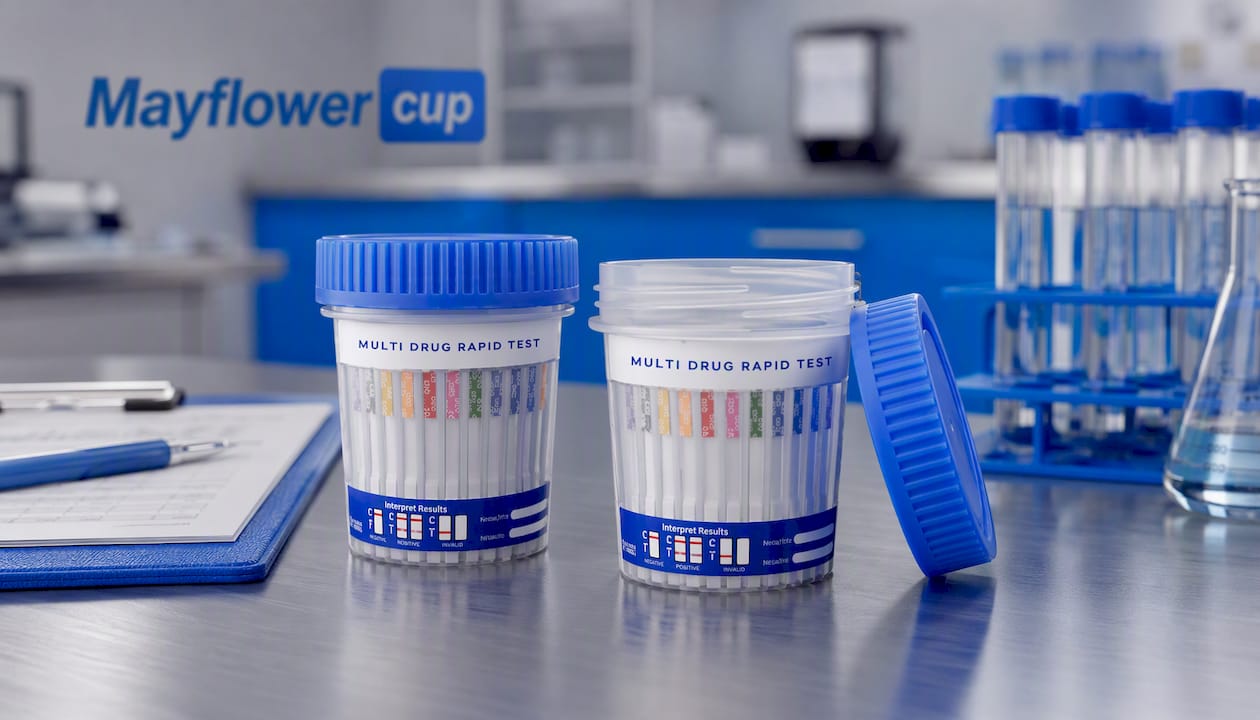
For institutional buyers, Mayflowerbio provides technical documentation, CoA access, and direct support for validation planning. Labs scaling to larger panel sizes can also review the 16-panel cup with FEN to compare analyte coverage against validation burden. Contact Mayflowerbio directly to request bulk-lot pricing, lot continuity commitments, or a technical file for your IRB or study protocol.
Sources
- Recommendations for Use and Fit-for-Purpose Validation of Biomarker Multiplex Ligand Binding Assays in Drug Development
- Drug Detection, Analysis, and Monitoring Workshop Report
- LC-MS/MS-Based Method for the Multiplex Detection of 24 Fentanyl Analogues and Metabolites in Whole Blood at Sub ng mL-1 Concentrations
- Multiplexing immunoassays: Technical considerations for optimal performance – Drug Discovery and Development
FAQ
What is the recommended LOD for fentanyl in a 12-panel blood test?
Target an in-matrix LOD of ≤0.10 ng/mL in whole blood, consistent with ISO 15189-validated LC-MS/MS methods reporting LODs of 0.01–0.10 ng/mL and LOQs of 0.10–0.40 ng/mL across fentanyl analogs.
How reliable is a 12-panel drug test for detecting fentanyl analogs?
Reliability depends on platform and validation. LC-MS/MS panels validated in the target matrix are highly specific; immunoassay-based panels can cross-react with structurally similar analogs, so LC-MS/MS confirmation of positive fentanyl results is standard practice until your lab’s false-positive rate is established.
What isotopically labeled internal standards are needed for fentanyl detection?
Fentanyl-d5 is the minimum requirement for LC-MS/MS quantitation. Labs targeting norfentanyl, acetylfentanyl, or carfentanil should add the corresponding deuterated IS for each analyte to correct for matrix-specific extraction variability.
How long does it take to validate a 12-analyte fentanyl panel?
A full fit-for-purpose validation typically requires 8–12 weeks from kit receipt to study-ready status, including prevalidation, full validation, SOP finalization, and in-study QC ramp. Using vendor prevalidation data as a starting point can compress this to 6–8 weeks.
Does Mayflowerbio supply lot documentation for its 12-panel fentanyl products?
Yes. Mayflowerbio provides lot-specific certificates of analysis and technical documentation for its 12-panel fentanyl cup products, with direct US-based support available for validation planning and bulk-lot inquiries.