12 Panel Drug Test: What Buyers and Employers Need to Know
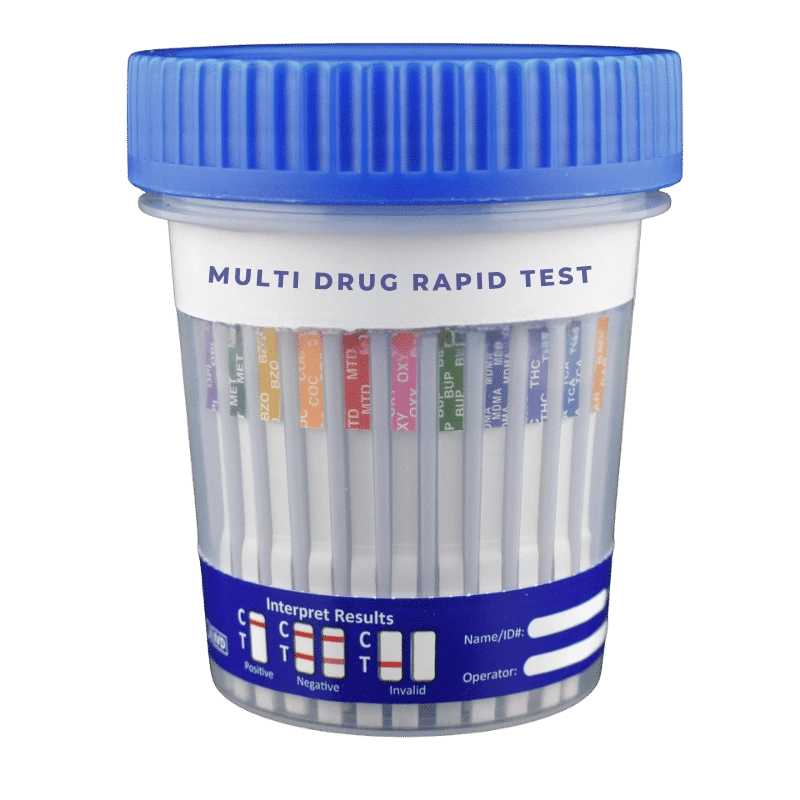
A 12 panel drug test is a single urine screen that checks for 12 different drug classes at once, using antibody-based immunoassay strips built into a collection cup. It’s the standard choice for employers, clinics, and treatment programs that need broad coverage without sending every sample straight to a lab.
Most 12-panel cups screen for:
- Amphetamines and methamphetamines
- THC (marijuana metabolite)
- Cocaine metabolite
- Opiates (morphine/codeine)
- Oxycodone
- Phencyclidine (PCP)
- Benzodiazepines
- Barbiturates
- Methadone
- MDMA (ecstasy)
- Buprenorphine
- A twelfth slot that varies by vendor, often fentanyl or ETG, which is an alcohol metabolite
Workplace pre-employment screening, clinical medication monitoring, and probation or court-ordered testing are the three settings where a 12-panel earns its keep. If you need alcohol or fentanyl coverage specifically, that’s where panel variants and vendor selection actually matter.
Key Takeaways
A 12 panel drug test screens for 12 drug classes at once through immunoassay technology, but every presumptive positive requires GC-MS or LC-MS/MS confirmation before anyone acts on it.
| Point | Details |
|---|---|
| Panels vary by vendor | The 12th analyte slot often varies, commonly including fentanyl, ETG, or buprenorphine depending on the manufacturer. |
| Confirm before acting | Presumptive positives must go through GC-MS or LC-MS/MS confirmation and MRO review before any decision is made. |
| THC has the longest window | Chronic heavy use can stay detectable in urine for several weeks, far longer than most other analytes. |
| Match cutoffs to your use case | DOT and safety-sensitive programs should follow SAMHSA benchmark cutoffs, not just a vendor’s default settings. |
| Mayflowerbio covers three key configurations | ETG/alcohol, fentanyl and alcohol, and CLIA-waived cups address the most common workplace and clinical testing needs. |
Table of Contents
- Which Drugs Does a 12 Panel Drug Test Screen For?
- How Does a 12 Panel Urine Drug Screen Work?
- How Long Do Drugs Stay in Your System?
- Which Sample Type Should You Use for Drug Testing?
- What Causes False Positives on a 12 Panel Drug Test?
- Where Is 12 Panel Testing Used, and What Should You Check?
- What Do 12 Panel Drug Tests Cost, and How Fast Are Results?
- How Should You Prepare for a 12 Panel Urine Collection?
- What Should You Check Before Buying a 12 Panel Test?
- What Regulatory Standards Apply to 12 Panel Cutoffs?
- A Practical Note on Using 12 Panel Screens Responsibly
- Which Mayflowerbio 12 Panel Cup Fits Your Program?
- Sources
- FAQ
Which Drugs Does a 12 Panel Drug Test Screen For?
The “12” in a 12 panel drug test refers to distinct drug classes, not 12 individual drugs. Each class can include several related substances, which is why two vials of “12-panel” cups from different manufacturers can technically screen for different things.
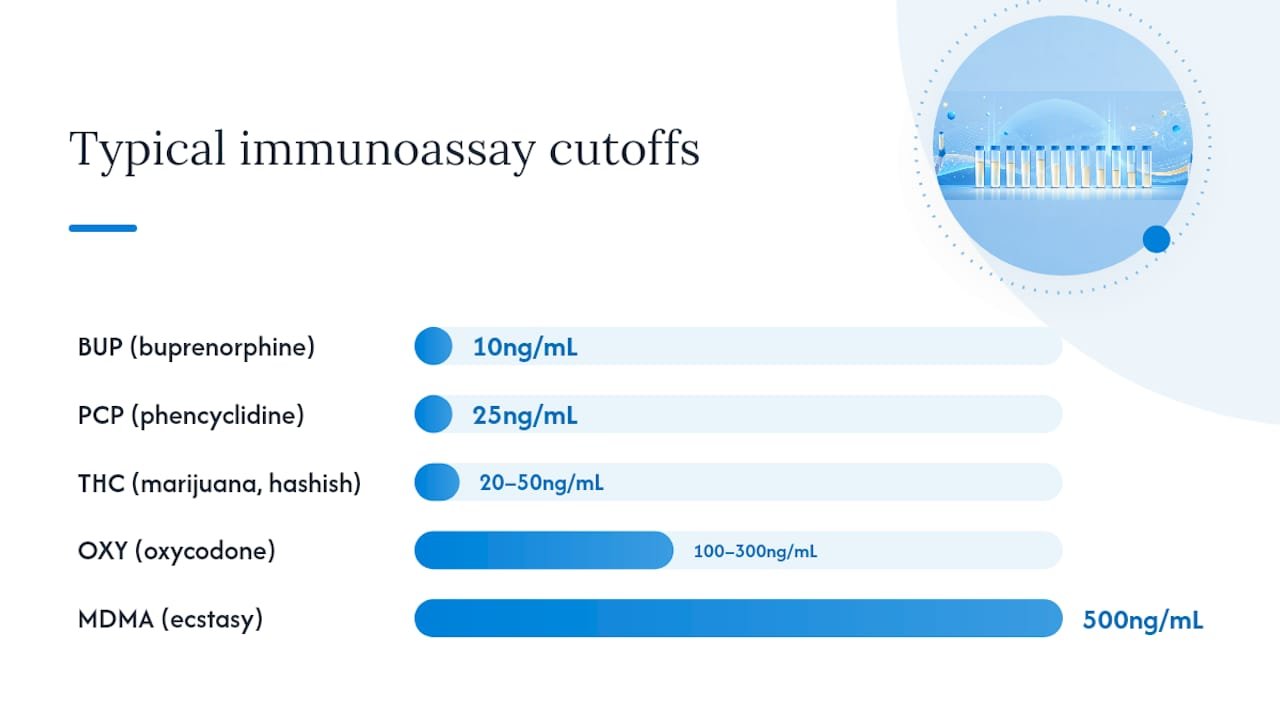
The table below maps the standard analyte codes to common drug examples and the immunoassay cutoff ranges labs typically use. Cutoffs are the concentration threshold, measured in nanograms per milliliter (ng/mL), above which a sample reads as presumptive positive.
| Analyte Code | Common Drug Examples | Typical Cutoff Range (ng/mL) |
|---|---|---|
| AMP | Amphetamine, methamphetamine | 500–1000 |
| THC | Marijuana, hashish | 20–50 |
| COC | Cocaine, crack | 150–300 |
| OPI | Morphine, codeine, heroin | 300–2000 |
| OXY | Oxycodone, oxymorphone | 100–300 |
| PCP | Phencyclidine | 25 |
| BZO | Diazepam, alprazolam, lorazepam | 200–300 |
| BAR | Phenobarbital, secobarbital | 200–300 |
| MTD | Methadone | 300 |
| MDMA | Ecstasy, molly | 500 |
| BUP | Buprenorphine (Suboxone) | 10 |
| ETG or FEN | Ethyl glucuronide (alcohol marker) or fentanyl | 300–500 (ETG); 20–200 (FEN) |
Manufacturer cutoffs can shift by a factor of two or more, which is exactly why the NIDA drug charts are useful as a neutral reference point when comparing vendors.
Panel variants exist because no single 12-slot configuration fits every buyer. A construction company running DOT-regulated testing has different priorities than an addiction treatment clinic monitoring compliance with a Suboxone taper. That’s why some vendors swap in buprenorphine, others prioritize fentanyl, and others build in ETG for alcohol programs. Mayflowerbio’s multi-drug test cup line reflects this by offering configurations built around what the buyer actually needs to catch, rather than a one-size-fits-all panel.
Pro Tip: When you’re reading a product datasheet, check four things before you buy: the exact cutoff for each analyte, whether specimen validity tests (SVTs) are built in, the shelf life and lot expiration date, and whether the manufacturer provides a certificate of analysis (COA) tied to that specific lot number. A datasheet that’s vague on any of these is a red flag.
How Does a 12 Panel Urine Drug Screen Work?
The process runs in a predictable sequence, and understanding each step matters if you ever need to explain a result to an employee or a patient.
- Collection: the donor provides a urine sample directly into the test cup or a separate collection container.
- Immunoassay screening: antibody strips inside the cup react to each targeted drug metabolite within minutes.
- Initial read: lines appear or fail to appear based on whether metabolite concentration exceeds the cutoff.
- Reflex confirmation: any presumptive positive gets sent to a lab for confirmatory testing before anyone acts on it.
Immunoassay technology works by using antibodies that bind to a specific drug metabolite. If enough metabolite is present to saturate the antibody binding sites past the cutoff, the strip shows a positive line. It’s fast and cheap, but it’s also a blunt instrument. Antibodies don’t always distinguish between structurally similar compounds, which is the root cause of most false positives.
That’s why a presumptive positive is never the final word. Confirmatory testing uses gas chromatography-mass spectrometry (GC-MS) or liquid chromatography-tandem mass spectrometry (LC-MS/MS), which identify the exact molecular structure of what’s in the sample rather than a chemical family. A Medical Review Officer (MRO), a licensed physician trained in substance testing interpretation, reviews confirmed results and any legitimate medical explanation before an employer or court ever sees a final verdict.
According to the FDA’s device clearance framework, point-of-care immunoassay cups are cleared as screening devices, not diagnostic confirmatory tools. That distinction is written into how these products are regulated, and it’s why credible vendors never market a cup result as a final diagnosis.
How Long Do Drugs Stay in Your System?
Detection windows vary more than most people expect, and the variance is driven by the drug’s half-life, how it’s metabolized, and how often the person uses it. There’s no single answer that applies across all 12 analytes.
| Drug Class | Typical Urine Detection Window | Key Caveats |
|---|---|---|
| Amphetamines/Meth | 2–4 days | Faster metabolizers clear sooner; alkaline urine speeds elimination |
| THC | 3 days (single use) to 30+ days (chronic use) | Stored in fat tissue; heavy users can test positive for weeks |
| Cocaine | 2–4 days | Metabolite (benzoylecgonine) detectable longer than the drug itself |
| Opiates | 2–4 days | Poppy seed consumption can trigger low-level positives |
| Oxycodone | 2–4 days | Often tested separately from general opiates due to different metabolism |
| PCP | 7–14 days | Can extend past several weeks in chronic, heavy users |
| Benzodiazepines | 3 days (short-acting) to 6+ weeks (long-acting like diazepam) | Half-life differences between drugs in this class are extreme |
| Barbiturates | 2–4 days (short-acting) to 3 weeks (phenobarbital) | Long-acting barbiturates behave more like benzodiazepines |
| Methadone | 3–4 days | Accumulates with daily dosing in maintenance programs |
| MDMA | 2–4 days | Similar clearance to amphetamines |
| Buprenorphine | 3–7 days | Long-acting; used in medication-assisted treatment monitoring |
| Fentanyl | 1–3 days | Short half-life means testing timing matters a great deal |
The NIDA emerging drug trends resource notes that detection ranges shift with individual metabolism, hydration, body composition, and frequency of use, so treat every number above as a range, not a guarantee.
THC is the outlier that trips up most first-time buyers. Because it’s fat-soluble, chronic heavy users can test positive for a month or longer after stopping, while an occasional user clears it in a few days. Long-acting benzodiazepines like diazepam behave similarly, lingering for weeks because of their extended half-life, while short-acting ones like alprazolam clear much faster. Long half-life opioids follow the same pattern: methadone and buprenorphine, both used in medication-assisted treatment, stay detectable longer than short-acting opioids like fentanyl.
Pro Tip: First-morning urine is more concentrated than samples taken later in the day, which improves detection sensitivity for borderline cases. If you’re administering tests in a clinical or treatment setting, scheduling collections earlier in the day reduces the odds of a false negative on a chronic THC user who’s close to clearing the drug.
Which Sample Type Should You Use for Drug Testing?
Urine remains the default matrix for 12-panel testing, but it’s not the only option, and each format trades speed against detection window and legal defensibility.
- Instant urine cups (point-of-care): results in 5 minutes, lowest cost per test, ideal for high-volume screening where speed matters more than forensic-grade documentation.
- Lab-based urine tests: same urine matrix, but processed by a lab with full chain-of-custody documentation, making the results more defensible in legal or DOT-regulated contexts.
- Hair testing: detects use over roughly the past 90 days, but can’t detect very recent use (within the last few days) and costs more per test.
- Oral fluid (saliva): detects very recent use (hours to 1-2 days), harder to adulterate since collection is observed, but has a shorter detection window than urine.
- Blood testing: most invasive, shortest detection window, mostly reserved for post-accident or emergency clinical situations.
CLIA-waived status means the FDA has determined a test is simple enough and low-risk enough for use outside a certified lab setting, including at a workplace or clinic front desk. That’s the practical difference between a device you can administer onsite and one that legally has to go through a certified laboratory.
A CLIA-waived cup makes sense anywhere speed and cost matter more than forensic rigor: routine pre-employment screening, clinical spot checks, or probation check-ins where a confirmed positive will get lab-verified anyway. Mayflowerbio’s CLIA-waived 12-panel cups are built for exactly that use case, with the confirmatory pathway still available when a result needs to hold up to scrutiny.
What Causes False Positives on a 12 Panel Drug Test?
Immunoassay screening trades precision for speed, and that trade-off shows up as cross-reactivity, when an antibody binds to a substance that’s chemically similar to the target drug but isn’t actually it.
The most common false-positive triggers include:
- Pseudoephedrine (common decongestant) cross-reacting with amphetamine antibodies
- Poppy seeds triggering low-level opiate positives
- Certain antidepressants (bupropion, sertraline) occasionally cross-reacting with amphetamine or benzodiazepine panels
- Ibuprofen at high doses, in rare cases, affecting THC or barbiturate readings
- Quinolone antibiotics interfering with opiate immunoassays
False negatives happen too, usually from cutoffs set too high for a low-level user, extremely dilute urine, or a synthetic opioid like fentanyl that a standard panel wasn’t built to catch in the first place. MedlinePlus drug information is a useful resource for understanding why a specific prescription might trigger a cross-reactive result, which is exactly why donors should disclose current medications before testing.
This is the entire reason confirmatory testing exists. GC-MS and LC-MS/MS identify the exact molecule, not just a chemical family, so a poppy-seed-triggered opiate flag gets cleared before it ever reaches an employer’s desk. The MRO’s job is to review that confirmed result against the donor’s disclosed medications and give a final medical determination.
Pro Tip: If you’re contesting a result, ask the lab or MRO three specific questions: what confirmatory method was used (GC-MS or LC-MS/MS), what the confirmed concentration was relative to the cutoff, and whether your disclosed prescriptions were reviewed against known cross-reactivity patterns before the final call was made.
Where Is 12 Panel Testing Used, and What Should You Check?
Employers, clinics, and courts each use 12-panel screening for different reasons, and the compliance requirements shift depending on which bucket you’re in.
The main use cases break down as:
- Pre-employment screening, typically a condition of a job offer
- Reasonable suspicion testing, triggered by observed behavior
- Post-accident testing, standard in safety-sensitive industries
- Clinical medication monitoring, common in pain management and addiction treatment
- Probation or court-ordered testing, tied to legal compliance
For each of these, check the following before you commit to a testing program:
- Whether chain-of-custody documentation is required for legal defensibility
- Whether a confirmatory lab pathway is built into your vendor contract
- Whether DOT or SAMHSA rules apply to your industry (they do for transportation, aviation, and other federally regulated safety-sensitive roles)
Federal workplace testing programs follow cutoff and procedural standards set by SAMHSA, and any organization running DOT-regulated testing has to follow those guidelines specifically, not just a generic vendor’s default settings. Non-DOT employers have more flexibility, but skipping a defined confirmatory pathway is still one of the fastest ways to lose a wrongful termination dispute.
What Do 12 Panel Drug Tests Cost, and How Fast Are Results?
Budget expectations vary widely depending on whether you’re buying basic screening cups or paying for full lab confirmation on every positive.
- Basic retail or bulk-box instant cups: lowest per-unit cost, suited to high-volume, low-stakes screening.
- CLIA-waived cups from established vendors: mid-range pricing, reflecting built-in specimen validity testing and documentation support.
- Lab confirmatory testing: highest per-sample cost, but only triggered on presumptive positives, not every test.
Turnaround time follows the same split. Instant cups read in about 5 minutes onsite. Lab confirmation typically takes 24 to 72 hours, depending on the lab’s volume and whether GC-MS or LC-MS/MS is used.
Pro Tip: Buying in volume usually unlocks per-unit discounts, and vendors who provide dedicated technical support and batch COAs on request save you time when you need to defend a result later. Ask about both before signing a purchase order.
How Should You Prepare for a 12 Panel Urine Collection?
A smooth collection process starts before the donor ever walks into the room, and it prevents most of the invalid-sample headaches that force retests.
For donors, the checklist is short: disclose current prescriptions to the collector or MRO beforehand, avoid drinking excessive water right before the test (it can dilute the sample enough to trigger a retest), bring ID if required, and follow any timing instructions from your program administrator.
For administrators or collection staff, the checklist runs a bit longer:
- Confirm the sample temperature within the required range shortly after collection
- Run specimen validity tests, pH and specific gravity, to rule out dilution or substitution
- Seal and label the specimen immediately with the donor’s information and a chain-of-custody form
- Document the collection time and any observed irregularities
Pro Tip: Scheduling collections for first-morning urine when possible, and keeping a consistent documentation process across every collection, cuts down significantly on retests triggered by dilute or invalid samples.
What Should You Check Before Buying a 12 Panel Test?
Choosing between vendors comes down to a short list of concrete checks, whether you’re a clinic buying a few boxes or a company running an ongoing screening program.
Run through this before you commit to a supplier:
- Confirm which analytes are actually included (ETG, fentanyl, oxycodone, buprenorphine) and whether that matches your program’s needs
- Compare cutoffs against SAMHSA benchmarks rather than trusting marketing claims alone
- Check for built-in specimen validity tests and visible tamper-evidence seals
- Verify CLIA-waived status and ask for the FDA clearance documentation
- Request a certificate of analysis (COA) tied to the specific lot you’re purchasing
- Ask about vendor support: warranty terms, expiration dating, technical support availability, and minimum order quantities
Common buyer questions worth asking any supplier directly: How long is the shelf life from the ship date? Can you provide a lot-specific COA before I order? What’s your process if a batch fails specimen validity testing? Do you offer bulk pricing tiers?
Pro Tip: Never take a vendor’s cutoff claims at face value. Request the datasheet, ask for CLIA and FDA documentation by name, and get a sample lot’s COA before placing a large order. A legitimate vendor will have all three ready within a day.
What Regulatory Standards Apply to 12 Panel Cutoffs?
Cutoff concentrations aren’t arbitrary. SAMHSA sets the benchmark cutoffs used in federally regulated workplace programs, and most private-sector vendors reference those same thresholds even when they’re not legally required to.
Key points to check:
- SAMHSA cutoffs for federally mandated testing programs are published and standardized, but manufacturer cutoffs on commercial cups can run higher or lower.
- CLIA-waived classification, granted through FDA device clearance, means a device is simple and low-risk enough for onsite use without a certified lab.
- Full laboratory confirmation is still required for any result that could lead to termination, legal action, or a safety-sensitive employment decision.
If a result might end up in front of a judge, an arbitrator, or a licensing board, insist on laboratory confirmation with GC-MS or LC-MS/MS every time. An instant cup is a screening tool, not a legal verdict, and treating it as one is how testing programs end up losing disputes they should have won.
A Practical Note on Using 12 Panel Screens Responsibly
The biggest mistake I see in testing programs isn’t a bad cup. It’s treating a presumptive positive as a final answer. A cheap immunoassay strip and a confirmatory lab result are not interchangeable, and any policy that skips the confirmation step is one poppy seed muffin away from a wrongful accusation. Protect donor privacy, document your testing policy in writing before you ever administer a test, and make sure whoever reviews positives understands the difference between “presumptive” and “confirmed.”
Pro Tip: Use instant cups for speed and cost control at the screening stage, but never act on a positive until it’s been confirmed in a lab. That one habit is what separates a defensible testing program from a lawsuit waiting to happen.
Which Mayflowerbio 12 Panel Cup Fits Your Program?
Once you know which analytes your program actually needs, picking the right cup gets a lot simpler. Mayflowerbio carries three configurations built around the situations covered in this guide, not a generic one-size panel.
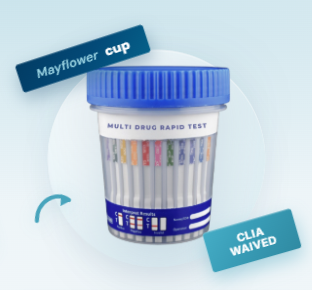
The 12-Panel Drug Test Cup with ETG/Alcohol option fits workplace programs that need alcohol monitoring alongside standard drug classes, a common requirement for safety-sensitive roles and return-to-duty programs. The 12-Panel Cup with Fentanyl & Alcohol targets the gap most older panels miss entirely: fentanyl’s short detection window and low cutoff make it easy to overlook if your vendor hasn’t updated their panel design in a few years. For clinics and workplaces that need onsite results without a certified lab, Mayflowerbio’s CLIA-waived 12-panel cups come with the FDA clearance documentation and specimen validity testing built in, so you’re not stuck defending a device’s legitimacy after the fact.
Every configuration ships with lot-specific COAs on request, and Mayflowerbio supports bulk ordering for clinics and companies running ongoing programs. Browse the multi-drug test cup lineup to compare configurations, or reach out through Mayflowerbio’s product catalog to request a quote and technical documentation for your program.
Sources
Regulatory and scientific claims in this guide draw on a small set of authoritative sources worth bookmarking if you manage a testing program.
- Substance Abuse and Mental Health Services Administration (SAMHSA)
- Device approvals and clearances | FDA
- Research Topics: Emerging Drug Trends | National Institute on Drug Abuse (NIDA)
Consult SAMHSA for cutoff questions and FDA for anything related to device approval or CLIA-waived status.
This article is general information, not a substitute for advice from a qualified doctor. Consult a qualified healthcare professional about your own circumstances before acting on anything here.
FAQ
What Drugs Show Up on a 13 Panel Drug Test?
A 13-panel adds one more analyte class to the standard 12-panel configuration, commonly fentanyl, ETG (alcohol), or another emerging substance, depending on the vendor’s design.
What Drugs Are Tested for in a 12-Panel Cup Drug Test?
A standard 12-panel cup screens for amphetamines, THC, cocaine, opiates, oxycodone, PCP, benzodiazepines, barbiturates, methadone, MDMA, buprenorphine, and a twelfth analyte that varies by manufacturer, often fentanyl or ETG.
How Much Is a 12 Panel Urine Drug Test?
Instant cup pricing runs lowest for basic retail options and moderately higher for CLIA-waived cups with built-in specimen validity testing; lab confirmation adds cost but only applies to presumptive positives, not every sample tested.
Do Poppy Seeds Really Cause a False Positive?
Yes, poppy seeds can trigger a low-level opiate positive on immunoassay screening, which is exactly why confirmatory GC-MS or LC-MS/MS testing exists to rule out dietary causes before any action is taken.
What Does CLIA-Waived Mean for a Drug Test Cup?
CLIA-waived means the FDA has classified the device as simple and low-risk enough to use outside a certified laboratory, making it appropriate for onsite workplace or clinical screening.