14-Panel Drug Test: Choosing the Right Panel for Clinics
A 14-panel drug test screens for the standard 12 substances found on most workplace panels, plus two additions that matter most in 2026: fentanyl and often EtG (ethyl glucuronide, an alcohol marker). Before you buy anything, confirm two things on the spec sheet: the exact analyte list and whether the device carries CLIA-waived or FDA 510(k) status when results will affect a medical record or an employment decision.
That single check separates a compliant point-of-care tool from a device that could get flagged during an audit. Fentanyl and its analogs rarely show up on older 10 or 12-panel configurations, and standard opiate strips often miss it entirely. That gap is exactly why so many clinics and treatment programs have moved to 14-panel builds.
Here’s what to verify before you order:
- Analyte list: confirm AMP, BAR, BUP, BZO, COC, MET/mAMP, MDMA, MOP/OPI, MTD, OXY, PCP, PPX, TCA, THC are named individually, not just “14-panel” as a label.
- Fentanyl and EtG inclusion: these are the two strips that typically justify stepping up from a 12-panel.
- Regulatory status: CLIA waiver and FDA 510(k) clearance if the results inform treatment, employment, or medical records.
- Confirmation pathway: a plan to send non-negative screens to a lab for GC/MS or LC-MS/MS confirmation.
- Lot documentation: a certificate of analysis and traceable lot numbers from the manufacturer.
Key Takeaways
A 14-panel drug test is only as good as its documented analyte list and its regulatory status, and neither should be assumed from the name alone.
| Point | Details |
|---|---|
| Confirm the analyte list | Verify all 14 analytes by name on the spec sheet, including whether fentanyl and EtG are both present. |
| Check regulatory status | Confirm CLIA waiver and FDA 510(k) status before using results in clinical or medical-record contexts. |
| Plan for lab confirmation | Send every non-negative screen for GC/MS or LC-MS/MS confirmation before acting on it. |
| Watch shelf life and QC | Request a certificate of analysis and check expiration dates before bulk ordering. |
| Match configuration to use case | Mayflowerbio offers CLIA-waived 14-panel lines with fentanyl and EtG built in for clinics and treatment programs. |
Table of Contents
- What Is a 14-Panel Drug Test?
- What Does a 14-Panel Drug Test Detect?
- CLIA-Waived vs. Forensic-Use-Only: What’s the Difference?
- How Accurate Are 14-Panel Tests?
- How Do You Choose the Right 14-Panel Configuration?
- Where to Buy 14-Panel Tests and What They Cost
- How Mayflowerbio’s 14-Panel Line Fits Clinical and Point-of-Care Needs
- Why CLIA Waiver and Lab Confirmation Actually Matter
- How Do You Read a 14-Panel Test Result?
- How Should You Store 14-Panel Test Kits?
- What Legal and Privacy Rules Apply to Drug Test Results?
- What Experience Teaches You About Running a Testing Program
- Get 14-Panel Cups Built for Fentanyl and Alcohol Screening
- Sources
- FAQ
What Is a 14-Panel Drug Test?
A 14-panel drug test is a multi-drug urine screen that expands a 10 or 12-panel configuration by adding two or more analytes, usually to catch synthetic opioids or alcohol use that older panels weren’t built to detect. The core logic hasn’t changed much since 12-panel cups became standard: more strips mean broader coverage, but only if the added analytes match what your population is actually at risk for.
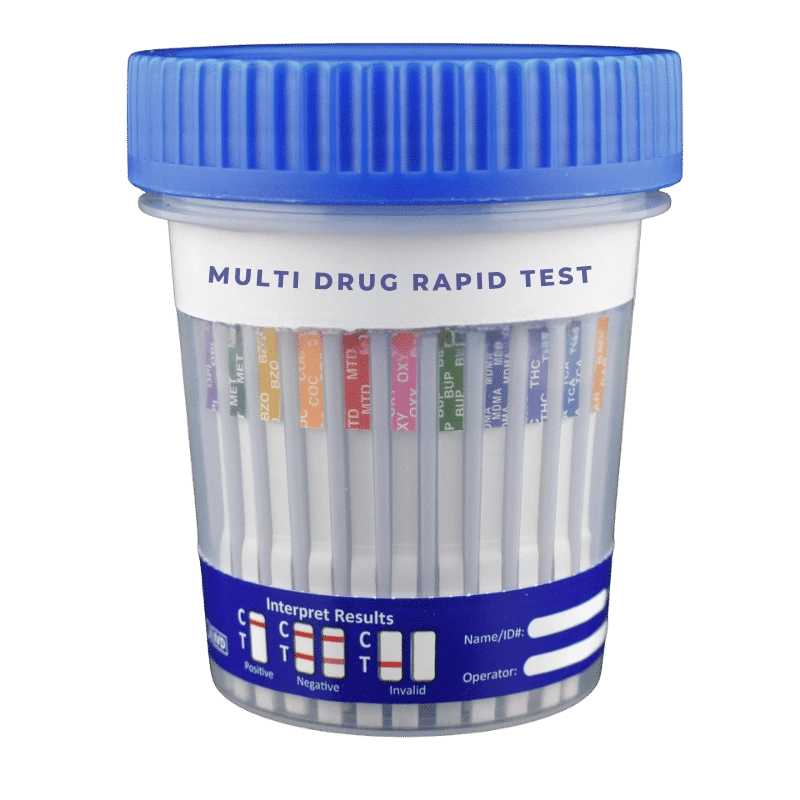
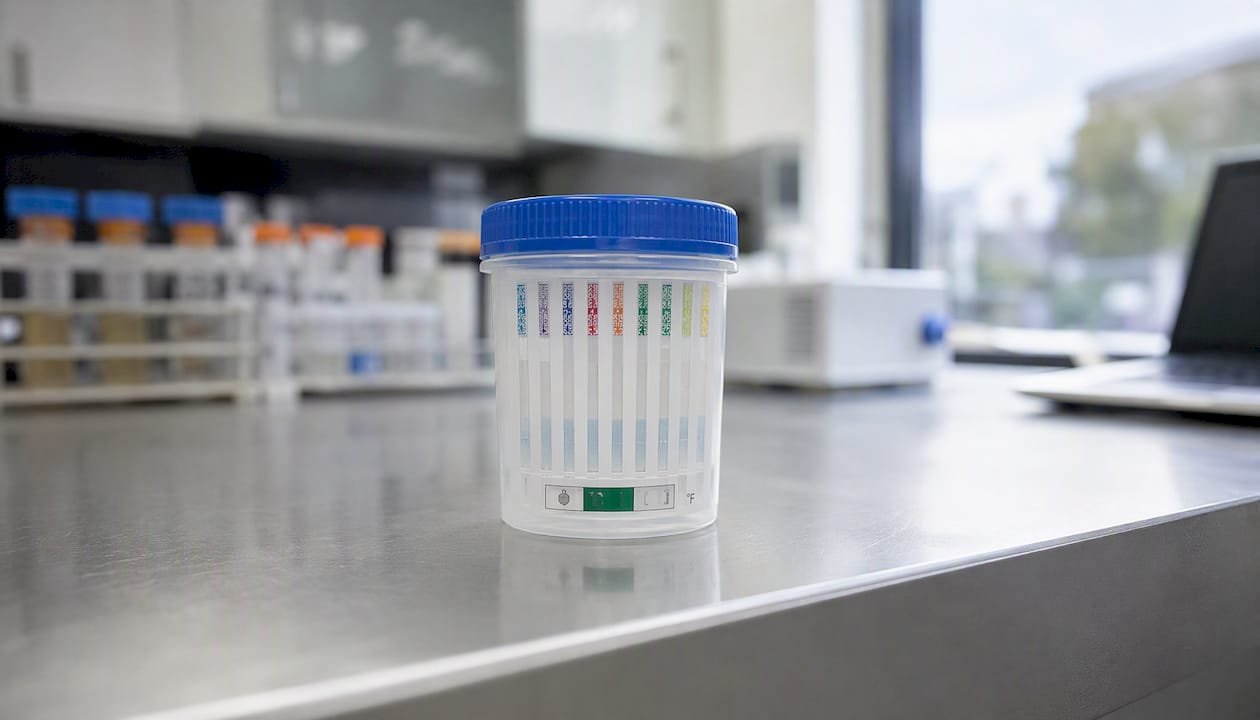
Most 14-panel tests ship as instant urine cups with a built-in temperature strip and integrated cup design, which means no separate collection container. You’ll also find at-home versions sold to consumers, lab-collected urine samples processed at a certified facility, and, less commonly, oral-fluid panels for observed collection settings. Each format trades off speed, cost, and legal defensibility differently, and the right pick depends heavily on what happens after a positive result.
Clinical monitoring programs, addiction treatment centers, and high-risk workplace screening make up the bulk of 14-panel use. A treatment program tracking a patient’s recovery needs frequent, low-cost screening with fast turnaround. A construction company running post-incident testing under a non-DOT policy needs something similar but with tighter chain-of-custody documentation. DOT-regulated employers are a different story entirely: federal transportation testing rules under 49 CFR Part 40 require laboratory-based protocols, not instant multi-panel cups, so a 14-panel cup has no role in a DOT-regulated collection.
What Does a 14-Panel Drug Test Detect?
The 14 analytes vary slightly by manufacturer, but a typical build screens for these substances. Exact cutoff concentrations differ across vendors, so always cross-check the number printed on the product’s package insert against what’s listed here.
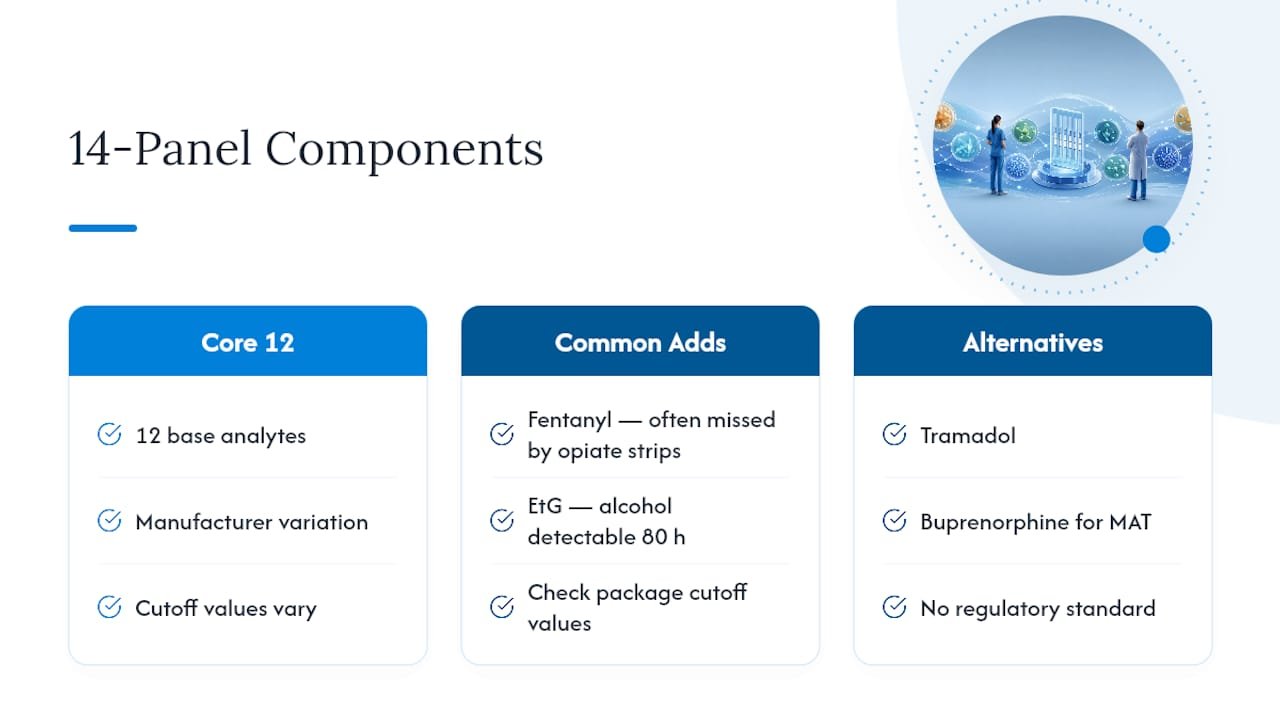
That table shows the twelve analytes present on nearly every configuration marketed as a 12-panel, with fentanyl and EtG as the two most frequent additions that push it to 14. But that’s not universal. Some manufacturers substitute tramadol, a synthetic opioid painkiller, in place of EtG. Others build a 14-panel around buprenorphine monitoring for medication-assisted treatment programs instead of alcohol detection. Configuration differences between 12, 14, and 18-panel builds come down entirely to which two or more strips get added to the base panel, and there’s no regulatory body standardizing which combination earns the “14-panel” label.
Fentanyl and EtG earn their spot for a practical reason. Fentanyl is potent enough that overdose risk climbs fast, and older opiate strips calibrated for morphine or codeine frequently miss it because the antibody used in the strip doesn’t cross-react well with fentanyl’s molecular structure. EtG matters for a different reason: it’s one of the few markers that can detect alcohol use up to 80 hours after consumption, far longer than a breathalyzer, which makes it valuable for abstinence monitoring in treatment settings.
Pro Tip: Never assume “14-panel” means the same thing across two different suppliers. Pull up the actual spec sheet or package insert and match analyte codes and cutoff values line by line before you place an order.
CLIA-Waived vs. Forensic-Use-Only: What’s the Difference?
The chemistry inside a CLIA-waived cup and a forensic-use-only cup is often identical. What separates them is regulatory labeling and where you’re legally allowed to use the result. CLIA-waived and forensic-use-only devices commonly share the same lateral-flow immunoassay technology, but only a CLIA-waived device is cleared for use in clinical decision-making, meaning the result can legitimately go into a patient’s chart or guide a treatment adjustment.
Device types break down roughly like this:
- Instant urine cups: integrated collection and testing in one unit, results in 5 to 10 minutes.
- Dip cards: separate collection cup plus a testing strip, slightly more manual handling.
- Lab-based immunoassays: higher-throughput screening run on automated analyzers at a certified laboratory.
- Lab confirmatory testing: GC/MS or LC-MS/MS analysis that identifies and quantifies specific compounds.
To earn a CLIA waiver, a manufacturer has to demonstrate the device carries a negligible risk of producing an erroneous result under its intended use conditions. That’s a meaningfully different bar than FDA 510(k) clearance, which evaluates device design and manufacturing consistency rather than point-of-care ease-of-use. A device can hold both certifications, one, or neither, and buyers frequently conflate the two.
Roughly 45 states currently require a CLIA Certificate of Waiver before a clinic or workplace program can legally run point-of-care testing that informs patient care, which makes the waiver a compliance checkpoint, not just a marketing badge. Forensic-use-only labeling exists for a reason too: it signals the device is intended for non-clinical contexts like pre-employment screening or corrections, where the chain-of-custody process, not the point-of-care result, carries the legal weight.
How Accurate Are 14-Panel Tests?
Instant 14-panel cups are screening tools, not final verdicts. Many vendors report screening accuracy rates approaching 99% for initial results, but that figure describes how reliably the cup detects the presence of a drug class above its cutoff concentration, not whether the specific substance identified is correct. A qualitative screen tells you “positive” or “negative.” A quantitative lab confirmation tells you exactly which compound was present and at what concentration.
SAMHSA’s federal cutoff guidance sets the benchmark most manufacturers calibrate against, but cutoffs vary by analyte and by vendor. A cutoff that’s too low increases false positives from cross-reactivity; too high and you’ll miss legitimate low-level use.
Cross-reactivity is the most common source of confusing results. A few patterns worth knowing:
- Certain cold medications containing pseudoephedrine can trigger a false positive on amphetamine strips.
- Poppy seed consumption has historically triggered false positives on opiate strips, though modern cutoffs have reduced this.
- Some opiate strips genuinely do not detect fentanyl because the antibody doesn’t recognize its structure, which is exactly why a dedicated fentanyl strip matters.
- Certain antibiotics and antidepressants have been linked to false positives on benzodiazepine and TCA strips.
Pro Tip: Treat every non-negative instant screen as provisional. Send it to a certified lab for confirmatory testing by GC/MS or LC-MS/MS before you act on it in a way that affects someone’s job, treatment plan, or legal standing. A confirmed result holds up; an unconfirmed screen does not.
How Do You Choose the Right 14-Panel Configuration?
Picking a panel isn’t about maximizing strip count. A configuration should match the actual substance risk profile of the population you’re testing, since adding strips that aren’t relevant to your setting mostly adds cost and cross-reactivity risk without giving you useful information.
Work through this checklist before comparing vendors:
- Define the purpose. Clinical monitoring, addiction treatment compliance, pre-employment screening, and post-incident testing all call for different device types and documentation standards.
- Identify your highest-risk analytes. A treatment program managing opioid use disorder patients needs fentanyl and buprenorphine coverage. A workplace safety program in a state with high DUI rates may prioritize EtG.
- Confirm regulatory requirements. DOT-regulated positions require laboratory protocols under 49 CFR Part 40, full stop. Non-DOT workplace and clinical programs have more flexibility but still need CLIA waivers if results touch medical decisions.
- Set a realistic budget. Bulk CLIA-waived cups cost less per test than retail kits, but only if your volume justifies a case purchase.
- Choose your confirmatory workflow up front. Know which lab you’ll send non-negative results to before you need it, not after.
Watch for these red flags when evaluating a supplier: no clearly published analyte list, vague or missing claims about CLIA/FDA status when your use case requires it, and no certificate of analysis available on request. A legitimate manufacturer should be able to hand you lot-specific QC documentation without hesitation.
Where to Buy 14-Panel Tests and What They Cost
Three channels dominate the market, and each fits a different buyer.
Retail and at-home kits, the kind sold through general marketplace listings and pharmacy retailers like Walgreens’ at-home multi-panel offerings, target individual consumers who want a quick answer without lab involvement. These run higher per-unit cost but require no minimum order and no clinical setup.
CLIA-waived point-of-care cups, sold in bulk to clinics, treatment centers, and employers, are the workhorse of most professional programs. Buying by the case brings the per-test cost down substantially compared to retail singles, though exact pricing depends heavily on order volume and whether the configuration includes fentanyl and EtG.
Laboratory urine panels, the kind processed through a certified lab reference service, cost more per test and take longer, typically one to three business days, but produce legally defensible, quantitative results suitable for employment terminations or clinical documentation disputes.
A few practical notes on cost and logistics:
- Bulk CLIA-waived cups purchased by the case generally run cheaper per test than retail single-unit kits.
- Shelf life on most instant cups runs 18 to 24 months from manufacture; check the expiration date before bulk ordering.
- Minimum order quantities are common for bulk cup purchases; ask about case pricing breaks before committing.
- Confirm whether the supplier offers technical support for interpreting borderline or invalid results, not just a warranty on defective units.
Case-quantity CLIA-waived cups tend to run in the low single digits per test, while individual retail kits and full laboratory confirmation cost meaningfully more per sample. Exact numbers shift with order size and configuration, so treat any published price as a starting point for a quote rather than a fixed rate.
How Mayflowerbio’s 14-Panel Line Fits Clinical and Point-of-Care Needs
Mayflowerbio’s 14-panel product lines are built around the two decisions that matter most in this buying process: which analytes you need and what regulatory status you require. That means configurations with fentanyl and EtG built in, not bolted on as an afterthought, and CLIA-waived availability for programs where results need to enter a patient record or guide a treatment decision.
Here’s how the lineup maps to common use cases:
- Addiction treatment programs monitoring abstinence benefit from configurations that combine buprenorphine tracking with EtG for alcohol detection, giving a fuller picture of compliance in medication-assisted treatment.
- Clinics and outpatient practices that need point-of-care results for same-visit decisions should prioritize the CLIA-waived line, which supports documentation directly in a patient chart.
- Workplace safety programs, particularly in industries with elevated overdose exposure risk, get the most value from configurations that include fentanyl as a standard strip rather than an optional add-on.
Every batch ships with lot-specific certificate of analysis documentation, so quality control isn’t something you have to chase down after the fact. Mayflowerbio’s support team is available to walk through configuration questions before you order, which matters more than it sounds when you’re trying to match a spec sheet to a real-world testing population.
Why CLIA Waiver and Lab Confirmation Actually Matter
Immunoassay screening and mass-spectrometry confirmation solve different problems, and understanding that difference is the core of using these tests responsibly. A lateral-flow immunoassay strip works by detecting whether a drug class binds to an antibody above a set concentration. It’s fast and cheap, but antibodies aren’t perfectly selective. That’s the entire mechanism behind cross-reactivity: a molecule structurally similar to the target drug can trigger a positive without the actual target substance being present.
GC/MS and LC-MS/MS confirmation eliminates that ambiguity by physically separating and identifying compounds based on mass and chemical structure. There’s no antibody involved, so structural lookalikes don’t confuse the result. That’s why confirmatory testing is the standard for any result that will inform an employment decision, a legal proceeding, or a documented treatment change.
The CLIA waiver process exists to bridge the gap between lab-grade accuracy and point-of-care practicality. A device only earns the waiver after demonstrating it can be operated correctly by staff without specialized laboratory training, with a negligible chance of producing an erroneous result under normal use. In practice, that translates to specific consequences for your program: staff need documented training on the device’s instructions for use, results need to be logged with lot numbers and expiration dates, and any borderline or invalid result needs a documented follow-up protocol rather than a guess.
How Do You Read a 14-Panel Test Result?
Reading an instant cup correctly takes about a minute, but skipping steps is where most interpretation errors happen. Follow this sequence every time:
- Check the specimen validity strip first. Confirm the sample falls within the accepted temperature range, typically read within four minutes of collection, and check for any built-in adulterant indicators.
- Wait the full development time. Most cups need 5 to 10 minutes before results stabilize; reading too early can produce a false negative appearance.
- Read the control line. If the control line doesn’t appear, the test is invalid regardless of what the drug lines show, and it needs to be repeated with a new device.
- Interpret each drug line individually. A line present means negative for that analyte; no line means presumptive positive; a faint line near the cutoff should be treated as non-negative.
- Quarantine any non-negative specimen. Don’t discard it. Preserve it for lab confirmation.
- Initiate chain-of-custody documentation if the result will inform an employment or legal decision, logging who handled the sample and when.
- Send to a certified laboratory for GC/MS or LC-MS/MS confirmation before treating the result as final.
- Consult a Medical Review Officer for workplace cases, since an MRO can identify legitimate prescription explanations before a result becomes actionable.
When telling a subject about an unexpected positive, keep the language neutral and procedural: explain that the screening result is presumptive, that a confirmatory lab test is being sent, and that no final decision will be made until that result returns. Avoid characterizing the result as definitive at this stage.
How Should You Store 14-Panel Test Kits?
Unopened cups need to stay within the temperature range printed on the package insert, typically between 39°F and 86°F (4°C to 30°C), away from direct sunlight and humidity. Storing kits in a hot vehicle or a damp storage room can degrade the antibody strips inside, leading to invalid or unreliable results well before the printed expiration date.
Rotate stock using a first-in, first-out system so older lots get used before newer ones. Check expiration dates at the time of bulk delivery, not just before use, since a supplier’s inventory can occasionally include older stock. Once a cup is opened for collection, use it immediately. These devices are single-use and are not designed to sit partially used or be resealed.
After collection, if a specimen needs to be preserved for lab confirmation, it should be refrigerated and sealed with proper chain-of-custody labeling. Room-temperature storage of a urine specimen for more than 24 hours risks bacterial degradation, which can alter results before the sample reaches the lab.
What Legal and Privacy Rules Apply to Drug Test Results?
Drug test results carry real legal weight depending on the setting, and treating every result the same way regardless of context is a common and costly mistake. Employment-related results generally fall under a patchwork of state laws governing workplace drug testing, and some states impose specific requirements around notice, confirmation testing, and an employee’s right to explain a positive result before adverse action is taken.
Clinical results that enter a patient’s medical record fall under HIPAA privacy protections, which restrict who can access that information and require specific safeguards for storage and transmission. A treatment program using 14-panel screens as part of ongoing care needs to handle those records with the same confidentiality standards applied to any other protected health information.
This article provides general information and not legal advice. Programs handling employment or clinical drug testing results should confirm current federal and state requirements with legal counsel or a compliance professional before finalizing policy, since rules vary by jurisdiction and by whether the program is DOT-regulated.
What Experience Teaches You About Running a Testing Program
Most of the mistakes programs make with 14-panel testing aren’t about picking the wrong analytes. They’re operational. A clinic can have the perfect configuration and still get unreliable results because staff weren’t trained on specimen validity checks, or because a box of cups sat in a hot supply closet for six months before anyone opened it.
Lot rotation deserves more attention than it usually gets. Treat every incoming shipment like perishable inventory: log the lot number and expiration date immediately, and physically place new stock behind older stock on the shelf. Temperature-controlled storage isn’t optional if your storage room fluctuates seasonally. A cheap thermometer in the supply closet costs less than one bad batch of degraded test strips.
Staff training on specimen integrity matters more than most programs budget for it. The four-minute temperature read window is the single most-skipped step, and skipping it is exactly how a substituted or diluted specimen slips through undetected. Build it into a checklist, not just a verbal instruction during onboarding.
One rule of thumb worth pinning to the wall: if a result surprises you, don’t trust it, confirm it. An unexpected positive on a normally clean population, or an unexpected negative on someone with a known history, is more often a specimen integrity issue or a cross-reactivity quirk than a definitive answer. Confirmation testing exists precisely for those moments. Vendor technical support is also worth using proactively. A five-minute call to ask a supplier about an unusual result pattern beats guessing, especially when that guess could affect someone’s job or treatment plan.
Get 14-Panel Cups Built for Fentanyl and Alcohol Screening
If you’ve made it this far, you already know the two questions that matter: does the panel cover fentanyl and EtG, and does it carry the regulatory status your program needs. Mayflowerbio’s 14-panel lines are built around exactly that pairing, with CLIA-waived options available for clinics and treatment programs that need point-of-care results tied directly to patient care decisions.
Every configuration ships with lot-specific certificate of analysis documentation, so you’re not left guessing about quality control when a shipment arrives. Beyond drug screening, Mayflowerbio’s broader molecular biology and PCR reagent catalog supports labs running confirmatory or research-adjacent work alongside point-of-care screening. If you’re ready to match a configuration to your program’s risk profile, start by reviewing Mayflowerbio’s product offerings and requesting a quote based on your expected order volume.
Sources
- CDC MMWR — Drug overdose surveillance and related topics
- SAMHSA — Substance Abuse and Mental Health Services Administration
- U.S. Department of Transportation — official site
Always cross-check product-specific cutoffs and certifications against the manufacturer’s own package insert rather than relying solely on general guidance.
This article is general information, not a substitute for advice from a qualified doctor. Consult a qualified healthcare professional about your own circumstances before acting on anything here.
FAQ
What drugs does a LabCorp 14-panel test check for?
Lab-based 14-panel testing typically screens for the same core analytes as instant cups, including amphetamines, opiates, cocaine, THC, and benzodiazepines, with fentanyl or EtG frequently added depending on the ordering provider’s protocol. Exact configurations vary by the specific test code ordered, so confirm the analyte list with the ordering physician or lab.
How accurate is an at-home 14-panel drug test?
At-home instant cups can reach screening accuracy near 99% for initial results under proper use conditions, but that figure reflects preliminary screening, not confirmed identification. Any non-negative result should be sent to a laboratory for GC/MS or LC-MS/MS confirmation before it’s treated as definitive.
Does a 14-panel test always include fentanyl?
No. Fentanyl inclusion varies by manufacturer, since there’s no standardized definition of what a “14-panel” must contain. Always check the specific analyte list on the product’s spec sheet rather than assuming fentanyl coverage from the panel count alone.
What’s the difference between a CLIA-waived and forensic-use-only test?
Both often use the same underlying test technology, but a CLIA-waived device is cleared for clinical decision-making and can inform a patient’s medical record, while a forensic-use-only device is intended for non-clinical purposes like employment screening. Using the wrong label for your setting can create compliance problems.
Can a 14-panel cup be used for DOT-regulated testing?
No. DOT-regulated testing requires laboratory-based protocols under 49 CFR Part 40, not instant multi-panel cups. Non-DOT workplace programs have more flexibility to use CLIA-waived point-of-care devices.
Where can clinics buy CLIA-waived 14-panel cups in bulk?
Clinics and treatment programs typically buy CLIA-waived cups directly from manufacturers or specialized suppliers in case quantities to reduce per-test cost. Mayflowerbio offers 14-panel configurations with fentanyl and EtG options built for exactly this kind of point-of-care use.