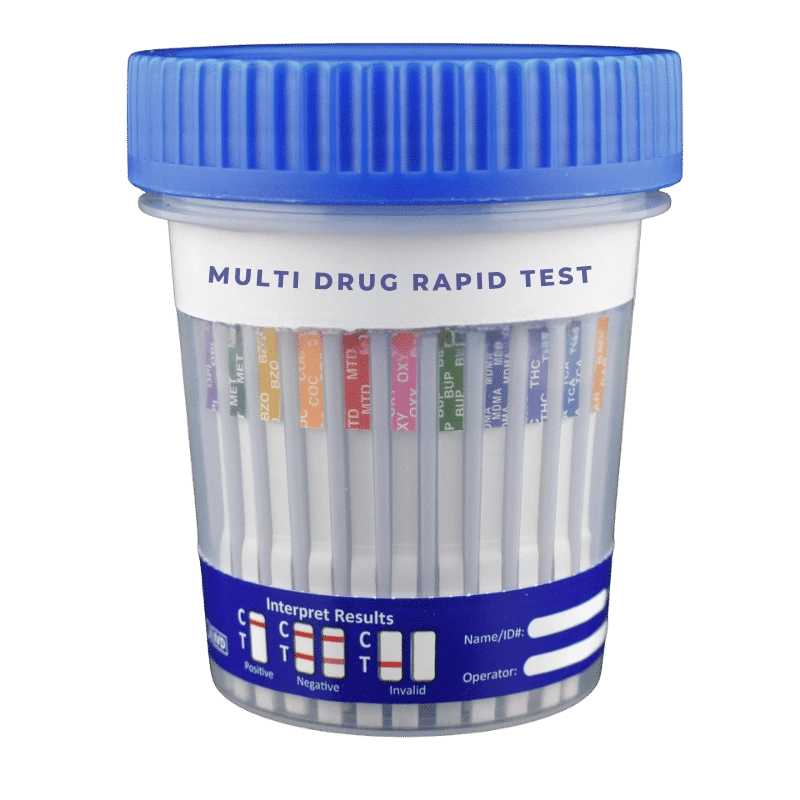
14 Panel Drug Test: Best Cups, Kits, and Lab Options
For point-of-care and compliance-driven programs, the Mayflower Bioscience 14-panel drug test cup is the recommended CLIA-waived option — it covers fentanyl and ETG in a single tamper-evident cup, with full IFU and lot traceability. If you need a quick at-home screen without clinical requirements, Prime Screen 14 Panel is a widely available retail choice. For legally defensible confirmation, LabCorp’s 14-panel lab service using GC-MS/LC-MS/MS is the standard.
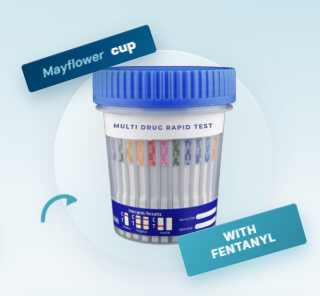
- Best CLIA-waived POC cup: Mayflower Bioscience 14-panel cup (fentanyl + ETG variant) — CLIA-waived, tamper-evident, IFU included, technical support available
- Best retail at-home kit: Prime Screen 14 Panel Urine Drug Test — low cost, available on Amazon, no clinical compliance requirement
- Best lab confirmation: LabCorp 14-panel — definitive mass spectrometry results, standardized chain-of-custody, legally defensible
SAMHSA requires confirmatory testing before any presumptive positive is used in an employment or legal decision. CDC surveillance consistently identifies illicitly manufactured fentanyl as a primary driver of U.S. overdose deaths, which is why fentanyl detection has become a near-essential feature in any 14-panel configuration for higher-risk programs.
Key Takeaways
A 14-panel drug test is only as useful as its analyte list: verify fentanyl and ETG inclusion, CLIA-waived status, and the confirmatory pathway before ordering.
| Point | Details |
|---|---|
| Fentanyl strip is not automatic | A “14 panel” label does not guarantee a fentanyl strip; confirm it explicitly in the product IFU. |
| Screening requires confirmation | Presumptive positives from rapid cups must be confirmed by GC-MS/LC-MS/MS before any adverse action. |
| Matrix determines detection window | Urine detects recent use (days); hair extends to approximately 90 days; oral fluid covers hours to 1–2 days. |
| CLIA-waived status matters for clinical use | Only CLIA-waived devices are appropriate for point-of-care clinical and occupational health decisions. |
| Mayflowerbio’s recommended pick | The Mayflower Bioscience 14-panel cup with fentanyl + ETG is the recommended CLIA-waived option for compliance-driven programs. |
Table of Contents
- How do the top 14 panel drug test options compare?
- How do you choose the right 14-panel test for your situation?
- What analytes does a 14-panel test actually include?
- How accurate is a 14-panel drug test, and what are its limits?
- Urine vs hair vs oral fluid vs blood: which matrix should you use?
- What does expert guidance say about smarter panel selection?
- Where can you buy a 14-panel test, and what compliance rules apply?
- A note on using 14-panel cups responsibly
- Mayflowerbio’s 14-panel cup: the recommended pick for compliance programs
- Sources
- FAQ
How do the top 14 panel drug test options compare?
The table below covers the six most commonly purchased options across three categories: CLIA-waived point-of-care cups, retail at-home kits, and lab confirmation services.
Reading the panel contents column: “Standard 14-analyte panel” means the product lists 14 strips, but the specific analytes vary by manufacturer. The two most clinically significant additions beyond a 12-panel are fentanyl and either ETG (ethyl glucuronide, for alcohol) or tramadol. Some cups substitute tramadol for ETG, or omit fentanyl entirely. Always read the strip list on the product IFU before ordering, not just the panel count on the box.
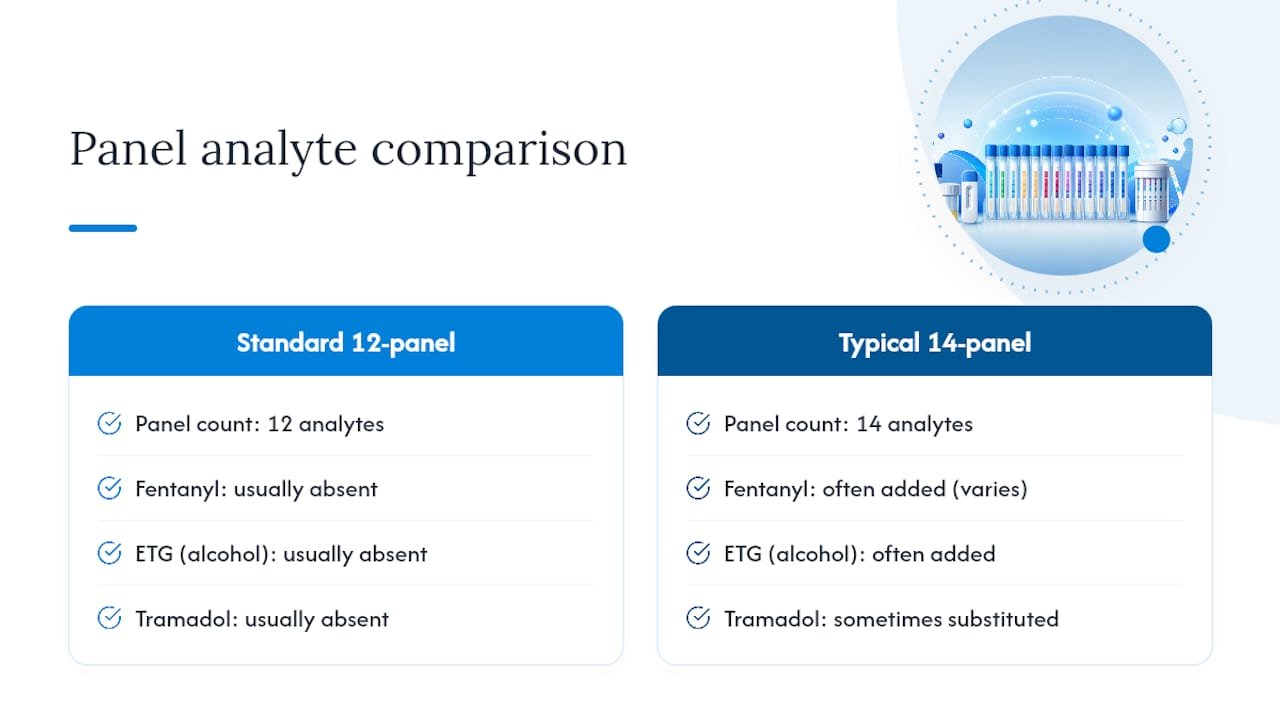
According to American Screening Corp’s panel breakdown, a 14-panel typically adds fentanyl plus one additional analyte (often ETG or tramadol) to a standard 12-panel configuration. Exact strip lists vary by manufacturer, and buyers should verify before purchase.
Pro Tip: Request the product’s IFU (instructions for use) PDF from the supplier or manufacturer before placing a bulk order. The IFU lists every analyte, its cutoff concentration in ng/mL, and the lot traceability information. If a supplier cannot provide the IFU, that is a red flag.
How do you choose the right 14-panel test for your situation?
The panel count alone tells you almost nothing useful. What matters is whether the specific analytes match your population’s risk profile, whether the device meets your regulatory requirements, and whether you have a confirmatory pathway for positive results.
Start with your primary goal
- Workplace safety / pre-employment: You likely need a CLIA-waived cup for point-of-care screening, plus a confirmatory lab pathway (LabCorp or equivalent) for any positive before adverse action. SAMHSA standards require confirmation before employment decisions.
- Treatment program monitoring: CLIA-waived cups with fentanyl and ETG strips are the most clinically useful configuration. Frequent random testing with a cup that catches alcohol and synthetic opioids covers the highest-risk substances in most U.S. treatment settings.
- Home / personal use: A retail at-home kit (Prime Screen, Walgreens) works for informal screening. These are not CLIA-waived and should not be used to make clinical or legal decisions.
- Court-ordered or legal proceedings: Lab confirmation only. A rapid cup result is not legally defensible on its own.
Questions to ask before buying
- Is the device explicitly labeled CLIA-waived? (Check the product label and IFU, not just the listing description.)
- Does the strip list explicitly include fentanyl? (A generic “opiates” strip does not detect fentanyl.)
- Is ETG included if alcohol detection matters for your program?
- What are the cutoff concentrations for each analyte? (SAMHSA commonly used cutoffs are a useful benchmark.)
- Does the supplier provide lot traceability and expiration date information?
- What is the confirmatory pathway if a result is positive?
Red flags to avoid
- Analyte lists described only as “14 drugs” with no specific names
- No IFU available from the supplier
- Missing tamper-evident cup design for clinical use
- Price-per-test that seems unusually low without a clear confirmatory pathway offered
Pricing and turnaround at a glance
Retail at-home cups (Prime Screen, Walgreens) typically run in the range of a few dollars per test at consumer quantities. CLIA-waived professional cups from Mayflowerbio or MedicalDisposables are priced for bulk clinical purchasing. LabCorp lab confirmation carries a higher per-test cost and a 24–72 hour turnaround, which is appropriate for confirmatory use rather than routine screening. For drug test cups in bulk clinical quantities, contact the manufacturer directly for volume pricing.
Pro Tip: For programs that need both speed and legal defensibility, the standard workflow is: CLIA-waived cup for rapid triage, then send a split specimen to a lab for GC-MS/LC-MS/MS confirmation on any presumptive positive. This two-step approach keeps costs down while protecting the program.
What analytes does a 14-panel test actually include?
A 14-panel urine drug test typically screens for the following core analytes:
- THC (marijuana/cannabis)
- COC (cocaine/benzoylecgonine)
- AMP (amphetamines)
- mAMP (methamphetamine)
- OPI (opiates: morphine, codeine, heroin metabolites)
- OXY (oxycodone)
- BZO (benzodiazepines)
- BAR (barbiturates)
- MTD (methadone)
- MDMA (ecstasy)
- PCP (phencyclidine; see what PCP looks like on a drug test)
- BUP (buprenorphine) or TCA (tricyclic antidepressants)
- Fentanyl (FEN)
- ETG (ethyl glucuronide, an alcohol metabolite) or Tramadol (TRA)
The last two slots are where manufacturers diverge most. Some configure the 14th strip as tramadol; others use ETG. A cup labeled “14 panel” without specifying which analytes fill those last two positions could be missing fentanyl entirely, which matters enormously in high-risk settings.
The distinction between a 12-panel and a 14-panel comes down to those two additions. A standard 12-panel covers the first 12 analytes above. The 14-panel adds fentanyl (a critical gap in the 12-panel, since standard OPI strips do not detect synthetic opioids) and one more specialty analyte. If your program serves a population with opioid risk, a cup without a dedicated fentanyl strip is not a complete screen.
Panel configuration also varies by clinical context. Some programs substitute buprenorphine for TCA, or add tramadol for pain management monitoring. The right configuration depends on your population, not on what happens to be the default SKU from a given supplier. Laboratories should review and optimize panels based on local drug use patterns, as research at two academic medical centers demonstrated: shifting limited-value analytes out in favor of fentanyl and oxycodone increased clinical utility and reduced unnecessary add-on orders.
How accurate is a 14-panel drug test, and what are its limits?
A rapid immunoassay cup is a screening tool, not a diagnostic conclusion. It is fast, inexpensive, and useful for triage. It is not specific enough to stand alone as proof of drug use in clinical, employment, or legal contexts.
False positives: more common than most buyers expect
Immunoassay strips work by detecting drug classes, not individual molecules. Cross-reactive substances can trigger a positive result even when the target drug is absent:
- Opiates strip: poppy seed consumption can produce a positive; certain cough medications containing codeine will also flag
- Amphetamines strip: some decongestants (pseudoephedrine), certain antidepressants (bupropion), and ADHD medications can cross-react
- Benzodiazepines strip: some muscle relaxants and sleep aids have been reported to cross-react
- PCP strip: dextromethorphan (found in many OTC cough syrups) is a known cross-reactant
A positive on a rapid cup is a presumptive positive. SAMHSA is explicit: confirmatory testing by GC-MS or LC-MS/MS is required before any adverse action based on a drug test result.
False negatives: the fentanyl problem
Standard OPI (opiate) strips are calibrated for morphine. Fentanyl is a synthetic opioid with a completely different molecular structure — it will not trigger a standard opiate strip. A 14-panel cup without a dedicated fentanyl strip will return a negative result for fentanyl use. This is not a malfunction; it is a design limitation of the opiate immunoassay. The only fix is a cup that explicitly includes a fentanyl-specific strip.
Specimen validity and collection
Adulterated or diluted specimens are a real problem in supervised and unsupervised collection settings. Reliable cups include:
- Temperature strip (valid urine: 90–100°F within 4 minutes of collection)
- Creatinine and specific gravity checks (built into some cups or available as add-on strips)
- Tamper-evident seal on the cup lid
Clinical guidance from StatPearls/NCBI recommends using immunoassay screening for rapid triage and confirming positives with definitive methods. For programs where results carry consequences, a confirmatory lab workflow using GC-MS/LC-MS/MS is the standard of care.
Screening identifies; confirmation proves. A rapid cup result is the starting point of a testing workflow, not the endpoint.
Laboratory reviews note real trade-offs between smaller drug-class-specific confirmation panels and larger all-inclusive panels: smaller panels cost less in reagents but may require repeated preparation when multiple classes are positive; larger panels reduce repeat prep but increase reagent costs and review time. The right choice depends on your volume and the range of analytes you typically confirm.
Urine vs hair vs oral fluid vs blood: which matrix should you use?
The matrix determines what you can detect and how far back you can see. Panel count is irrelevant if the matrix does not match the clinical question.
- Urine: Most common for routine screening. Detection windows are typically 1–3 days for most drugs at standard use levels, up to 30 days for heavy cannabis use. Urine is the right matrix for recent-use screening, compliance monitoring, and most workplace programs.
- Hair: Detection window extends to approximately 90 days (roughly 1.5 inches of hair growth). Hair testing is best for long-term pattern assessment, not acute intoxication. It does not detect very recent use (the past 7–10 days are typically below the hair follicle).
- Oral fluid (saliva): Detects very recent use, typically within hours to 1–2 days. Useful for post-accident testing or reasonable suspicion situations where you need evidence of current impairment rather than historical use.
- Blood: Shortest detection window, highest invasiveness. Used in clinical and forensic settings for acute intoxication confirmation or when a precise blood concentration is needed.
The practical decision rule: use urine for routine screening and compliance monitoring, hair for long-window adherence checks or when a longer history is needed, and oral fluid or blood for acute intoxication cases or post-incident investigations.
StatPearls clinical guidance recommends matching the matrix to the clinical question rather than defaulting to urine for every situation. Frequent random urine testing combined with periodic hair testing is a common approach in high-stakes treatment programs: urine catches recent use quickly, hair confirms longer-term patterns.
Pro Tip: Pairing matrices adds cost but closes detection gaps. A urine screen catches last week; a hair test catches the last three months. For programs where long-term abstinence verification matters, the combination is more informative than either alone.
What does expert guidance say about smarter panel selection?
The short answer: tailor the panel to your population’s actual drug use patterns, and treat fentanyl inclusion as a baseline requirement in most U.S. settings.
That finding came from a real implementation at two academic centers. After adding fentanyl and oxycodone to the standard panel and removing low-utility analytes, fentanyl testing increased 8-fold and oxycodone testing increased 3-fold at one site. The removed analytes were rarely reordered, confirming they had low clinical value for that population.
CDC overdose surveillance consistently shows illicitly manufactured fentanyl as a primary driver of U.S. overdose deaths. A screening program that cannot detect fentanyl is missing the most dangerous substance in the current drug supply.
Key guidance points from ASAM and SAMHSA:
- Use immunoassay screening for rapid triage; confirm presumptive positives with GC-MS/LC-MS/MS before taking action
- Select the matrix based on the clinical question, not convenience alone
- Review panel composition periodically against local epidemiology
- For workplace programs, follow SAMHSA cutoff standards and chain-of-custody requirements
For buyers, the practical trust signals are: CLIA-waived labeling on the device itself, an available IFU with named analytes and cutoff concentrations, lot traceability, and a supplier who can explain the confirmatory pathway. If a product listing cannot answer those four questions, look elsewhere.
Where can you buy a 14-panel test, and what compliance rules apply?
Purchase channels
- Manufacturer direct (Mayflowerbio): Best option for CLIA-waived cups with fentanyl and ETG. Direct purchase gives access to IFU documentation, lot traceability, and technical support. Mayflowerbio’s multi-drug test cup page lists available configurations.
- Medical supply distributors (MedicalDisposables and similar): Appropriate for clinical and occupational health programs; verify CLIA labeling and IFU availability before ordering.
- Pharmacy retail (Walgreens): Convenient for consumers; not appropriate for clinical or employment decisions. Verify CLIA status before any professional use.
- Online marketplaces (Amazon): Prime Screen and similar retail cups are available here. Confirm the analyte strip list and CLIA status in the product listing before purchase.
- Reference labs (LabCorp): For confirmatory testing, LabCorp provides standardized chain-of-custody collection kits and GC-MS/LC-MS/MS confirmation. Appropriate for employment, court, and clinical confirmation needs.
Compliance notes
DOT-regulated testing (federal transportation employees) follows a specific federal panel and collection protocol. Most multi-panel cups, including 14-panel configurations, are for non-DOT programs or clinical point-of-care use. Using a rapid cup for a DOT-regulated test is not compliant with federal requirements.
For non-DOT workplace programs, CLIA-waived cups are appropriate for on-site screening. Any positive result used for adverse employment action should be confirmed by a certified laboratory.
Practical ordering checklist:
- Confirm expiration date and lot number on every shipment
- Request IFU documentation from the supplier
- Verify CLIA-waived labeling on the device (not just the box or listing)
- Confirm the supplier’s confirmatory testing pathway or referral process
- For clinical programs, check that tamper-evident cup features are intact on arrival
A note on using 14-panel cups responsibly
Mayflowerbio’s position is straightforward: for treatment programs and higher-risk clinical settings, a CLIA-waived 14-panel cup that explicitly includes fentanyl and ETG strips is the most clinically useful configuration available in a rapid point-of-care format. The fentanyl strip addresses the most dangerous gap in standard opiate screening; the ETG strip catches alcohol use that would otherwise go undetected.
Cost matters, but it should not drive the analyte selection. A cup that costs slightly less but omits fentanyl is a false economy in any program serving a population with opioid exposure. Mayflowerbio provides IFU documentation, lot traceability, and direct technical support to help programs make that case internally and to auditors.
Mayflowerbio’s 14-panel cup: the recommended pick for compliance programs
For clinics, treatment programs, and employers who need a CLIA-waived point-of-care screen that covers fentanyl and alcohol in a single collection, the Mayflower Bioscience 14-panel drug test cup with fentanyl and ETG is the recommended option.
Why it stands out for compliance-sensitive programs:
- CLIA-waived: Labeled for point-of-care use in clinical and occupational health settings
- Fentanyl strip included: Dedicated FEN strip, not reliant on a standard OPI strip that misses synthetic opioids
- ETG strip included: Detects alcohol metabolite, covering a gap that most standard panels miss
- Tamper-evident cup design: Temperature strip and sealed collection chamber for specimen integrity
- IFU and lot traceability: Full documentation available for audit and compliance purposes
- Technical support: Mayflowerbio’s US-based team can assist with product questions, IFU interpretation, and ordering
To order or get volume pricing, visit the Mayflower Bioscience product page or contact the team directly through the site.
Sources
- The Effect of Optimizing Urine Drug Screening Panels at Two Academic Medical Centers
- Clinical Drug Testing – StatPearls – NCBI Bookshelf
- Modern drug testing in clinical laboratories: a narrative review of practical approaches and emerging technologies – Journal of Laboratory and Precision Medicine
- CDC
- SAMHSA
FAQ
What drugs does a 14-panel drug test screen for?
A standard 14-panel typically covers THC, cocaine, amphetamines, methamphetamine, opiates, oxycodone, benzodiazepines, barbiturates, methadone, MDMA, PCP, buprenorphine, fentanyl, and either ETG (alcohol metabolite) or tramadol. The exact analytes vary by manufacturer, so always verify the strip list in the product IFU before purchasing.
What drugs does LabCorp’s 14-panel test for?
LabCorp’s 14-panel laboratory service uses GC-MS/LC-MS/MS confirmation and covers a standard 14-analyte urine panel with chain-of-custody documentation. For the exact analyte list and current panel configuration, confirm directly with LabCorp, as lab panels can be customized by ordering program.
How accurate is the Walgreens 14-panel drug test?
The Walgreens At-Home 14 Panel Drug Test is an immunoassay screening device, not a confirmatory test. Like all rapid cups, it can produce false positives from cross-reactive substances and false negatives for analytes like fentanyl if a dedicated strip is not included. It is appropriate for informal personal screening only, not for clinical or employment decisions.
What should you avoid before a urine drug test?
Avoid consuming poppy seeds (which can trigger a false positive on opiate strips), certain OTC medications containing pseudoephedrine or dextromethorphan, and excessive water intake immediately before collection (which can dilute the specimen below valid creatinine thresholds). Follow the collection site’s instructions and disclose any current prescription medications to the medical review officer.
What is the difference between a 13-panel and a 14-panel drug test?
A 14-panel test typically covers the standard 12 analytes plus two additions, most commonly fentanyl and either ETG (for alcohol) or tramadol. The practical difference depends entirely on which analytes fill those extra slots, so comparing panel counts without checking the strip list is not meaningful.
This article provides general informational guidance about drug testing products and is not a substitute for professional medical, legal, or regulatory advice. Confirm current CLIA, DOT, and SAMHSA requirements with the relevant authority or a qualified professional before implementing a testing program.
Recommended
- Drug Test Cups – Mayflower Bioscience
- 16 Panel Drug Test Cup ETG/FEN – Mayflower Bioscience
- Drug Test Cups for Clinics & Programs | Mayflower Bioscience
- 12 Panel Drug Test Cup with Alcohol, ETG and Fentanyl, 120ml, As low as $3.70 – MayFlower