Does Alcohol Show Up in Drug Tests?
If you have an upcoming drug screening, you may be wondering, does alcohol show up in drug tests? The answer depends on the type of drug test and what substances the test is designed to detect.
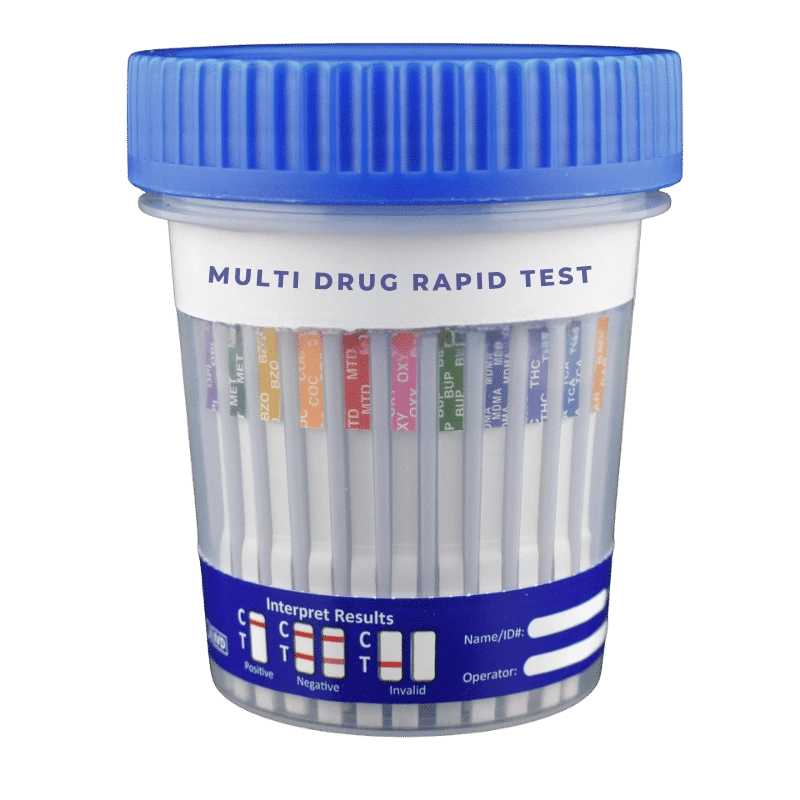
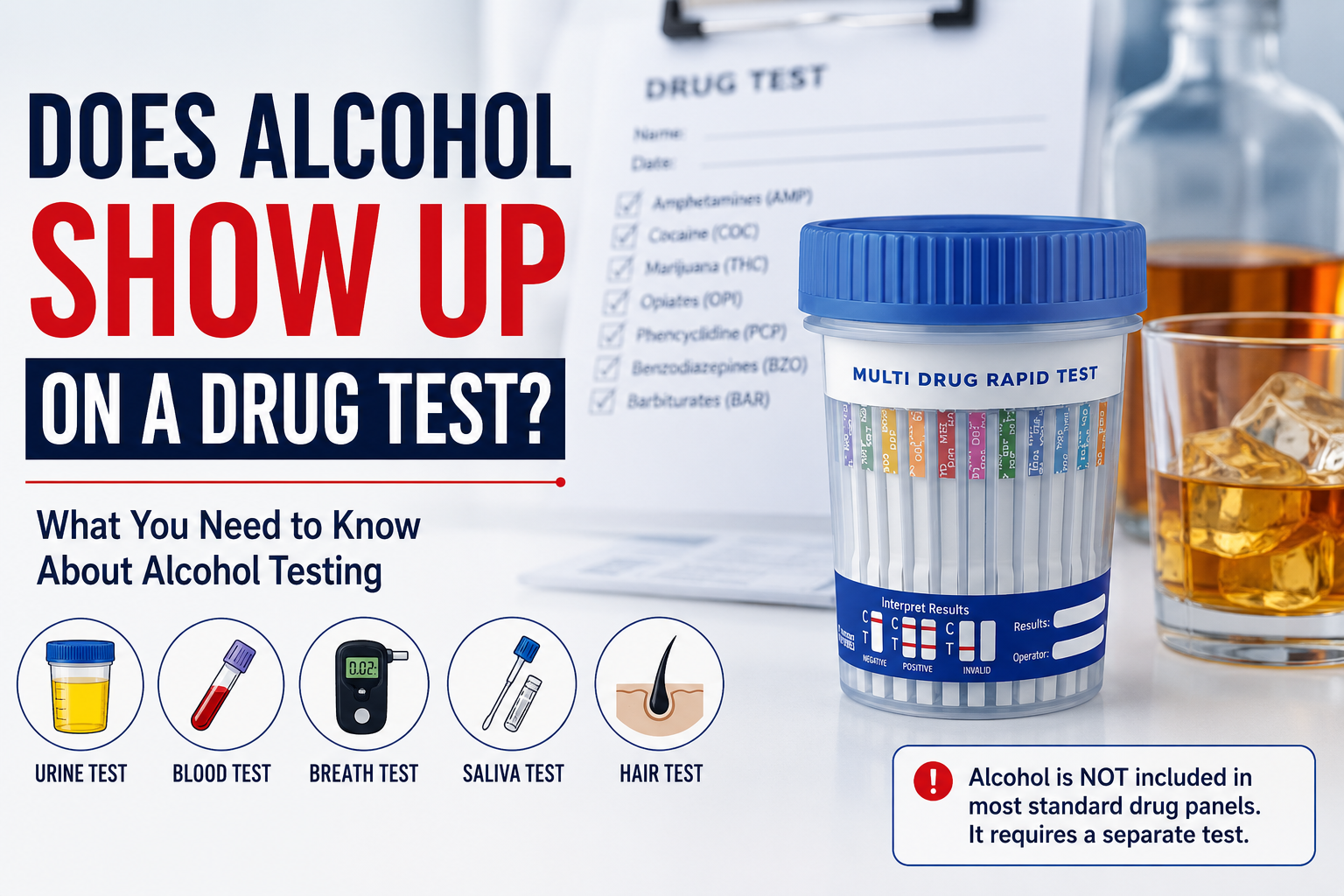
Most standard drug tests are designed to screen for specific drugs or drug metabolites, such as marijuana, cocaine, amphetamines, opioids, and PCP. Alcohol is not automatically included in every standard drug panel. However, employers, courts, probation programs, treatment centers, and other organizations can request separate alcohol testing when they need to determine whether someone has recently consumed alcohol.
Alcohol can be detected in several ways, including urine, blood, breath, saliva, and specialized hair testing. Some tests detect ethanol itself, while others look for alcohol metabolites such as ethyl glucuronide (EtG) and ethyl sulfate (EtS).
Understanding the difference between a standard drug test and an alcohol-specific test is important because the detection window can vary significantly depending on the testing method.
Does Alcohol Show Up on a Standard Drug Test?
Generally, alcohol does not automatically show up on a standard drug test.
A typical drug screening checks for a predefined group of substances. For example, a common 5-panel drug test may screen for substances such as:
- Marijuana (THC)
- Cocaine (COC)
- Amphetamines (AMP)
- Opiates (OPI)
- Phencyclidine (PCP)
Alcohol is usually not part of these basic drug panels unless the testing program specifically includes it.
This means that someone can take a standard drug test that screens for controlled substances without the test necessarily checking whether they consumed alcohol.
However, this does not mean alcohol can never be detected during drug testing. A testing provider can use an alcohol-specific test or add alcohol metabolites to the testing panel.
When Is Alcohol Included in Drug Testing?
Alcohol testing may be requested when there is a specific reason to monitor alcohol consumption.
For example, alcohol screening may be used for:
- Pre-employment testing
- Workplace testing
- Safety-sensitive jobs
- Probation monitoring
- Court-ordered testing
- Substance-use treatment programs
- Professional monitoring programs
- Medical evaluations
- Law enforcement investigations
- Transportation-related testing
The exact testing requirements depend on the organization and the purpose of the test.
Some workplaces have separate policies for alcohol and controlled substances. In safety-sensitive industries, an employer may require alcohol testing because impairment can create serious risks even when the standard drug panel does not include alcohol.
What Is the Difference Between a Drug Test and an Alcohol Test?
A drug test and an alcohol test are not necessarily the same thing.
A drug test usually looks for specific drugs or their metabolites. An alcohol test may instead detect:
- Ethanol
- EtG
- EtS
- Other alcohol-related biomarkers, depending on the testing method
The specimen also matters.
A urine test can be designed to detect drug metabolites, alcohol, or alcohol metabolites. A breath test generally measures alcohol currently present in the breath. A blood test can measure alcohol in the bloodstream.
Therefore, simply knowing that you are having a “drug test” does not always tell you whether alcohol is being tested.
What Types of Tests Can Detect Alcohol?
Several testing methods can identify alcohol consumption. Each method has a different purpose and detection window.
1. Urine Alcohol Testing
Urine testing is commonly used because it is relatively convenient and noninvasive.
A urine alcohol test may detect ethanol, the alcohol itself, or metabolites such as EtG and EtS.
An ethanol urine test generally has a shorter detection period because the body eliminates alcohol relatively quickly.
EtG and EtS testing is different. These metabolites can remain detectable after the alcohol itself is no longer present in the bloodstream.
This is why an EtG or EtS test may detect previous alcohol consumption for longer than a basic ethanol test.
2. EtG Urine Testing
EtG stands for ethyl glucuronide.
It is a metabolite formed when the body processes alcohol.
Because EtG can remain in the body after ethanol has been eliminated, EtG urine testing is commonly used when the goal is to identify relatively recent alcohol consumption.
Depending on the test and circumstances, EtG may be detectable for approximately 24 to 72 hours, and longer detection has been reported after heavier alcohol consumption.
However, an EtG result should not be interpreted as an exact measurement of how many drinks someone consumed or precisely when they drank. Detection depends on the test cutoff, amount consumed, individual factors, and other variables.
3. EtS Urine Testing
EtS stands for ethyl sulfate.
Like EtG, EtS is an alcohol metabolite.
EtS testing may be used alongside EtG because both can provide evidence of recent alcohol exposure. The detection period is generally longer than that of a direct ethanol test.
Some testing programs use EtG and EtS together to provide additional information when monitoring recent alcohol consumption.
4. Breath Alcohol Testing
Breath alcohol testing measures alcohol present in a person’s breath.
Breathalyzers are commonly associated with law enforcement, but breath alcohol testing can also be used in some workplace and occupational settings.
Unlike EtG testing, a breath test is primarily concerned with current or very recent alcohol presence, rather than alcohol consumption several days earlier.
A person may feel sober while still having measurable alcohol in their system, which is one reason breath testing can be useful for assessing current alcohol concentration.
5. Blood Alcohol Testing
Blood testing can directly measure alcohol in the bloodstream.
It is highly specific for measuring blood alcohol concentration (BAC), but it is less convenient than urine testing and is not typically the first choice for routine workplace drug screening.
Blood testing may be used in:
- Medical settings
- Legal investigations
- Emergency situations
- Law enforcement
- Specialized testing programs
The detection window is relatively short compared with some alcohol metabolite tests.
6. Saliva Alcohol Testing
Saliva testing can detect relatively recent alcohol consumption.
Because the detection window is generally shorter than urine EtG testing, saliva testing is more useful when the goal is to identify recent exposure rather than drinking several days earlier.
7. Hair Testing
Specialized hair testing can provide information about longer-term alcohol exposure.
Hair testing is different from urine or breath testing because it is not primarily designed to determine whether someone has alcohol in their body at the moment of testing.
Instead, specialized biomarkers may be used to evaluate patterns of alcohol exposure over a much longer period.
Because hair testing methods and interpretation can vary, a statement such as “alcohol stays in hair for exactly 90 days” is too simplistic.
How Long Can Alcohol Be Detected in a Drug Test?
There is no single detection window that applies to every alcohol test.
The timeframe depends on:
- Type of test
- Substance or metabolite being measured
- Amount of alcohol consumed
- Time since drinking
- Test cutoff level
- Individual metabolism
- Testing methodology
- Frequency of alcohol consumption
A general overview looks like this:
| Test Type | What It Detects | General Detection Period |
|---|---|---|
| Breath test | Ethanol | Several hours |
| Blood test | Ethanol | Generally several hours |
| Urine ethanol | Ethanol | Roughly 12–24 hours |
| Urine EtG | Alcohol metabolite | Commonly 24–72 hours |
| Urine EtS | Alcohol metabolite | Commonly 24–72 hours |
| Saliva | Recent alcohol exposure | Generally up to about 24 hours |
| Specialized hair testing | Long-term alcohol biomarkers | Weeks to months, depending on method |
These are general ranges, not guarantees. A particular test may have a shorter or longer detection period.
Why Does EtG Stay Detectable Longer Than Alcohol?
This is one of the most important concepts to understand.
When you consume alcohol, your body breaks down ethanol through several metabolic processes. One result is the formation of metabolites, including ethyl glucuronide (EtG) and ethyl sulfate (EtS).
The alcohol itself may be eliminated relatively quickly.
However, its metabolites can remain detectable for longer.
This creates an important distinction:
Ethanol testing:
Looks for alcohol itself.
EtG/EtS testing:
Looks for evidence that the body recently processed alcohol.
That is why someone can feel completely sober but still have a positive result on a sufficiently sensitive alcohol-metabolite test.
Does Alcohol Show Up in a Urine Drug Test?
It can, but only if the urine test is designed to detect alcohol or alcohol metabolites.
A standard urine drug panel may not include alcohol.
An alcohol-specific urine test may detect:
- Ethanol
- EtG
- EtS
The detection period depends heavily on which substance the test measures.
For example, a urine ethanol test generally has a shorter detection window than an EtG test.
If a testing program specifically uses EtG, recent alcohol consumption may remain detectable after ethanol itself is no longer present.
Does Alcohol Show Up on a Pre-Employment Drug Test?
This depends on the employer and the testing program.
Many pre-employment drug screenings are designed primarily to detect controlled substances and do not automatically include alcohol.
However, some employers may require separate alcohol screening.
This can be particularly relevant for jobs where alcohol impairment could create safety risks.
Examples may include certain positions in:
- Transportation
- Aviation
- Construction
- Manufacturing
- Healthcare
- Heavy equipment operation
- Public safety
- Other safety-sensitive workplaces
If alcohol testing is included, the employer or testing provider may use a breath, urine, or another appropriate testing method.
Does Alcohol Show Up on a Workplace Drug Test?
A workplace drug test does not necessarily mean an alcohol test.
The answer depends on the employer’s testing policy and the specific panel ordered.
Some employers may conduct:
Drug-only testing
This focuses on selected controlled substances.
Alcohol-only testing
This specifically checks for alcohol.
Combined drug and alcohol testing
This evaluates selected drugs and alcohol under the organization’s testing program.
Therefore, employees should not assume that every workplace drug test either does or does not include alcohol.
The testing paperwork, employer policy, or testing facility can clarify what substances are included.
Can You Fail a Drug Test Because of Alcohol?
If the test does not include alcohol, alcohol consumption generally would not create a positive result for one of the unrelated drug categories.
However, if the testing program includes alcohol, you may receive a positive alcohol result if the measured substance exceeds the applicable cutoff.
For example, an alcohol-specific test could detect:
- Ethanol
- EtG
- EtS
The consequences of a positive result depend on why the test was performed and the rules of the organization requesting it.
A workplace, probation program, court, or treatment program may have different policies.
Can One Drink Show Up on a Drug Test?
A single drink can potentially be detected by an alcohol-specific test.
However, whether it is detected depends on several factors, including:
- The type of test
- Time between drinking and testing
- Test sensitivity
- Cutoff concentration
- Amount consumed
- Individual metabolism
A direct ethanol test and an EtG test do not provide the same detection window.
Therefore, it is not accurate to say that one drink will always be undetectable after a specific number of hours.
Will Drinking the Night Before a Drug Test Affect the Result?
This depends on whether alcohol is included in the test.
If you are taking a standard drug panel that does not include alcohol, drinking alcohol the night before generally would not cause alcohol to appear as one of the tested drug categories.
However, if your testing program includes alcohol or EtG/EtS testing, drinking the previous night may still be relevant.
The amount consumed can also matter.
A person who had one drink and a person who consumed a large amount of alcohol may have different detection patterns.
For this reason, anyone who has specific testing requirements should follow the instructions provided by the organization or testing facility rather than relying on a generic detection-time estimate.
Can Alcohol Cause a False Positive?
Certain alcohol-containing products can complicate interpretation of some alcohol tests, particularly sensitive metabolite testing.
Examples sometimes discussed include:
- Alcohol-containing mouthwash
- Breath sprays
- Fermented products
- Some “non-alcoholic” beverages
- Alcohol-based hand sanitizers
- Certain cosmetics
- Products containing ethanol
However, exposure does not automatically mean a laboratory test will produce a positive result. Test cutoffs, specimen handling, timing, and laboratory procedures all matter.
If you are concerned about possible exposure before testing, follow the instructions provided by the testing facility.
What Is the Difference Between EtG and EtS?
Both EtG and EtS are alcohol metabolites, but they are not identical substances.
EtG
Ethyl glucuronide is produced when the body processes ethanol. It is widely used as a marker of recent alcohol exposure.
EtS
Ethyl sulfate is another metabolite of alcohol. It can be tested alongside EtG in some testing programs.
Using both markers may provide additional information when evaluating recent alcohol exposure.
Neither test should automatically be interpreted as an exact measurement of how much alcohol a person consumed.
Can Drinking Water Remove Alcohol From a Drug Test?
Drinking excessive amounts of water is not a reliable way to eliminate alcohol or guarantee a negative drug test.
The body metabolizes alcohol naturally, and there is no dependable method for instantly removing it from the body.
Excessive fluid intake can also dilute a urine specimen. Depending on the testing program, a highly diluted specimen may be reported as dilute or may require additional testing.
The safest approach is to follow the testing instructions and avoid trying to manipulate the specimen.
What Factors Affect Alcohol Detection?
Alcohol detection can vary considerably from person to person.
Amount Consumed
Drinking a larger amount can result in greater alcohol exposure and potentially longer detection of alcohol metabolites.
Timing
The time between the last drink and the test is one of the most important factors.
Test Type
A breath test, urine ethanol test, EtG test, blood test, and specialized hair test do not have identical detection windows.
Test Cutoff
Laboratories and testing programs use specific cutoff concentrations. A result depends partly on whether the measured level reaches the applicable cutoff.
Individual Differences
Body composition, metabolism, liver function, drinking patterns, and other factors can influence alcohol processing.
Because of these variables, detection windows should always be treated as estimates rather than guarantees.
How Do You Know if Your Drug Test Includes Alcohol?
If you have an upcoming drug test and are unsure whether alcohol is included, check the test documentation or contact the organization conducting the test.
You can ask:
- Is this a standard drug panel?
- Does the panel include alcohol?
- Is EtG or EtS testing included?
- Is the test urine, blood, saliva, breath, or another specimen?
- Are there specific instructions about alcohol before testing?
The testing provider or organization ordering the test can give you the most accurate information about what is being screened.
Alcohol Testing in Safety-Sensitive Jobs
Alcohol testing can be particularly important in safety-sensitive workplaces.
An employee operating a vehicle, heavy machinery, aircraft, medical equipment, or other safety-critical equipment may be subject to stricter alcohol policies than employees in other positions.
In these situations, employers may have separate rules for:
- Alcohol consumption before work
- Alcohol possession at work
- Impairment
- Breath alcohol concentration
- Random testing
- Post-incident testing
- Reasonable-suspicion testing
The fact that alcohol is legal for adults does not mean workplace policies cannot restrict alcohol use in certain circumstances.
Always check the applicable workplace policy rather than assuming that a standard drug test is the only form of testing.
Standard Drug Panel vs. Alcohol-Specific Test
The easiest way to understand the difference is to compare the purpose of each test.
| Feature | Standard Drug Test | Alcohol-Specific Test |
|---|---|---|
| Main purpose | Detect selected drugs | Detect alcohol or alcohol exposure |
| Common targets | THC, cocaine, opioids, amphetamines, PCP, etc. | Ethanol, EtG, EtS |
| Alcohol automatically included? | Usually no | Yes |
| Common specimen | Urine | Urine, breath, blood, saliva, or other specimen |
| Detection window | Depends on drug | Depends on alcohol test |
| Common uses | Employment, probation, screening | Workplace, legal, monitoring, treatment |
This distinction is important because the phrase “drug test” can refer to many different testing programs.
What Should You Do Before an Alcohol-Inclusive Drug Test?
If you know that your upcoming test includes alcohol, follow the instructions supplied by the testing organization.
Do not rely on online “detox” methods or attempts to manipulate a urine sample.
If the test is for employment, probation, medical care, or another formal program, the organization conducting the test should provide the applicable instructions.
If you are unsure whether alcohol is included, ask before the test rather than making assumptions.
Frequently Asked Questions
Does alcohol show up on a drug test?
Alcohol can show up if the test specifically screens for alcohol or alcohol metabolites. Most standard drug panels do not automatically include alcohol.
Do standard drug tests test for alcohol?
Usually, standard drug panels focus on selected drugs rather than alcohol. Alcohol testing can be added separately depending on the testing program.
Does alcohol show up in a urine drug test?
It can. Urine tests can detect ethanol or alcohol metabolites such as EtG and EtS when those substances are included in the test.
How long can alcohol be detected in urine?
A urine ethanol test may detect alcohol for roughly 12–24 hours, while EtG and EtS tests can commonly detect recent alcohol exposure for about 24–72 hours or longer in some circumstances.
Does alcohol show up on a pre-employment drug test?
Not necessarily. Many pre-employment drug tests do not automatically include alcohol, but employers can use separate alcohol testing when required by their policies or the nature of the job.
Can one drink show up on an EtG test?
It can potentially be detected, depending on the test’s cutoff, timing, amount consumed, and individual factors.
Does alcohol show up on a saliva drug test?
Alcohol can be detected by saliva-based alcohol testing, particularly after recent consumption.
Does alcohol show up on a blood test?
Yes. A blood alcohol test can directly measure ethanol in the bloodstream, although its detection window is relatively short.
Does alcohol show up on a hair test?
Specialized hair testing can assess longer-term alcohol exposure using specific biomarkers. It is different from a routine urine or breath alcohol test.
What does EtG mean on a drug test?
EtG means ethyl glucuronide, an alcohol metabolite. An EtG test is designed to detect evidence of recent alcohol exposure rather than simply measuring alcohol currently present in the bloodstream.
What does EtS mean on a drug test?
EtS means ethyl sulfate, another metabolite produced when the body processes alcohol. EtS may be tested along with EtG.
Can drinking alcohol the night before cause a positive drug test?
If alcohol is not included in the testing panel, drinking the night before generally should not produce a positive result for unrelated drug categories. If alcohol, EtG, or EtS testing is included, recent drinking may be detected.
Does drinking water make alcohol leave your system faster?
No. Drinking excessive water does not reliably speed up alcohol metabolism or guarantee a negative test. It may also dilute a urine specimen.
How can I find out what substances my test checks?
Review the test paperwork or contact the employer, healthcare provider, probation agency, or testing facility that ordered the test. They can tell you whether alcohol or alcohol metabolites are included.
Final Takeaway
So, does alcohol show up in drug tests? It depends on the test.
A standard drug panel generally focuses on specific drugs and does not automatically test for alcohol. However, alcohol can be specifically tested using urine, breath, blood, saliva, or specialized testing methods.
For urine testing, the most important distinction is between ethanol and alcohol metabolites such as EtG and EtS. Ethanol generally has a shorter detection window, while EtG and EtS can remain detectable longer after drinking.
If you have an upcoming pre-employment or workplace drug test, do not assume that every drug test includes or excludes alcohol. Check the testing panel and instructions provided by the organization conducting the test.
Understanding what is being tested, which specimen is being collected, and which alcohol marker is being measured is the best way to understand what your drug test can and cannot detect.