Forensic-use-only (FUO) drug test cups are built for programs whose policy allows expanded panel coverage beyond clinical configurations: drug courts, probation and parole, correctional facilities, and law enforcement. By combining classic analytes with fentanyl, ETG alcohol, and other emerging-substance panels, FUO cups match the monitoring needs of justice-system screening. Compare the full range of multi-panel urine drug test cups before you order.
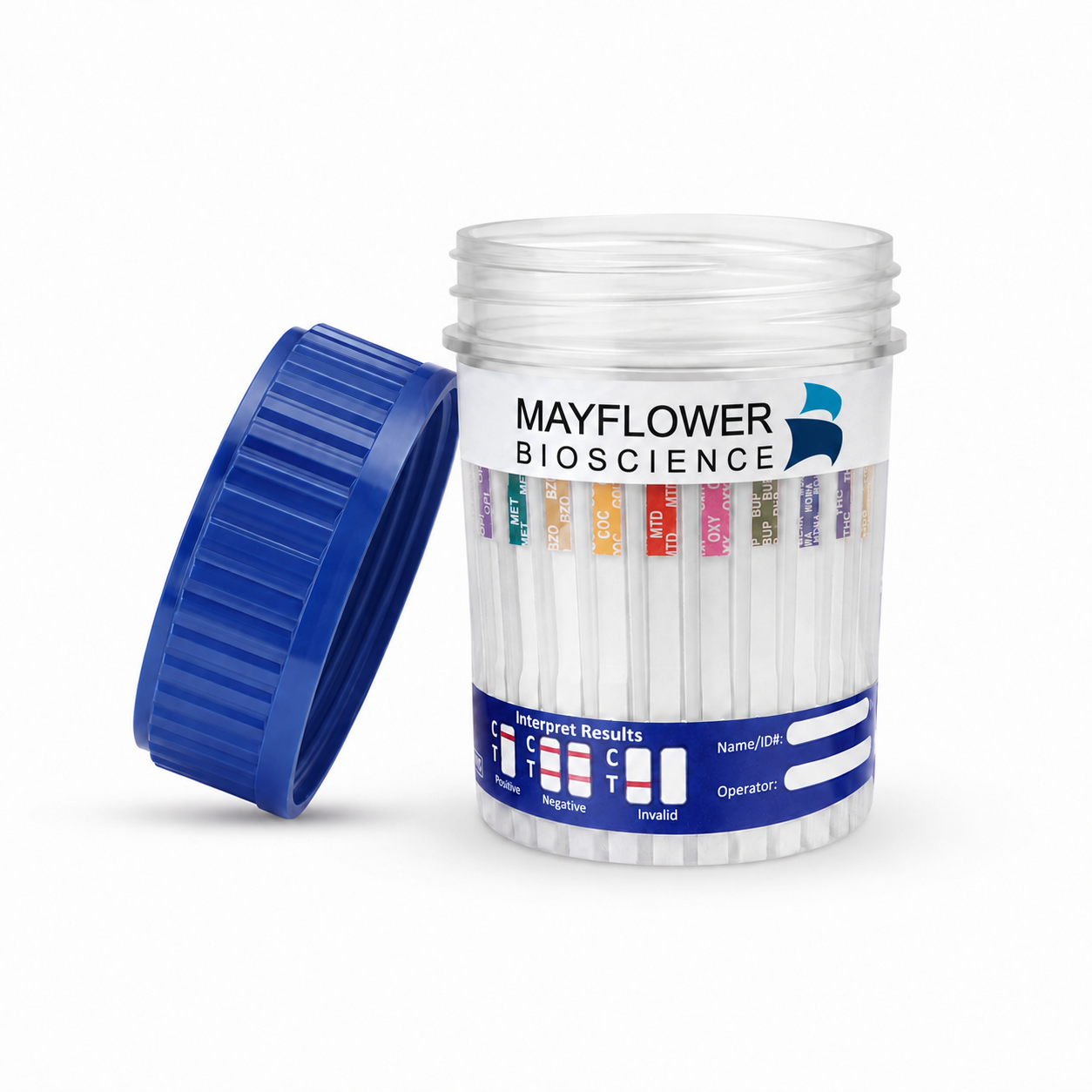
14 Panel Drug Test Cup with PCP, ETG & Fentanyl — forensic-use configuration pairing PCP, fentanyl (FEN 20 ng/mL), and ETG alcohol with the full classic panel set. Tamper-evident cap and built-in temperature strip support specimen integrity. View the 14 panel cup.
16 Panel Drug Test with Kratom, Alcohol, ETG, TCA & Fentanyl — maximum coverage for high-risk monitoring: kratom, TCA, ETG, and fentanyl alongside the classic set. View the 16 panel cup.
12 Panel Drug Test Cup with Alcohol, ETG & Fentanyl (120ml) — fentanyl plus ETG alcohol in a 12 panel format for programs that need expanded detection without the full 14 panel set. View the 12 panel cup.
FUO devices are labeled for forensic or non-clinical use — they enable panel mixes (such as ETG, fentanyl, kratom) that clinical configurations may not include. Programs operating under court order, probation conditions, or agency policy choose FUO cups when expanded coverage is required and their policy permits it. Clinical programs should instead use CLIA-waived cups.
Integrated leak-resistant cups, tamper-evident caps, and temperature strips help field and facility staff verify specimen integrity at collection. Five-minute preliminary results keep high-volume monitoring programs moving; positives are confirmed by certified laboratory methods.
Volume pricing, free shipping on 100+ cups, same-day dispatch from US stock. See wholesale terms.
Forensic-use only means the device is intended for forensic testing programs — criminal justice, drug courts, probation, and corrections — rather than CLIA-waived clinical diagnosis. FUO cups use the same immunoassay screening technology; the designation describes the regulatory intended use. Results are presumptive and are confirmed by a laboratory when they carry legal consequences.
Drug courts, probation and parole agencies, corrections facilities, law enforcement programs, court-ordered treatment providers, and private testing companies serving the justice system. Employers and clinics should check their own regulatory requirements — workplaces generally may also use FUO devices for non-DOT screening, while clinical diagnosis requires CLIA-waived or laboratory testing.
CLIA-waived cups are FDA-cleared for low-complexity clinical settings and require a CLIA Certificate of Waiver at the testing site. Forensic-use cups are designated for justice and program testing where screening supports supervision decisions. The practical difference is intended use and documentation, not screening chemistry. Compare the forensic-use and CLIA-waived collections.
A cup result is a presumptive screen. In court settings, contested or consequence-bearing results are confirmed by an accredited laboratory using GC-MS or LC-MS/MS under chain of custody, and it is the confirmed laboratory result that carries evidentiary weight. FUO cups give courts and officers an immediate, low-cost screening layer within that process.
Cups integrate collection and screening in a sealed device: no dip cards, less handling, built-in temperature verification, and results in about 5 minutes at the point of supervision. Officers can screen during office visits, document per-analyte results immediately, and send only preliminary positives for laboratory confirmation — controlling cost across thousands of tests.
MayFlower forensic-use configurations include the 14 panel cup with PCP, ETG alcohol, and fentanyl, and the 16 panel cup adding kratom and TCA. These expanded configurations match justice-system risks: synthetic opioids, alcohol abstinence violations, and emerging substances that basic 5 panel screens miss.
The donor provides the specimen directly into the sealed cup, the collector verifies temperature (90–100 °F) and records the result per analyte with donor identification, date, and signatures per agency protocol. If confirmation is required, a split or the same specimen is sealed, labeled, and transferred with custody documentation to the laboratory.
Yes. The integrated temperature strip is the first validity check, flagging samples that may be substituted or diluted. A specimen outside 90–100 °F shortly after collection should be recollected under agency policy. Some programs add adulteration strips or laboratory validity testing (creatinine, pH, specific gravity) for high-stakes cases.
Screening immunoassays can cross-react with structurally similar substances, so results are preliminary by design. The justice system handles this through confirmation: GC-MS or LC-MS/MS testing by a certified laboratory before sanctions are based on a result. Validity checks at collection and documented procedures further protect accuracy.
Agencies order by the case on volume tiers — per-cup pricing decreases at higher quantities, with free shipping on 100+ cups and same-day shipping for stocked configurations. Store at room temperature and rotate by expiration date. See the wholesale collection for program pricing.