Labs: Match RNA Stabilization Tubes to RNA Sequencing, qPCR, and miRNA
RNA stabilization tubes are collection devices preloaded with a reagent that halts RNase activity and locks in the transcriptome at the moment of sample draw or tissue harvest. The single rule that matters most when picking one: choose based on downstream assay compatibility and a validated extraction protocol, never on marketing claims alone. Fill ratio, mixing technique, and time-to-stabilization affect your RNA integrity numbers just as much as which brand of tube sits in the rack.
TL;DR:
- The effectiveness of RNA stabilization tubes depends heavily on proper fill volume, mixing, and minimizing processing delays, not just on the chemical chemistry.
- Chaotropic stabilizers are best suited for whole blood and require careful removal of salts during extraction to prevent inhibition of downstream assays like PCR.
- Preservation chemistry should match the intended downstream assay, with full-length transcript preservation prioritized for RNA sequencing, and strict validation recommended before large-scale studies.
- Shipping conditions, including temperature control and timing, critically influence RNA integrity during sample transit, especially for precipitation-based tissue preservatives.
- Cost considerations extend beyond the tubes to include extraction kits, QC reagents, and validation processes, which are essential for reproducible, high-quality RNA data.
Table of Contents
- How RNA Stabilization Tubes Work and the Main Stabilizer Chemistries
- How Do You Match a Tube to RNA-seq, qPCR, or miRNA Work?
- What Fill Ratios, Mixing, and Storage Windows Actually Matter?
- How Do You Validate That Your Workflow Actually Preserves RNA?
- Biohazard and Safety Considerations for Handling These Tubes
- What Do RNA Stabilization Tubes Cost, and How Should You Budget?
- How Do the Leading Commercial Tube Systems Compare?
- What Shipping and Transport Conditions Keep RNA Stable?
- What I’ve Learned Reviewing RNA Stabilization Data Across Labs
- Where Mayflowerbio Fits Into Your RNA Stabilization Workflow
- Sources
- FAQ
How RNA Stabilization Tubes Work and the Main Stabilizer Chemistries
Every RNA stabilization tube solves the same problem, RNases start degrading transcripts within seconds of sample collection, but the two dominant chemistries get there differently, and that difference determines what you can do with the sample later.
Chaotropic or lysis-based stabilizers rupture cell membranes immediately and denature RNases with high concentrations of guanidinium salts. This is the mechanism behind most whole-blood collection tubes used in genomic and biobanking workflows. Cells lyse on contact, RNA gets bound up in a protein-nucleic acid complex, and the sample is stable at room temperature for days. The tradeoff: those same salts have to be scrubbed out during extraction, or they will inhibit reverse transcriptase and PCR.
Precipitation-based, ambient-protection chemistries (the category RNAlater-style reagents fall into) work differently. They penetrate intact tissue and precipitate cellular RNA in place without lysing the cell wall outright, which is why they dominate tissue biopsy and small-organism preservation rather than blood collection.
The chemistry you pick has direct consequences downstream:
- Chaotropic lysates can clog silica columns if carryover isn’t managed, and residual guanidinium salts inhibit RT-PCR at concentrations as low as a few millimolar.
- Precipitation reagents leave tissue physically intact, which is useful for later histology but requires a wash step before column extraction.
- Purified RNA that’s already extracted needs a different class of tube entirely: nuclease-free storage with no active stabilizer chemistry at all.
- Pre-analytical variables including tube type and extraction method can introduce enzymatic inhibition when stabilizer and extraction kit aren’t matched.
Whole blood pairs naturally with chaotropic tubes. Solid tissue and biopsy specimens pair with precipitation reagents. Purified RNA belongs in dedicated RNase-free storage, not in either stabilizer type.
How Do You Match a Tube to RNA-seq, qPCR, or miRNA Work?
The chemistry question above is only half the decision. The other half is what assay the RNA is headed for, because a tube that’s perfect for qPCR can quietly wreck a sequencing library.
- RNA-seq: Prioritize tubes validated to preserve full-length transcript representation, not just total yield. A large transcriptome-wide comparison found interactions between tube type, processing time, and extraction method that introduce measurable bias in extracellular RNA profiles, and recommended completing blood processing within four hours for exRNA sequencing work.
- qPCR and RT-qPCR: Yield matters less than consistent amplification efficiency across replicates. Chaotropic-lysis tubes work well here as long as your RT-qPCR master mix tolerates residual salt, or you’ve added a cleanup step.
- miRNA and low-input work: Small RNAs are the first casualty of a suboptimal extraction column, so confirm the tube’s stabilizer is compatible with a kit specifically validated for small-RNA recovery, not a generic total-RNA column.
Before you commit a study’s samples to any tube, run the compatibility checklist: does the manufacturer publish a recommended extraction kit for that exact tube? If not, plan on validating the pairing yourself, chaotropic reagents in particular often need an added cleanup step to prevent salt carryover from inhibiting RT enzymes.
Volume constraints matter too. Pediatric or low-volume draws (under 1 mL) need tubes rated for microvolume fill ratios, since the standard adult-draw preservative-to-sample ratio won’t hold at smaller volumes.
Pro Tip: If your study spans multiple processing delays, don’t assume the tube’s marketed stability window applies uniformly. Test a 0-hour, 4-hour, and 24-hour processing arm on the same donor before you scale to a full cohort.
When timing allows immediate extraction, skip the stabilizer step entirely and extract fresh. Preservation tubes exist for the reality of multi-site studies and shipping delays, not as a universal default.
What Fill Ratios, Mixing, and Storage Windows Actually Matter?
Pre-analytic handling is where most RNA integrity problems actually originate, not in the tube chemistry itself.
Mixing: Invert the tube gently 8 to 10 times immediately after draw. Never vortex or shake vigorously, that mechanical shear damages both cells and the RNA being released from them, and it can also cause foaming that interferes with fill-level accuracy.
Fill volume: Stick to the manufacturer’s specified fill line exactly. Underfilling dilutes the preservative-to-sample ratio below its effective concentration, and overfilling does the same thing in reverse, neither leaves enough active reagent per cell to fully suppress RNase activity. Consensus recommendations from BBMRI treat correct fill ratio as a non-negotiable step, alongside gentle homogenization by inversion and following the manufacturer’s own extraction protocol.
Storage windows: Time-to-stabilization tends to matter more than storage temperature for transcriptome fidelity, so minimizing the delay between draw and stabilization should be the priority, not just picking a colder freezer. Once stabilized, some whole-blood systems hold RNA integrity for weeks at 4°C or several days at room temperature, and properly stabilized, promptly frozen samples can remain stable at −80°C for years.
- Label every tube with draw time, not just draw date, since processing-time interactions can shift results within a single day.
- Track fill volume visually against the tube’s calibration line at the point of collection, not after the fact.
- Keep gloves on and surfaces RNase-free; a contaminated pipette tip defeats the stabilizer chemistry before it even gets a chance to work.
- Log storage temperature transitions (room temp to 4°C to freezer) for each batch, since that chain of custody becomes essential if integrity numbers come back inconsistent later.
How Do You Validate That Your Workflow Actually Preserves RNA?
You don’t know your tube-and-extraction combination works until you’ve measured it, not assumed it.
- Pick your QC metrics up front: RIN or RQN for integrity, A260/280 ratio for purity, total yield per input volume, and spike-in recovery percentage for extraction efficiency. Synthetic spike-in RNAs are the most reliable way to catch extraction efficiency differences that a simple yield number would miss.
- Design a small same-donor comparison before scaling up: draw multiple tubes from one subject, process them at staggered time points (0h, 4h, 24h), and extract with your intended kit at each point.
- Watch for the usual failure modes: incompatible extraction reagents, delayed processing past the stabilizer’s validated window, and inconsistent fill levels across a batch are the three most common causes of a study’s RNA data falling apart after the fact.
- Document everything: tube lot number, fill volume, time-to-stabilization, and storage conditions per sample, so a reproducibility question six months into a cohort study has an actual paper trail to check against.
Pro Tip: Run your validation panel across the full range of processing delays your study will realistically encounter, not just the best-case scenario of same-day extraction.
Biohazard and Safety Considerations for Handling These Tubes
RNA stabilization tubes contain two hazards worth taking seriously: the biological sample itself and the chemical stabilizer.
Whole blood and tissue samples are potentially infectious material regardless of what preservative they’re suspended in, so standard universal precautions apply from the moment of draw: gloves, eye protection where splash risk exists, and disposal in designated biohazard sharps or waste containers. Chaotropic stabilizers add a second layer of concern. Guanidinium-based reagents are corrosive and can react with bleach to release toxic gas, a detail that trips up labs that default to bleach for all biological spill cleanup. Check the specific tube manufacturer’s safety data sheet before choosing a decontamination agent, since the correct neutralizer depends on the exact chaotropic salt used.
Transport of filled tubes between collection site and lab typically falls under packaging rules for diagnostic specimens or biological substances, depending on your institution’s classification of the sample. Leaking or improperly sealed tubes are the most common citation in internal safety audits, so a secondary containment bag isn’t optional for anything moving between buildings or facilities.
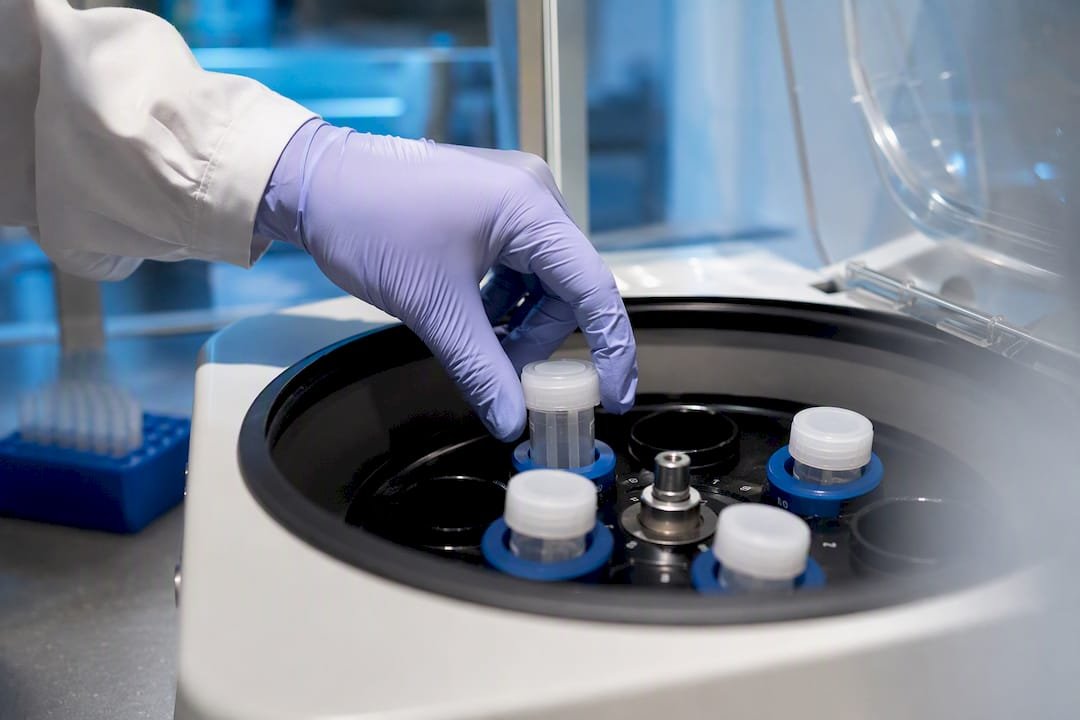
Centrifugation of stabilized samples, when required, should happen in a sealed rotor or with aerosol-tight caps, since chaotropic reagents can aerosolize and irritate mucous membranes on inhalation. If your protocol calls for opening tubes outside a fume hood or biosafety cabinet, that’s worth reconsidering regardless of how routine the sample volume seems.
What Do RNA Stabilization Tubes Cost, and How Should You Budget?
Per-unit tube pricing varies widely depending on stabilizer chemistry, tube volume, and whether you’re buying research-grade or clinically validated versions, and that spread is usually the biggest line item labs underestimate when planning a cohort study.
Chaotropic whole-blood tubes tend to sit at a moderate per-unit cost but require a matched extraction kit, often sold separately, that can double the effective per-sample price once you account for both. Precipitation-based tissue preservation reagents are frequently sold in bulk bottle format rather than pre-filled tubes, which lowers per-sample cost for high-volume tissue banking but adds labor time for manual dispensing and fill-volume verification.
Budget for more than the tube itself. Extraction kits, RNase-free consumables (tips, tubes, gloves), and QC reagents like spike-in controls all add to the real per-sample cost, and skipping the QC step to save money is the single most common way labs end up repeating an entire cohort’s collection after a reproducibility failure surfaces months later.
For multi-site or longitudinal studies, factor in shipping costs for cold-chain transport if your stabilizer requires it, that expense scales with sample count in a way that’s easy to miss during initial protocol design. A cost comparison across a few candidate extraction kits run against your specific tube chemistry, done early, is cheaper than discovering an incompatibility after a thousand samples are already collected.
How Do the Leading Commercial Tube Systems Compare?
No single stabilization system wins across every metric, and the comparative literature backs that up directly. Field evaluations comparing tube performance under tropical, high-temperature conditions found one major chaotropic system maintaining somewhat higher RNA integrity and yield than a comparable system under those specific stress conditions, a gap that narrowed considerably under standard climate-controlled storage.
That’s the pattern worth internalizing: performance differences between commercial systems are often condition-dependent rather than universal. A tube that performs well in a climate-controlled core lab may show a measurable integrity drop in a field-collection scenario with delayed processing and ambient heat exposure.
Chaotropic whole-blood systems generally offer the longest ambient-temperature stability window and the broadest compatibility with high-throughput extraction robots, which makes them the default for large biobanking operations. Their downside is the mandatory extraction-kit pairing and the salt-carryover risk discussed earlier. Precipitation-based tissue reagents excel at preserving tissue architecture for combined histology and RNA work, but they generally require longer sample processing time and more careful handling of the wash step before extraction.
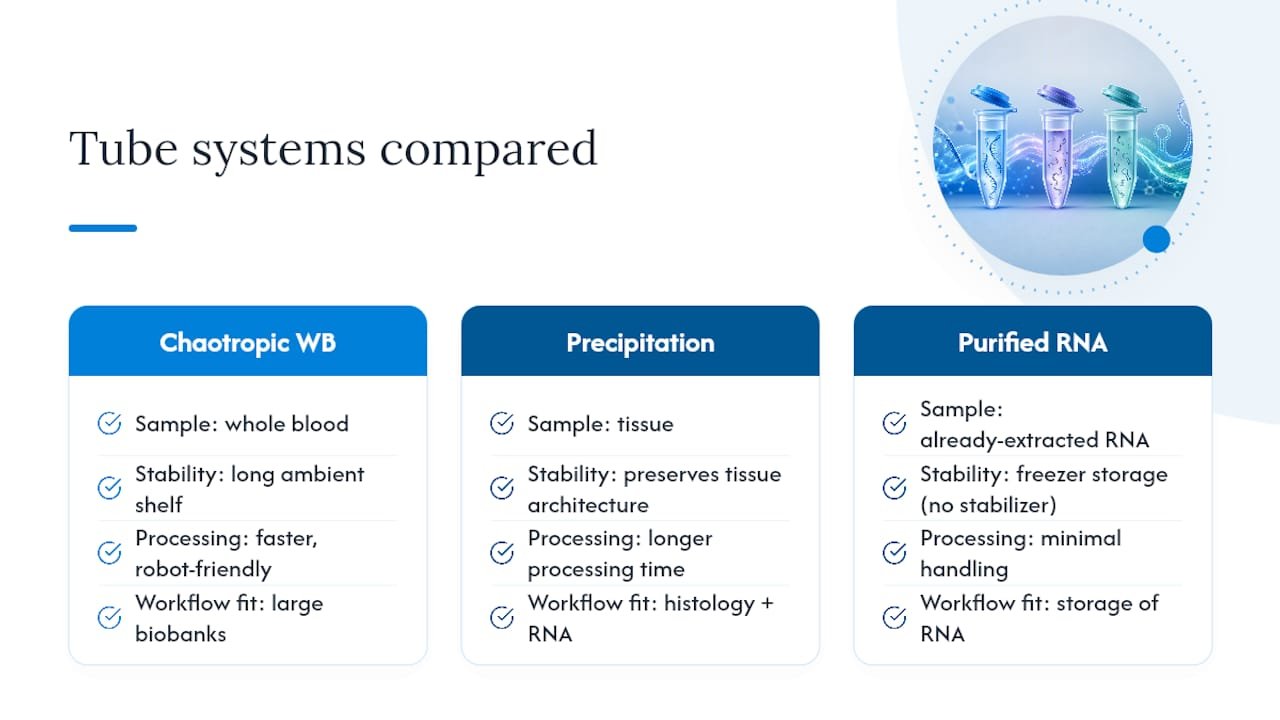
Purified RNA storage tubes, the third category, aren’t really in competition with the other two, they solve a different problem: keeping already-extracted RNA stable in a freezer, with no stabilizer chemistry involved at all. The honest takeaway is that “leading” depends entirely on your sample type, your processing timeline, and which extraction chemistry your lab already has validated.
What Shipping and Transport Conditions Keep RNA Stable?
Time-to-stabilization matters at the bench, and it matters just as much in transit. A tube that stabilizes RNA effectively the moment it’s capped can still lose integrity if the shipping conditions between collection site and lab aren’t controlled.
Room-temperature-stable chaotropic tubes are the easiest to ship, most tolerate ambient shipping conditions for several days, which is why they’re the default choice for multi-site clinical trials that can’t guarantee cold-chain logistics at every collection point. Even so, avoid extreme heat exposure, a tube left in a hot vehicle or on a loading dock in summer can exceed the temperature range the stabilizer was validated at, even if the listed stability window seems generous.
Tissue samples in precipitation-based reagents are more temperature-sensitive during transport and generally need refrigerated (4°C) shipping if the transit time exceeds a day. Dry ice shipment becomes necessary for anything requiring frozen transport, and that introduces its own handling considerations, dry ice sublimates and needs a vented container, plus proper hazmat labeling for air transport.
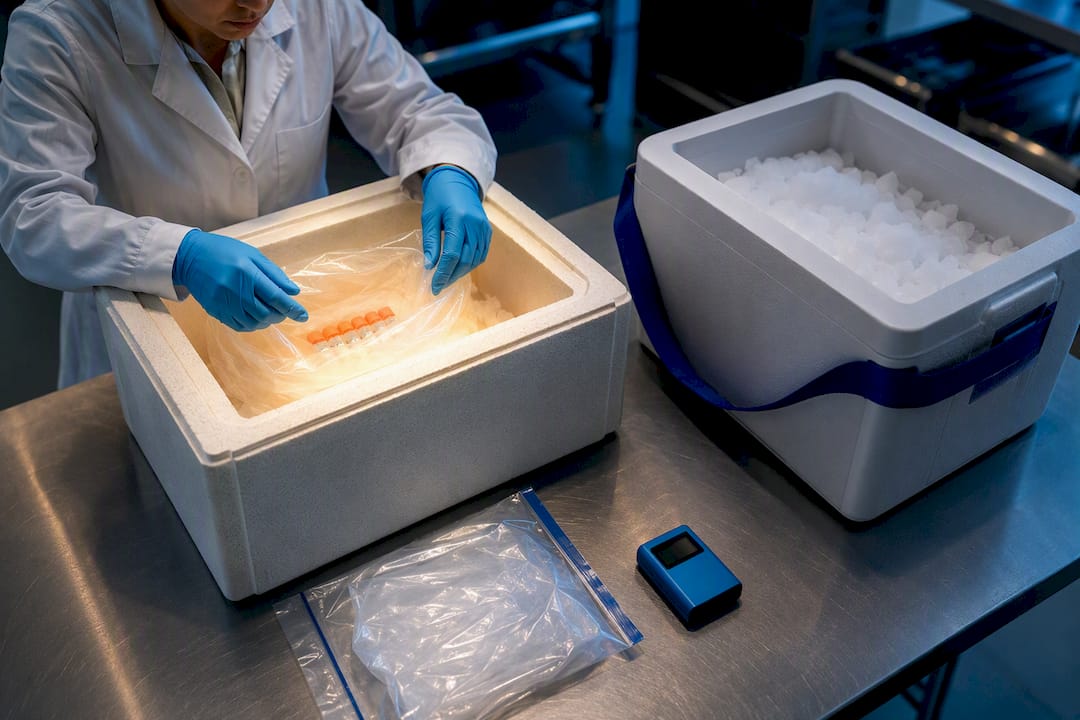
Whatever the shipping method, document the actual transit time and temperature exposure for each shipment, not just the planned schedule. A shipment that sat at an airport hub for six extra hours during a heat wave is a data point worth flagging before you interpret that batch’s RIN scores. Consistent chain-of-custody logging turns a shipping delay from a silent confound into a documented variable you can control for in your analysis.
What I’ve Learned Reviewing RNA Stabilization Data Across Labs
The biggest misconception in this space is that stabilizer chemistry is the variable that matters most. It isn’t. Across the comparative literature, tube type, processing time, and extraction method interact in ways that make a “best tube” ranking almost meaningless without specifying your exact downstream assay and timeline. A tube that performs beautifully in a same-day core lab workflow can produce mediocre integrity scores in a field-collection study with a six-hour processing delay, and neither result says anything wrong about the tube itself.
What actually separates labs with reproducible RNA data from labs that keep chasing inconsistent results is discipline around fill ratio, mixing technique, and time-to-stabilization, the unglamorous variables nobody puts in a marketing brochure. Some suppliers work with research teams navigating exactly this kind of validation question, supplying RNase-control reagents, extraction chemistries, and technical guidance for labs building out a stabilization workflow from scratch. If your study design calls for a same-donor validation panel or a second opinion on an extraction-kit pairing, that’s a conversation worth having before your first cohort sample gets collected, not after the integrity numbers come back uneven.
— Alina
Where Mayflowerbio Fits Into Your RNA Stabilization Workflow
Once you’ve settled on a tube chemistry and validated your extraction protocol, the workflow still needs the enzymes, inhibitors, and reagents that carry RNA from stabilized sample to usable data.

Mayflowerbio supplies the pieces that sit downstream of collection: RNase-control reagents to protect extracted RNA during handling, cDNA synthesis chemistries for converting stabilized RNA into template for qPCR or sequencing library prep, and a broader catalog of PCR reagents for teams assembling a full extraction-to-amplification pipeline. If you’re running a same-donor validation panel and need an RNase inhibitor that holds up through multiple freeze-thaw cycles, the RiboGrip® RNase inhibitor is built for exactly that use case. For labs still mapping out their full workflow, the step-by-step molecular biology experiment guide walks through where each reagent decision fits.
Have questions about which extraction chemistry pairs with your tube choice, or need a sample quote for a cohort-scale reagent order? Reach out through Mayflowerbio’s product catalog to start that conversation and get a validated reagent list matched to your specific downstream assay.
Sources
- Blood collection tube and RNA purification method recommendations for extracellular RNA transcriptome profiling | Nature Communications
- Characteristics of RNA Stabilizer RNApro for Peripheral Blood Collection
- BBMRI sample collection recommendations for whole-blood RNA
FAQ
What Is an RNA Stabilizing Solution?
It’s a reagent, either chaotropic or precipitation-based, that inactivates RNases at the moment of sample collection so transcript profiles don’t degrade before extraction. The specific chemistry determines which extraction kit and downstream assay it’s compatible with.
What Are PAXgene-Style Tubes Used For?
Chaotropic whole-blood collection tubes in this category lyse cells on contact and denature RNases with guanidinium salts, making them a common choice for genomic studies and biobanking where room-temperature stability for several days is needed before processing.
How Long Can Tissue Stay in an RNAlater-Style Preservative?
Stability duration depends on tissue size and storage temperature, smaller tissue pieces at refrigerated temperatures generally hold integrity longer than larger pieces at room temperature. Always check the specific manufacturer’s validated stability window for your tissue type and size before assuming a universal timeframe.
What Diseases Are Linked to RNA Dysfunction?
Errors in RNA processing, splicing, or stability contribute to a range of conditions studied through transcriptomics, including several cancers and neurodegenerative diseases, which is part of why reproducible RNA collection and preservation matters so much in research settings.
Does Mayflowerbio Sell RNA Stabilization Tubes Directly?
Mayflowerbio focuses on the reagents and support that surround the stabilization workflow, including RNase inhibitors, extraction-compatible PCR reagents, and cDNA synthesis chemistries, rather than the collection tubes themselves. Contact their team for guidance on matching a stabilizer chemistry to a validated downstream reagent set.