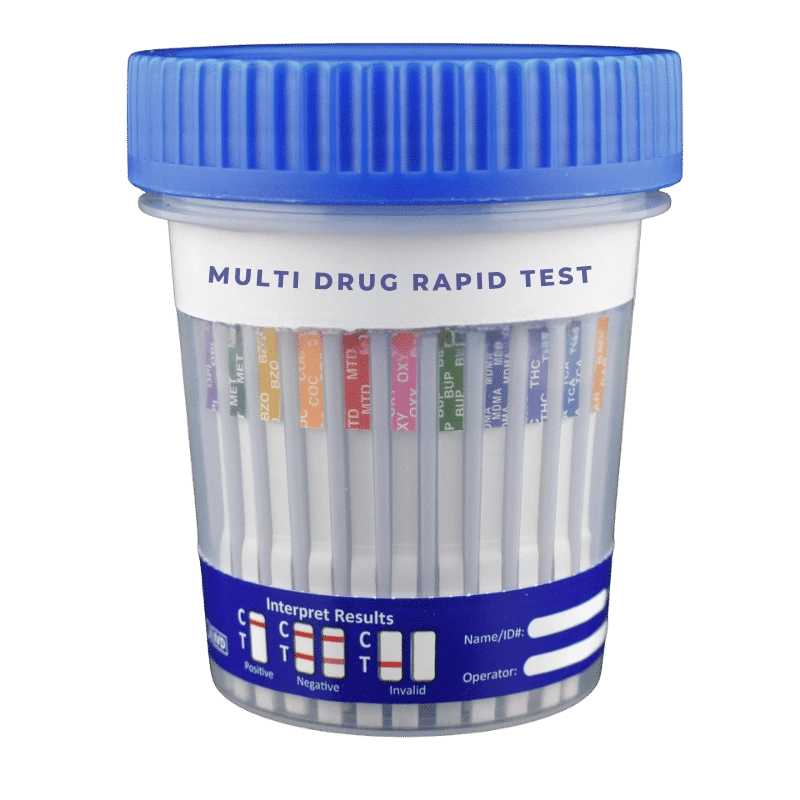
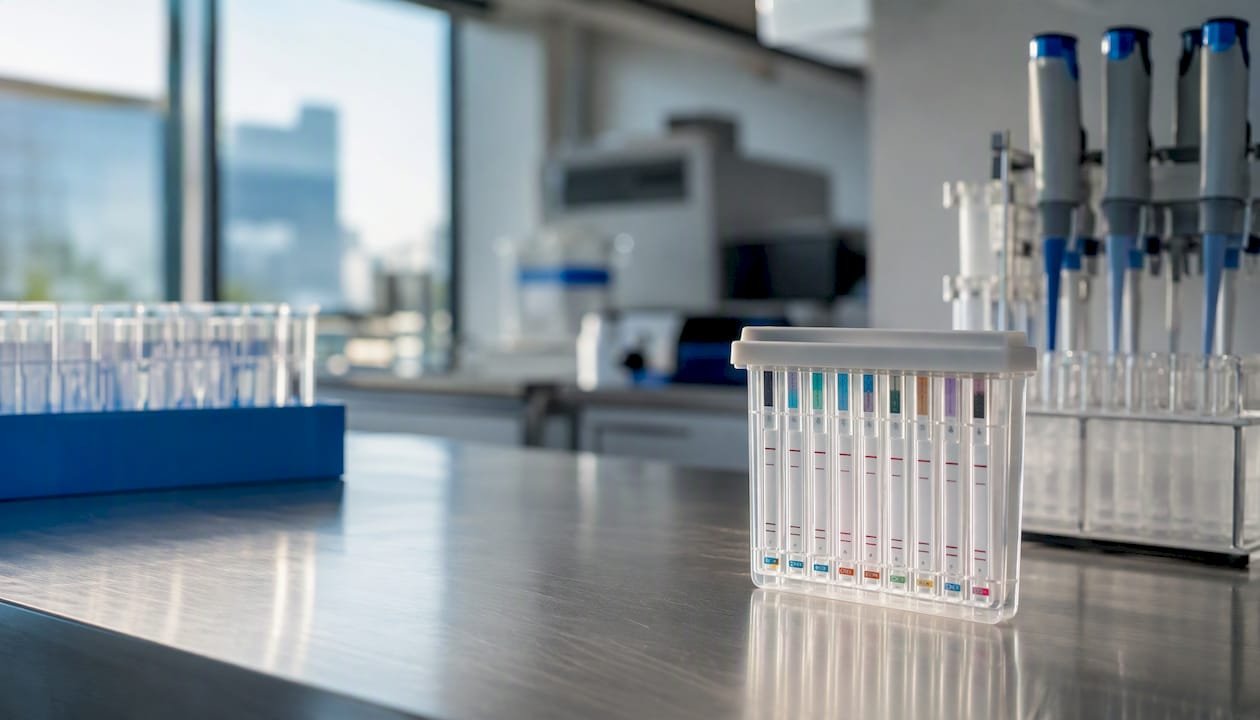
What a 16-Panel Drug Screen Tests For: Full Analyte Guide
A standard 16-panel drug screen checks for these substances:
- Amphetamines (AMP)
- Barbiturates (BAR)
- Benzodiazepines (BZO)
- Buprenorphine (BUP)
- Carisoprodol (CAR)
- Cocaine metabolite (COC)
- Fentanyl (FEN)
- Gabapentin (GABA)
- Meperidine (MEP)
- Methadone (MTD)
- Opiates (OPI) — covers morphine, codeine, heroin metabolites
- Oxycodone/Oxymorphone (OXY)
- Phencyclidine (PCP)
- Propoxyphene (PPX)
- THC (cannabinoids)
- Tramadol (TRAM)
That list comes directly from LabCorp Drug Screen 16 with reflex confirmation for whole blood. Retail urine cups often swap one or two of those targets for ethyl glucuronide (EtG, an alcohol metabolite) or synthetic cannabinoids (K2/Spice), so the exact 16 slots vary by vendor. Any screen that returns a non-negative result is presumptive only — confirmation by GC‑MS or LC‑MS/MS is required before a result is used for employment or clinical decisions.
Key Takeaways
A 16-panel drug screen is a presumptive immunoassay test — any non-negative result requires GC‑MS or LC‑MS/MS confirmation before it can be used for employment or clinical decisions.
| Point | Details |
|---|---|
| Typical 16 analytes | AMP, BAR, BZO, BUP, CAR, COC, FEN, GABA, MEP, MTD, OPI, OXY, PCP, PPX, THC, TRAM — but exact lists vary by vendor. |
| Urine is standard | Most 16-panel screens use urine; detection windows range from hours (EtG) to weeks (THC with chronic use). |
| Presumptive, not confirmed | A non-negative screen triggers reflex confirmation by GC‑MS or LC‑MS/MS before any action is taken. |
| Cutoffs determine results | A drug present below the ng/mL cutoff reads negative; check both screening and confirmation cutoffs on the spec sheet. |
| Mayflowerbio cup options | Mayflowerbio’s 16-panel cup covers fentanyl and EtG with published analyte lists, cutoffs, and adulterant checks. |
Table of Contents
- What does a 16-panel drug screen test for, analyte by analyte?
- How real 16-panel products differ from each other
- Specimen types and detection windows
- How accurate is a 16-panel drug screen?
- How to interpret cutoffs, positives, and inconclusive results
- Factors that affect whether a drug shows up
- Methods, standards, and accreditation to look for
- Why the spec sheet is the only thing that actually matters
- Mayflowerbio’s 16-panel drug test cups: fentanyl, EtG, and CLIA options
- Sources
- FAQ
What does a 16-panel drug screen test for, analyte by analyte?
Each of the 16 targets has its own abbreviation, detection logic, and clinical reason for inclusion. Here is what you will actually see on a spec sheet.
Cutoff values above come from a retail 16-panel cup spec sheet and represent common vendor defaults — labs may set different thresholds.
Here are a few points worth flagging:
- OXY and OPI are separate entries. Oxycodone does not reliably trigger a standard opiate immunoassay, which is why extended panels list it as its own lane.
- Fentanyl’s cutoff is notably low (20 ng/mL on many cups) because the drug is active at microgram doses and standard opiate assays miss it entirely.
- Buprenorphine at 10 ng/mL reflects its role in medication-assisted treatment — employers or clinicians may need to know whether someone is on a legitimate prescription.
- Gabapentin and tramadol are relatively recent additions to extended panels, driven by rising misuse rates. Not every 16-panel product includes them; always check the spec sheet.
How real 16-panel products differ from each other
The label “16-panel” tells you how many drug classes are tested, not which ones. Two cups sitting side by side on a distributor’s shelf can have meaningfully different analyte sets.
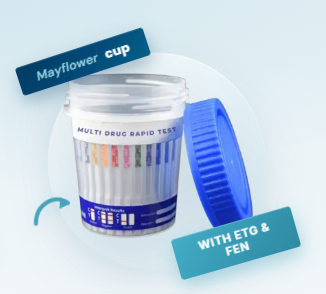
The most common swap involves EtG (ethyl glucuronide). Many retail cups replace carisoprodol or propoxyphene with EtG at a 300 ng/mL cutoff, giving the panel an alcohol-detection lane. That matters for workplace programs where alcohol use is a policy concern but not always captured by a standard drug screen. Some cups go further and include both EtG and fentanyl, which is why you will see products marketed specifically as “16-panel with fentanyl and alcohol.”
Synthetic cannabinoids (K2/Spice) appear on some panels at a 50 ng/mL cutoff. K2 compounds do not trigger a standard THC immunoassay, so a panel that lists only THC will miss them. If your program covers synthetic cannabinoids, verify the K2 lane is explicitly listed.
Labs handle variation differently from cup manufacturers. LabCorp’s ToxAssure Flex 16 runs presumptive immunoassay screening on most analytes but uses definitive testing by default for benzodiazepines, buprenorphine, and fentanyl — meaning those three results are already confirmed before the report is issued.
What to check on any spec sheet before you buy or order:
- Full analyte names and abbreviations (not just the panel count)
- Cutoff levels in ng/mL for each analyte
- Specimen type (urine, whole blood, oral fluid)
- Whether the product includes built-in adulterant checks (temperature strip, creatinine, pH, specific gravity)
- Confirmation method and turnaround time for non-negative results
Specimen types and detection windows
Urine is the specimen for virtually all 16-panel point-of-care cups and most lab-based 16-panel screens. It is non-invasive, produces high analyte concentrations, and has the widest published reference ranges. Whole blood is used in some clinical and forensic settings — LabCorp’s 16-panel reflex panel is a whole-blood product — but it requires venipuncture and has shorter detection windows for most drugs. Oral fluid panels exist for roadside and workplace use but are less common at the 16-panel level.
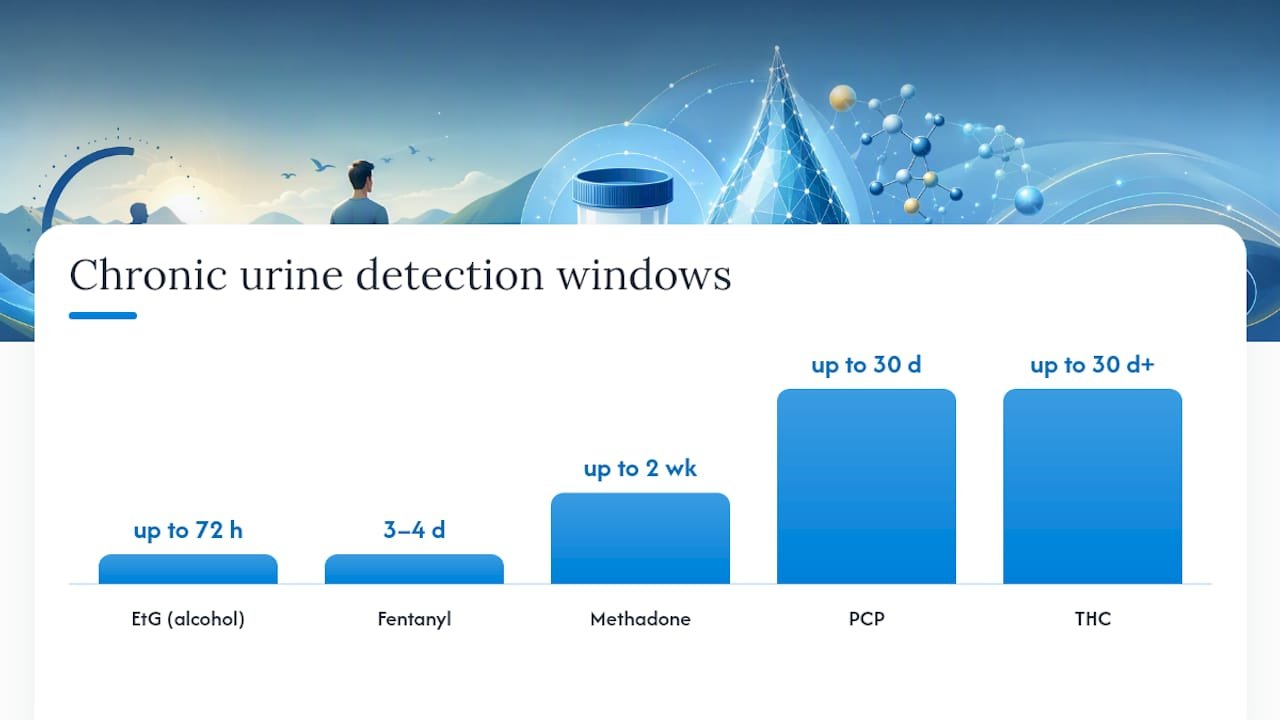
Detection windows in urine vary considerably depending on the drug, the dose, and the individual. The table below shows approximate ranges for the most common analytes.
| Drug class | Single-use detection (urine) | Chronic/heavy-use detection (urine) |
|---|---|---|
| Amphetamines | 1–3 days | 3–5 days |
| Barbiturates (short-acting) | 1–4 days | up to 3 weeks |
| Benzodiazepines (short-acting) | 1–3 days | up to several weeks |
| Cocaine metabolite | 2–4 days | up to 2 weeks |
| Fentanyl | 1–3 days | 3–4 days |
| Methadone | 3–7 days | up to 2 weeks |
| Opiates (morphine/codeine) | 1–3 days | 3–5 days |
| Oxycodone | 1–3 days | 3–5 days |
| PCP | 7–10 days | up to 30 days |
| THC | 1–3 days | up to 30 days or longer |
| Tramadol | 1–4 days | 4–5 days |
| EtG (alcohol metabolite) | 12–36 hours | up to 72 hours |
Ranges are approximate and drawn from published detection-window summaries. EtG has a notably short window compared with other analytes, which is why it is used to detect recent alcohol consumption rather than long-term use.
Factors that compress or extend these windows:
- Frequency of use: THC accumulates in fat tissue with chronic use, extending urine detection well past the single-use range.
- Metabolism rate: Faster metabolizers clear drugs more quickly; age, liver function, and genetics all play a role.
- Hydration: Dilute urine lowers analyte concentration and can push a borderline result below the cutoff.
- Body composition: Higher body fat prolongs THC and some benzodiazepine detection.
- Route of administration: Intravenous use typically produces a faster, higher peak concentration than oral ingestion.
For biopharma researchers working with specimen handling protocols, these same variables affect assay design decisions around matrix effects and analyte stability.
How accurate is a 16-panel drug screen?
The short answer: the screening step is fast and sensitive, but it is not definitive. Immunoassay-based point-of-care cups detect drug classes by measuring antibody-antigen binding. That makes them quick and inexpensive, but antibodies can cross-react with structurally similar compounds that are not the target drug.
Common cross-reactivity examples:
- Quinolone antibiotics (e.g., levofloxacin) can trigger a false positive on some opiate assays.
- Ibuprofen and naproxen at high doses have been associated with false positives on THC and PCP screens.
- Dextromethorphan (found in cough syrup) can cross-react with PCP and opioid assays.
- Certain antidepressants (e.g., quetiapine, sertraline) have been reported to interfere with benzodiazepine and amphetamine assays.
Pro Tip: When a vendor advertises “99% accuracy,” that figure typically refers to the agreement rate between the cup’s result and a reference method under controlled conditions — not to the false-positive rate in real-world use. It does not mean the screen is equivalent to a confirmed result. Always ask what confirmation method backs the claim.
Retail listings sometimes promote high accuracy for point-of-care cups, but such claims describe panel design performance, not the distinction between a presumptive screen and a confirmed result.
Reflex confirmation resolves this. When a screen returns non-negative, the same sample is sent to GC‑MS (gas chromatography/mass spectrometry) or LC‑MS/MS (liquid chromatography tandem mass spectrometry). These methods identify the specific compound and its concentration, not just a class signal. A confirmed positive is legally defensible; a presumptive positive is not. LabCorp’s ToxAssure Flex 16 illustrates this workflow: it runs definitive testing by default for benzodiazepines, buprenorphine, and fentanyl, and reflexes other non-negatives to definitive testing automatically.
How to interpret cutoffs, positives, and inconclusive results
A cutoff is the concentration threshold below which a result is reported as negative, regardless of whether trace amounts of the drug are present. Cutoffs are set in ng/mL and differ between the screening and confirmation steps — confirmation cutoffs are typically lower, which is why a screen can return negative while a confirmatory test on the same sample returns positive at a lower threshold.
Typical reporting categories:
- Negative: Analyte concentration is below the screening cutoff. No further action required under standard protocols.
- Presumptive positive (non-negative): Analyte concentration meets or exceeds the screening cutoff. This is not a confirmed result.
- Invalid: The specimen failed integrity checks (temperature out of range, creatinine too low, pH outside 4–9). The test cannot be interpreted.
- Adulterated: Specimen shows evidence of tampering (oxidizing agents, abnormal pH).
- Inconclusive: Result falls near the cutoff and cannot be reliably classified as positive or negative by the screening method alone.
Steps to take after a presumptive positive:
- Preserve the original specimen under proper storage conditions (refrigerated, chain-of-custody seal intact).
- Request confirmatory testing by GC‑MS or LC‑MS/MS on the same aliquot.
- Ask the donor to disclose any prescription medications that could explain the result before the medical review officer (MRO) review.
- Wait for the confirmed result before taking any employment or clinical action.
- If the confirmed result is positive, the MRO reviews prescription history and determines whether the result is a legitimate medical use or a reportable positive.
Factors that affect whether a drug shows up
A 16-panel screen can miss a drug that was genuinely used, or flag one that was not. Both outcomes have real consequences, so understanding what drives them matters.
Physiological and consumption factors:
- Chronic, heavy use extends detection windows significantly (especially THC and long-acting benzodiazepines).
- A single low dose taken days before testing may fall below the cutoff even if the drug was used.
- Kidney function affects how quickly drugs are excreted; impaired clearance can extend detection.
- Oral ingestion produces slower absorption and a lower peak urine concentration than inhalation or injection.
Sample integrity factors:
Most point-of-care cups include built-in adulterant checks. A temperature strip confirms the specimen was body temperature at collection (roughly 90–100°F). Creatinine, specific gravity, and pH checks detect dilution, substitution, or chemical adulteration. Cups with these built-in checks flag suspicious specimens before the immunoassay result is even read.
Testing and cutoff factors:
- A drug present at 45 ng/mL against a 50 ng/mL cutoff will read negative, even though the substance is detectable.
- Assay specificity varies by manufacturer — some antibodies are more cross-reactive than others.
- Analytes like fentanyl require their own dedicated immunoassay lane; they will not trigger an opiate result.
In safety-sensitive employment settings, chain-of-custody documentation and CLIA-accredited lab confirmation are standard requirements to ensure results hold up to legal scrutiny.
Methods, standards, and accreditation to look for
The immunoassay step in a point-of-care cup is a lateral-flow or competitive-binding reaction. It is fast and requires no laboratory equipment, but it produces a class-level signal, not a compound-specific identification. That distinction is what separates a presumptive screen from a definitive result.
Confirmatory methods used in accredited labs:
- GC‑MS: Gold standard for most drug classes; separates compounds by volatility and identifies them by mass fragmentation pattern.
- LC‑MS/MS: Preferred for polar or thermally labile compounds (buprenorphine, fentanyl, gabapentin); offers high sensitivity and specificity without derivatization.
Both methods produce a compound-specific result with a quantitative concentration, which is why they are required for any result that affects employment, custody, or clinical treatment decisions.
Standards and organizations to reference:
- SAMHSA publishes federal guidelines on workplace drug testing, mandatory guidelines for federal programs, and resources on confirmatory testing best practices.
- The PBSA (Professional Background Screening Association) provides industry guidance for employers choosing panel types and confirmation policies.
- CLIA (Clinical Laboratory Improvement Amendments) accreditation confirms a lab meets federal quality standards for testing accuracy and personnel.
- CAP (College of American Pathologists) accreditation is a higher-tier lab certification that includes proficiency testing for toxicology panels.
When evaluating a product or lab service, look for published analyte lists with LOINC codes, stated cutoffs for both screening and confirmation, and explicit documentation of the confirmation method. Vendors that publish this information are giving you the data you need to verify the panel fits your program. FDA-approved drug screen types vary in their regulatory pathway, and understanding that distinction matters when procurement or compliance is involved.
A statistic worth noting: background-check industry sources consistently note that 16-panel screens are more comprehensive than 5- or 10-panel tests, and that positive point-of-care results routinely require laboratory confirmation before any employment decision is made.
Why the spec sheet is the only thing that actually matters
Most buyers focus on the panel count. That is the wrong place to look first.
Two products both labeled “16-panel” can differ on fentanyl inclusion, EtG presence, K2 coverage, cutoff levels, and whether confirmation is built into the workflow or left to the buyer to arrange. A panel that does not include fentanyl will miss one of the most consequential substances in current drug use patterns. A panel without EtG will not detect recent alcohol consumption at all. These are not edge cases — they are the exact gaps that make a panel choice consequential.
The spec sheet tells you what the panel actually does. The panel count tells you almost nothing on its own. Before purchasing or ordering any 16-panel product, verify the full analyte list, the cutoff for each lane, the specimen type, and the confirmation pathway. If a vendor does not publish those details, that itself is a signal worth taking seriously.
Mayflowerbio’s 16-panel drug test cups: fentanyl, EtG, and CLIA options
If you need a 16-panel cup that explicitly covers fentanyl and alcohol (EtG) in a single collection, Mayflowerbio’s 16-panel drug test cup is built for exactly that. The product page lists the full analyte set, cutoffs, and adulterant check specifications — the details this article identifies as the minimum you should verify before any purchase.
For programs that require point-of-care compliance, Mayflowerbio also offers CLIA-waived options and a broader multi-drug test cup category that covers 12-, 14-, and 16-panel configurations. If you are comparing panel sizes, the 12-panel cup with PCP is a useful reference point for understanding what the additional lanes in a 16-panel actually add. Check the product pages for current analyte lists, cutoffs, and bulk pricing, then confirm the confirmation pathway your program requires before placing an order.
Sources
The following sources were used in this article and are worth bookmarking for deeper detail:
- 700902: Drug Screen 16 With Reflex Confirmation (AMP,BAR,BZO,COC,PCP,THC,OPI,OXY,MD,FEN,BUP,PPX,MEP,TRAM,GABA,CAR), Whole Blood | Labcorp
- 16 Panel Drug Screen Cup TRA, KRA, KET – Bulk Orders & Best Prices
- Samhsa
FAQ
What shows up on a 16-panel drug test?
A standard 16-panel screen covers amphetamines, barbiturates, benzodiazepines, buprenorphine, carisoprodol, cocaine metabolite, fentanyl, gabapentin, meperidine, methadone, opiates, oxycodone, PCP, propoxyphene, THC, and tramadol — though some vendors swap one or two of those for EtG (alcohol) or synthetic cannabinoids (K2).
How far back does a 16-panel urine test go?
Detection windows vary by drug: cocaine metabolite clears in 2–4 days for a single use, while THC can remain detectable for up to 30 days or longer with chronic use. EtG has the shortest window, typically 12–36 hours after alcohol consumption.
How accurate is the 16-panel drug test?
The immunoassay screening step is highly sensitive but subject to cross-reactivity, meaning certain medications can produce false positives. Confirmed accuracy requires GC‑MS or LC‑MS/MS, which identifies the specific compound rather than a drug class signal.
What is the difference between a 16-panel and a 5-panel drug test?
A standard 5-panel test covers amphetamines, cocaine, marijuana, opiates, and PCP. A 16-panel adds fentanyl, buprenorphine, benzodiazepines, methadone, oxycodone, tramadol, gabapentin, barbiturates, carisoprodol, meperidine, and propoxyphene — making it substantially more comprehensive for prescription drug misuse detection.
Can you pass a 16-panel drug screen by diluting your urine?
Dilution lowers analyte concentration and can push a borderline result below the cutoff, but most point-of-care cups include creatinine and specific gravity checks that flag dilute specimens as invalid. A flagged invalid result typically requires a retest under observed conditions.
This article is general information only and is not a substitute for professional medical, legal, or occupational health advice. Confirm current testing requirements and result interpretation with a qualified medical review officer, clinical laboratory, or HR professional.