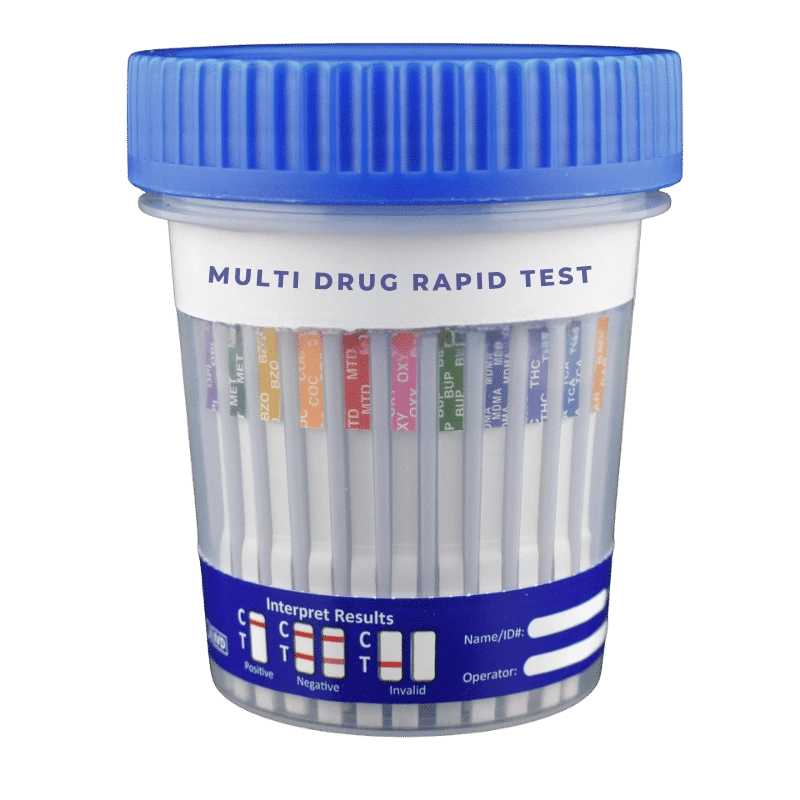
What Does FM-590PP Non-DOT Urine Test For?
If your employer or testing paperwork says “FM-590PP Non-DOT Urine,” you may be wondering exactly what drugs the test detects. The short answer is that FM-590PP refers to a Non-DOT urine drug-testing designation, but the exact substances included can depend on the panel and testing order selected by the employer.
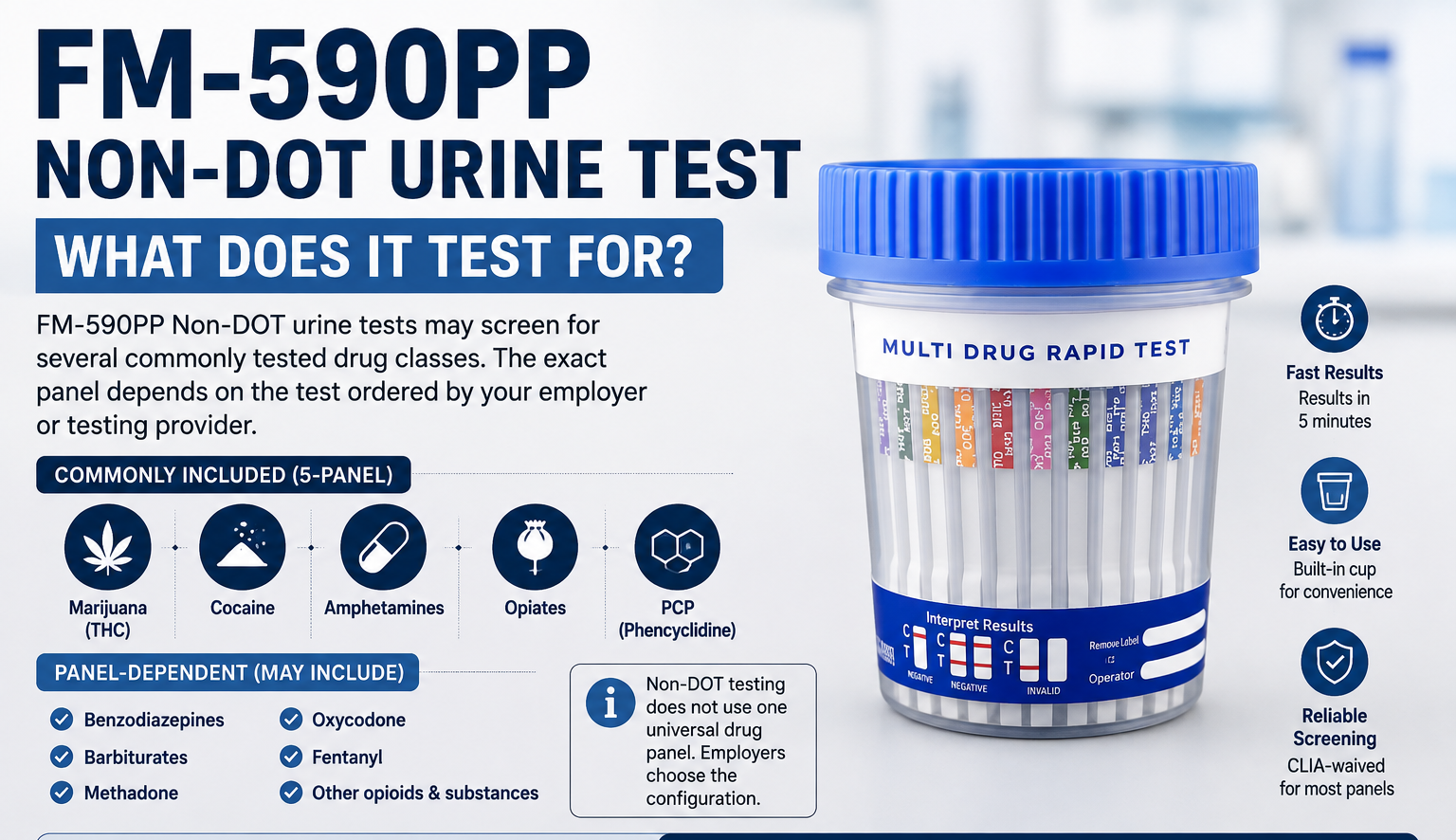
A commonly described 5-panel configuration includes marijuana/THC, cocaine, amphetamines, opiates, and PCP. Expanded Non-DOT panels can include additional drug classes such as benzodiazepines, barbiturates, methadone, oxycodone, fentanyl, or other substances. Because Non-DOT testing does not have one universal panel, the most reliable way to identify your exact test is to check the test order or ask the employer or testing provider.
Quick Answer: What Does FM-590PP Test For?
An FM-590PP Non-DOT urine test may screen for several commonly tested drug classes, including:
- Marijuana/THC
- Cocaine
- Amphetamines
- Methamphetamine
- Opiates
- PCP (phencyclidine)
Depending on the specific panel ordered, additional testing may include:
- Benzodiazepines
- Barbiturates
- Methadone
- Oxycodone
- Other opioids
- Fentanyl
- Other employer-selected substances
The important distinction is that Non-DOT testing does not use one universal drug panel. Employers can choose testing configurations based on their workplace drug-testing policy, job requirements, and applicable laws.
What Is an FM-590PP Non-DOT Urine Test?
An FM-590PP Non-DOT urine test is a urine-based drug screening designation associated with non-DOT workplace testing.
“Non-DOT” means the test is not being conducted as a DOT-regulated drug test under the federal Department of Transportation testing program. Non-DOT testing is commonly used by employers for purposes such as pre-employment screening, workplace testing, post-incident testing, or other situations covered by a company’s drug-testing policy.
Unlike DOT testing, a Non-DOT program can use different drug panels and may be customized by the employer or testing provider.
The FM-590PP portion is a test or ordering designation. It should not be interpreted as meaning that every laboratory or employer necessarily uses an identical panel under that name.
That distinction is important because many online discussions give conflicting answers about whether FM-590PP includes THC, fentanyl, benzodiazepines, or other drugs.
What Drugs Are Commonly Included in FM-590PP Testing?
The substances most frequently associated with the commonly described 5-panel configuration are marijuana/THC, cocaine, amphetamines, opiates, and PCP.
| Drug class | Commonly associated with a 5-panel screen? | Examples |
| Marijuana | Yes | THC metabolites |
| Cocaine | Yes | Cocaine metabolites |
| Amphetamines | Yes | Amphetamine, methamphetamine |
| Opiates | Yes | Morphine, codeine and related opiates |
| PCP | Yes | Phencyclidine |
| Benzodiazepines | Panel-dependent | Alprazolam, diazepam and others |
| Barbiturates | Panel-dependent | Phenobarbital and others |
| Methadone | Panel-dependent | Methadone |
| Oxycodone | Panel-dependent | Oxycodone |
| Fentanyl | Panel-dependent | Fentanyl |
| Alcohol | Separate/optional | Depends on the specific alcohol test ordered |
This table describes substances commonly associated with workplace drug-testing panels; it does not mean every FM-590PP order contains every substance listed.
Does FM-590PP Test for Marijuana or THC?
It can, and marijuana/THC is commonly included in workplace urine drug screens.
However, whether your specific FM-590PP order includes marijuana should be confirmed from the actual test configuration.
Marijuana urine testing generally looks for a THC metabolite, rather than measuring whether someone is currently impaired. A urine screening result therefore should not be interpreted as a direct measurement of current impairment.
This question appears frequently in searches about FM-590PP, particularly among people undergoing pre-employment testing. Online discussions about the test have produced conflicting reports about whether particular FM-590PP configurations included THC, which is another reason not to rely solely on anecdotal reports.
Does FM-590PP Test for Cocaine?
Cocaine may be included in a standard 5-panel configuration associated with Non-DOT testing.
Urine drug screens generally look for cocaine-related metabolites rather than the original drug itself.
If your employer ordered an expanded or customized panel, the exact analytes and cutoff levels may differ from those used in another workplace drug test.
Does FM-590PP Test for Amphetamines and Methamphetamine?
Amphetamines are commonly included in a 5-panel workplace drug screen.
Depending on the testing configuration, amphetamine-related testing may include:
- Amphetamine
- Methamphetamine
- MDMA or related compounds
The exact analytes should be confirmed from the laboratory’s test order because “amphetamine testing” does not necessarily mean that every stimulant is automatically included.
Does FM-590PP Test for Opiates?
Opiates are commonly included in a standard 5-panel drug screen.
Traditional opiate testing may detect substances or metabolites associated with drugs such as:
- Morphine
- Codeine
- Heroin-related metabolites
However, it is important to understand that a general opiate screen is not automatically the same thing as testing for every opioid medication.
For example, separate testing may be required for substances such as oxycodone, fentanyl, methadone, or certain other synthetic or semi-synthetic opioids.
Does FM-590PP Test for PCP?
PCP, also called phencyclidine, is commonly part of the traditional 5-panel drug-testing configuration.
PCP is one of the drug classes historically included in standard workplace 5-panel screening.
Can FM-590PP Include More Than Five Drugs?
Yes.
A Non-DOT employer can choose an expanded drug-testing panel rather than limiting testing to the traditional five drug classes.
Expanded testing may include substances such as:
- Benzodiazepines
- Barbiturates
- Methadone
- Oxycodone
- Fentanyl
- Other opioids
- Additional prescription or illicit drug classes
This is one of the biggest differences between a generic Non-DOT test and a federally regulated DOT drug test: Non-DOT employers can use different panels according to their testing program and applicable requirements.
Is FM-590PP a 5-Panel or 10-Panel Drug Test?
This is one of the most confusing parts of the FM-590PP search results.
Some online sources describe FM-590PP in connection with a 5-panel configuration, while others describe 10-panel or expanded testing.
The safest conclusion is:
Do not assume that the FM-590PP designation alone tells you every substance included in your specific order.
The panel can depend on the employer’s testing program and the configuration requested from the testing provider.
If your paperwork only says “FM-590PP Non-DOT Urine,” ask the employer, occupational health department, collection site, or testing provider for the exact panel or analytes included in the order.
Does FM-590PP Test for Fentanyl?
Not necessarily.
Fentanyl is not automatically included in every traditional 5-panel drug screen. Fentanyl testing generally requires a panel that specifically includes fentanyl or its metabolites.
This distinction matters because a person can have a urine test that includes several opioid categories without necessarily having a separate fentanyl assay.
Therefore, if fentanyl testing is important for your situation, look for an explicit reference to FENT/fentanyl on the test order or ask the testing provider.
Does FM-590PP Test for Benzodiazepines?
Benzodiazepines may be included in an expanded Non-DOT panel, but they are not automatically part of every basic 5-panel screen.
Benzodiazepines include medications from a broad drug class, so the specific testing method and analytes can matter.
If you take a prescription benzodiazepine, do not stop taking it solely because of an upcoming drug test. Follow your prescribing clinician’s instructions and use the appropriate medication-disclosure or Medical Review Officer process when applicable.
Does FM-590PP Test for Oxycodone?
Oxycodone testing may be included in an expanded panel.
A traditional opiate screen should not automatically be interpreted as a comprehensive test for every opioid medication. Oxycodone may be tested as its own analyte depending on the laboratory panel.
That is why the number of “panels” alone does not always tell you precisely which individual substances are included.
Does FM-590PP Test for Tramadol?
Tramadol is not generally part of the traditional five drug classes used in a basic workplace 5-panel screen.
However, a customized Non-DOT panel can include additional substances, so you should not assume that tramadol is either always included or always excluded from a particular employer’s test.
If you take tramadol as a prescribed medication, do not discontinue it simply to change a drug-test result. Follow your medical provider’s instructions and provide medication information through the appropriate testing process if requested.
Does FM-590PP Test for Alcohol?
A standard urine drug panel and an alcohol test are not necessarily the same thing.
Alcohol testing is not automatically included simply because a test is labeled Non-DOT. An employer can have separate alcohol-testing requirements or order a specific alcohol biomarker test.
For example, testing for alcohol metabolites such as EtG (ethyl glucuronide) is different from simply ordering a standard urine drug panel.
If alcohol testing is a concern, check whether your paperwork specifically lists an alcohol or EtG test.
What Is the Difference Between FM-590PP and a DOT Drug Test?
The biggest difference is the regulatory framework.
A DOT drug test is performed under federal DOT requirements for covered employees and follows specific rules concerning collection, laboratory testing, documentation, review, and reporting.
A Non-DOT test is conducted under an employer’s own testing program rather than as a DOT-regulated test. Non-DOT employers may use different drug panels and may add substances beyond the traditional federal panel.
| Feature | FM-590PP Non-DOT | DOT Drug Test |
| Regulatory framework | Employer/non-DOT program | Federal DOT requirements |
| Drug panel | Can vary | Federally specified |
| Marijuana testing | Depends on the ordered panel | Required under DOT drug-testing rules |
| Additional drugs | May be added | Standard DOT panel applies |
| Alcohol | Separate/optional depending on program | Separate DOT alcohol-testing requirements |
| Testing procedures | Employer/lab program | DOT-regulated procedures |
| Purpose | Workplace/employer testing | DOT-regulated safety-sensitive employment |
In other words, Non-DOT does not mean “no drug testing.” It means the testing is outside the federal DOT testing program.
How Far Back Does an FM-590PP Urine Test Detect Drugs?
There is no single detection window for an FM-590PP urine test.
Detection depends on factors such as:
- The substance being tested
- Frequency of use
- Amount used
- Individual metabolism
- Testing cutoff
- Type of specimen
- Characteristics of the drug and its metabolites
- Whether the test is an initial screen or a confirmatory analysis
A urine drug test generally indicates whether a tested analyte or metabolite is present at or above the applicable cutoff. It does not provide an exact timestamp for when a substance was used.
For that reason, claims such as “FM-590PP detects drugs for exactly X days” should be treated cautiously.
What Happens If an FM-590PP Screen Is Positive?
An initial urine drug screen is generally a screening test, not necessarily the final determination of drug use.
Depending on the employer’s program and the substance involved, a presumptive positive may be followed by additional laboratory testing and/or review by a qualified Medical Review Officer.
A confirmed result can then be handled according to the employer’s workplace drug-testing policy and applicable law.
A positive screening result should therefore not automatically be interpreted as proof that a person is impaired or that they violated a workplace policy.
How Can I Find Out Exactly What My FM-590PP Test Includes?
If you need a definitive answer about your specific test, the best approach is to check the actual test order or requisition.
You can also ask:
- Your employer’s HR department
- The occupational health department
- The testing/collection site
- The laboratory or testing provider
- The Medical Review Officer, when applicable
Ask specifically:
“Which drug classes and analytes are included in my FM-590PP Non-DOT urine test?”
This is more reliable than assuming that every FM-590PP test has the same configuration.
Current search results also indicate that the exact substances associated with FM-590PP are not consistently documented in publicly available information, so relying on the specific order is especially important.
FM-590PP Non-DOT Urine Test: Key Takeaways
The most important points are:
- FM-590PP is associated with Non-DOT urine drug testing.
- A commonly described 5-panel configuration includes THC/marijuana, cocaine, amphetamines, opiates, and PCP.
- Expanded panels may include benzodiazepines, barbiturates, methadone, oxycodone, fentanyl, or other substances.
- Fentanyl, tramadol, benzodiazepines, oxycodone, and alcohol should not automatically be assumed to be included.
- Non-DOT testing is generally more customizable than federally regulated DOT testing.
- The exact FM-590PP panel can depend on the employer’s testing order and laboratory configuration.
- The most reliable way to identify your exact test is to check the requisition or ask the employer/testing provider.
Frequently Asked Questions
What does FM-590PP Non-DOT urine test for?
FM-590PP is associated with a Non-DOT urine drug test. A commonly described 5-panel configuration screens for marijuana/THC, cocaine, amphetamines, opiates, and PCP, while expanded configurations can test for additional substances.
Does FM-590PP test for marijuana?
It can. Marijuana/THC is commonly included in workplace urine drug screens, but the exact FM-590PP configuration should be confirmed from the test order.
Is FM-590PP a 5-panel drug test?
It may correspond to a 5-panel configuration, but the exact panel can vary. Do not assume that every test carrying the FM-590PP designation contains exactly the same analytes.
Does FM-590PP test for fentanyl?
Not necessarily. Fentanyl generally requires specific inclusion in the ordered testing panel.
Does FM-590PP test for alcohol?
Not automatically. A standard urine drug panel is different from a specific alcohol or EtG test.
Does FM-590PP test for benzodiazepines?
Benzodiazepines can be included in an expanded Non-DOT panel, but they are not automatically included in every basic 5-panel configuration.
Does FM-590PP test for oxycodone?
Oxycodone may be included as an additional analyte in an expanded panel. A traditional opiate screen should not automatically be assumed to include every opioid medication.
Does FM-590PP test for tramadol?
Tramadol is not generally one of the traditional five drug classes in a basic 5-panel screen, but a customized panel may include additional testing.
Is FM-590PP a DOT drug test?
No. The designation “Non-DOT” means the test is outside the federally regulated DOT drug-testing program.
How do I know exactly what my FM-590PP test includes?
Check the laboratory requisition or ask your employer, HR department, collection site, or testing provider which specific drug panel and analytes were ordered.
Final Answer
If your paperwork says FM-590PP Non-DOT Urine, the safest interpretation is that you are being sent for a Non-DOT urine drug screen, but the code alone should not be treated as a guarantee of one universal drug panel.
A commonly described 5-panel configuration includes marijuana/THC, cocaine, amphetamines, opiates, and PCP, while expanded testing can include additional substances. Because Non-DOT testing can be customized, the specific test order is the best source for determining exactly what your e