How Long Does Meth Stay in Your Urine?
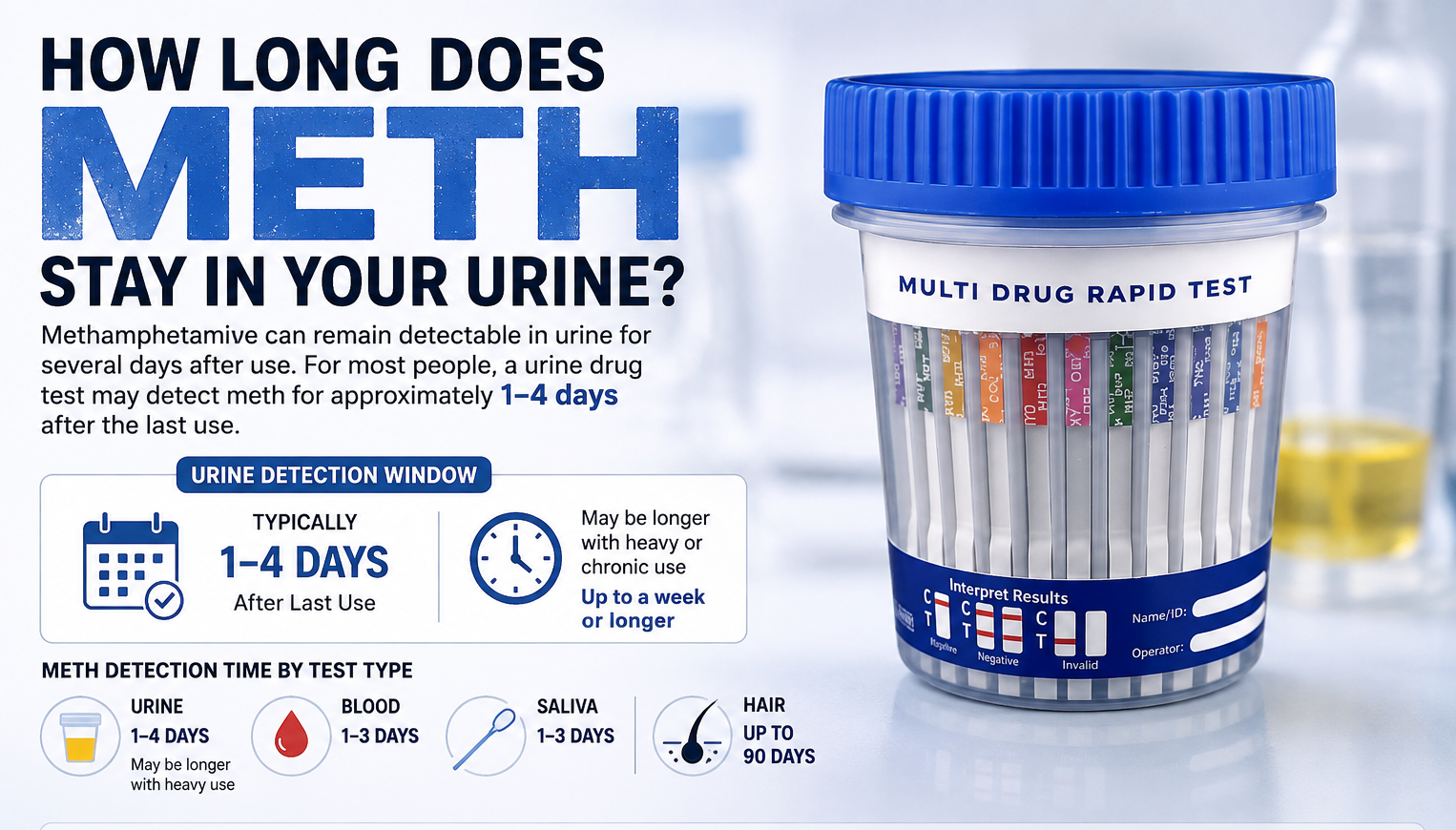
Methamphetamine, commonly called meth, can remain detectable in urine for several days after use. For most people, a urine drug test may detect meth for approximately 1–4 days after the last use, although the detection window can be longer with frequent or heavy use.
The exact timeframe is not the same for everyone. Factors such as the amount used, frequency of use, metabolism, overall health, urine characteristics, and the type of drug test can influence how long meth remains detectable.
If you’re wondering how long meth stays in your urine, urine testing is one of the most commonly used methods for detecting methamphetamine because it provides a practical detection window and is relatively easy to administer.
Key Takeaways
- Meth can typically be detected in urine for about 1–4 days after use.
- Heavy or chronic use may result in a longer detection window, sometimes around a week or more.
- Meth may become detectable in urine within a few hours after use.
- Methamphetamine can metabolize into amphetamine, so both substances may be identified during testing.
- Blood tests generally have a shorter detection window than urine tests.
- Saliva testing may detect meth for approximately 1–3 days, depending on the test and circumstances.
- Hair testing can provide a much longer detection window, commonly up to 90 days.
- There is no proven method to reliably eliminate meth from the body faster.
- A preliminary positive urine screening may require laboratory confirmation depending on the testing program and purpose.
How Long Does Meth Stay in Your Urine?
For a typical urine drug test, methamphetamine may remain detectable for approximately 1–4 days after the last use.
Some sources report a common window of 3–5 days, particularly depending on the test, individual factors, and frequency of use. With heavy or chronic use, detection may extend to a week or longer.
The important point is that a urine detection window is an estimate—not a guaranteed deadline.
| Pattern or circumstance | Approximate urine detection |
|---|---|
| Single use | About 1–4 days |
| Typical reported range | About 3–5 days |
| Heavy/chronic use | Up to a week or longer |
| Individual variation | Can differ considerably |
A urine test detects methamphetamine and/or its metabolites rather than determining exactly when the substance was used.
When Does Meth Show Up in Urine?
Meth can become detectable in urine within a few hours after use. The exact time depends on factors including the amount taken, route of administration, individual metabolism, and the sensitivity and cutoff of the test.
Because there is a delay between use and urinary excretion, testing immediately after use does not necessarily produce the same result as testing several hours later.
This is one reason drug-testing results should be interpreted according to the specific test’s instructions, cutoff levels, and testing procedure.
What Does a Urine Drug Test Look for?
A urine drug screening can be designed to detect methamphetamine and other substances or their metabolites.
Many multi-panel urine drug tests include methamphetamine (MET) and may also include amphetamine (AMP).
Methamphetamine is metabolized in the body, and amphetamine can be produced as one of its metabolites. Consequently, a drug-testing panel may report methamphetamine and amphetamine separately depending on its design.
A multi-panel urine test may screen for substances such as:
- Methamphetamine
- Amphetamine
- Cocaine
- Opioids
- Oxycodone
- Benzodiazepines
- Buprenorphine
- Fentanyl
- THC
- Methadone
- PCP
- MDMA
The exact substances included depend on the particular test.
Meth Detection Time by Drug Test
Urine is not the only method used to detect methamphetamine. Different specimens provide different detection windows.
| Test type | Approximate detection window |
|---|---|
| Urine | About 1–4 days; potentially longer with heavy use |
| Blood | Generally about 1–3 days |
| Saliva/oral fluid | Approximately 1–3 days |
| Hair | Up to about 90 days |
These are general ranges rather than guarantees. Test sensitivity, cutoff concentrations, individual metabolism, frequency of use, and other variables can affect the result.
1. Urine Test
Urine testing is one of the most commonly used methods for methamphetamine screening.
Meth may become detectable in urine within several hours, and a typical detection window is approximately 1–4 days. Other sources report around 3–5 days, while heavy or chronic use may extend the window to a week or longer.
Urine tests are frequently used in:
- Workplace drug screening
- Probation and parole programs
- Drug courts
- Rehabilitation programs
- Clinical settings
- Compliance testing
- Other structured drug-testing programs
A urine screening result indicates whether the concentration detected is above or below the test’s cutoff. It does not establish exactly when the substance was consumed.
2. Blood Test
Blood testing generally has a shorter detection window than urine testing.
Methamphetamine can appear in the bloodstream relatively soon after use, but concentrations decrease as the body metabolizes and eliminates the drug.
Blood testing is more commonly associated with situations requiring information about relatively recent exposure, such as certain medical, emergency, or forensic circumstances.
3. Saliva Test
Saliva, also called oral-fluid testing, can detect methamphetamine for approximately 1–3 days, although the exact window varies.
Oral-fluid testing may be used when rapid collection and recent-use detection are important.
Factors such as the test’s cutoff, collection procedure, and time since use can affect the result.
4. Hair Test
Hair testing generally has the longest detection window among commonly discussed drug-testing methods.
A standard hair sample may provide information about drug exposure over approximately 90 days, although the exact period depends on the sample and testing method.
Hair testing is more useful for identifying a longer history of exposure than very recent use because newly used substances require time to become incorporated into growing hair.
What Factors Affect How Long Meth Stays in Urine?
There isn’t one detection time that applies to everybody. Several factors can influence how long methamphetamine remains detectable.
1. Frequency of Use
Frequency is one of the most important considerations.
Someone who uses methamphetamine once may have a different detection window from someone who uses it repeatedly or heavily.
Repeated use may result in a longer period during which drug or metabolite concentrations remain detectable.
2. Amount Used
The amount consumed can influence the concentration present in the body and subsequently excreted in urine.
A larger exposure may produce a different detection pattern than a smaller exposure.
3. Metabolism
Individual metabolic differences can affect how quickly the body processes substances.
Age, genetics, overall health, and other biological factors can contribute to differences between individuals.
4. Liver and Kidney Function
The liver and kidneys play important roles in processing and eliminating substances.
Changes in liver or kidney function can influence drug metabolism and elimination.
5. Urinary pH
Urinary pH can affect the excretion of some substances, including methamphetamine. However, deliberately attempting to manipulate urine chemistry is not a reliable or appropriate way to predict or control a drug-test result.
6. Method of Administration
Methamphetamine can be administered through different routes, and the route can influence how quickly it enters the bloodstream and how its effects develop.
However, the route alone cannot be used to predict an exact urine detection time.
7. Test Cutoff and Sensitivity
Different drug tests use different cutoff concentrations and testing technologies.
This means two tests can potentially produce different results from specimens collected at similar times.
For this reason, the manufacturer’s instructions and cutoff information matter when interpreting a urine screening.
How Is Meth Detected on a Urine Drug Test?
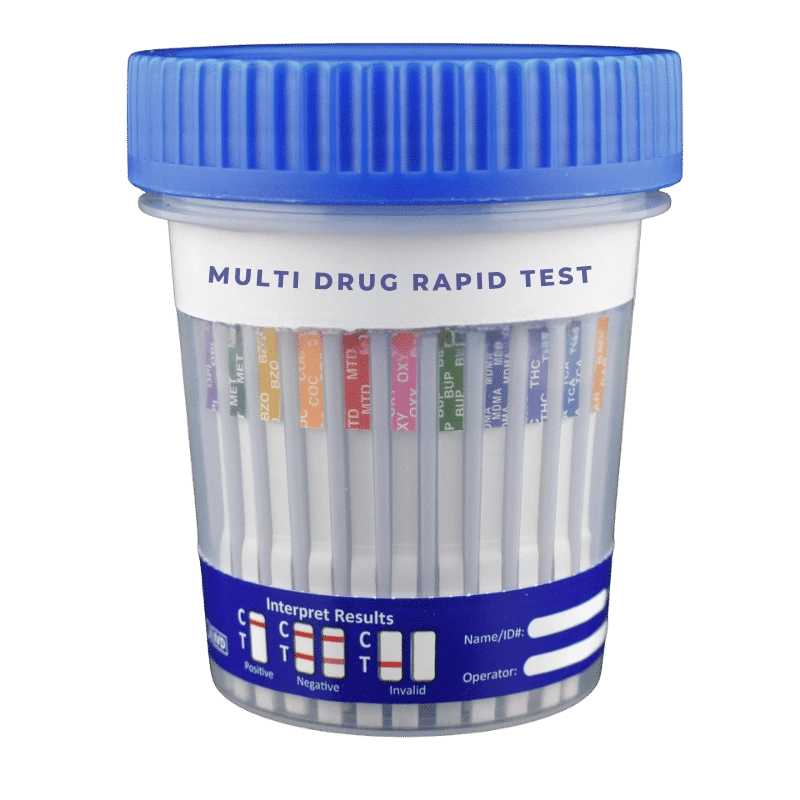
Most rapid urine drug screens use an immunoassay to identify whether a target substance or metabolite is present at or above a specified cutoff.
The result is generally reported as:
Negative
A negative screening result means the substance was not detected at or above the test’s specified cutoff.
It does not necessarily mean that absolutely no drug or metabolite is present.
Presumptive Positive
A presumptive positive means the screening test detected the target at or above its cutoff.
Depending on the testing program, a non-negative screening result may require confirmation using a laboratory method such as GC-MS or LC-MS/MS.
Invalid
An invalid result means the test did not perform properly or did not meet the requirements for a valid result. A new specimen or test may be required.
How Long Does Meth Stay in Your System Compared With Urine?
The phrase “stay in your system” can be confusing because the answer depends on what type of test is being used.
For example, meth may no longer produce noticeable effects while drug testing can still detect it or its metabolites.
General comparison
Urine: approximately 1–4 days, potentially longer with heavy use.
Blood: generally about 1–3 days.
Saliva: approximately 1–3 days.
Hair: approximately 90 days.
Therefore, asking “How long does meth stay in your urine?” is more specific than asking how long meth stays in the entire body.
Can Meth Show Up as Amphetamine on a Drug Test?
Yes. Methamphetamine can be metabolized into amphetamine.
As a result, some testing methods can detect both methamphetamine and amphetamine.
This is particularly relevant when interpreting laboratory results because a positive amphetamine result does not automatically mean the person consumed amphetamine separately.
The exact interpretation depends on the testing methodology and whether confirmatory testing is performed.
Does Meth Show Up on a Standard Drug Test?
Yes. Methamphetamine is commonly included in many standard multi-panel drug-testing configurations.
For example, some workplace or compliance tests may include:
- AMP — Amphetamine
- MET/mAMP — Methamphetamine
- COC — Cocaine
- THC — Cannabis
- BZO — Benzodiazepines
- OPI/MOR — Opiates/Morphine
- OXY — Oxycodone
- PCP — Phencyclidine
However, not every drug test contains the same panels.
Always check the specific test configuration to determine whether methamphetamine is included.
Can a 13-Panel Urine Drug Test Detect Meth?
A 13-panel urine drug test can include methamphetamine, depending on its configuration.
For example, a 13-panel test may include methamphetamine alongside amphetamine, benzodiazepines, cocaine, opioids, oxycodone, fentanyl, THC, methadone, buprenorphine, PCP, EtG, and MDMA.
However, “13-panel” does not universally mean the same 13 substances across every manufacturer.
If you’re purchasing or using a multi-panel test, check the product’s individual analyte list and cutoff levels.
How Accurate Are Urine Meth Tests?
Rapid urine drug tests are designed as screening tests, and their performance depends on the specific product, cutoff, specimen quality, and testing procedure.
A screening result should not automatically be treated as definitive proof of drug use in situations where confirmation is required.
When a result has significant employment, legal, medical, or other consequences, confirmatory laboratory testing may be appropriate according to the applicable testing program.
Can Drinking Water Remove Meth From Urine?
There is no reliable method that can guarantee rapid elimination of methamphetamine from the body or reliably shorten its detection window.
Excessive water consumption can also dilute urine and potentially affect specimen validity.
The body naturally metabolizes and eliminates methamphetamine over time. Detection windows cannot be precisely controlled by drinking water, detox beverages, supplements, or similar products.
What About Detox Drinks?
Detox drinks and supplements are sometimes marketed as ways to eliminate drugs rapidly.
However, there is no reliable evidence that these products can consistently and predictably remove methamphetamine from the body or guarantee a negative drug-test result.
A drug’s detection window is influenced by biological and testing factors that cannot be reliably overridden by a commercial detox product.
What Does a Positive Meth Urine Test Mean?
A positive or presumptive-positive screening result means the test detected methamphetamine or a related target at or above its cutoff.
It does not by itself establish:
- The exact time of use
- The exact amount consumed
- Whether the person was impaired when tested
- Whether the substance was intentionally consumed
- The exact source of the detected substance
Where required, confirmatory laboratory testing provides more specific analytical information.
How Long Does Meth Stay in Urine After One-Time Use?
After a single use, methamphetamine may be detectable in urine for approximately 1–4 days, although some sources report around 3–5 days.
There is no guaranteed number of hours or days that applies to every person.
The result can depend on:
- Dose
- Individual metabolism
- Test cutoff
- Time between use and collection
- Kidney function
- Urine characteristics
- Testing method
Therefore, a specific person’s result cannot be predicted solely from a general detection chart.
How Long Can Meth Stay in Urine With Heavy Use?
Heavy or chronic methamphetamine use can result in a longer detection window, sometimes extending to approximately a week or longer.
This is one reason detection charts should be viewed as estimates rather than exact schedules.
A person’s history of use and the characteristics of the particular test both matter.
Frequently Asked Questions
How long does meth stay in your urine?
Methamphetamine can generally be detected in urine for approximately 1–4 days, although some sources report 3–5 days and heavy or chronic use may extend the window to a week or longer.
How soon can meth be detected in urine?
Meth can become detectable in urine within several hours after use, although the exact timing varies by person and testing method.
Does meth show up on a 5-panel drug test?
Many 5-panel drug tests include amphetamine/methamphetamine screening, but the exact panel depends on the specific test and testing program.
Can a urine test tell exactly when meth was used?
No. A urine screening result generally indicates whether the detected concentration is above or below the test’s cutoff. It cannot reliably determine the exact time of use.
Does heavy meth use change the detection window?
Yes. Frequent or heavy use can be associated with a longer detection period than a single use.
Can meth show up as amphetamine?
Methamphetamine can metabolize into amphetamine, so testing may identify both substances depending on the analytical method.
How long does meth stay in blood?
Blood generally has a shorter detection window than urine, commonly around 1–3 days, depending on circumstances and the testing method.
How long does meth stay in saliva?
Oral-fluid testing may detect meth for approximately 1–3 days, depending on the test and individual factors.
How long does meth stay detectable in hair?
Hair testing can provide a detection window of approximately 90 days, making it useful for identifying a longer history of exposure.
Can drinking lots of water make meth leave urine faster?
No reliable method has been established to rapidly eliminate methamphetamine from the body. Excessive water consumption can also dilute urine and affect specimen validity.
Can a rapid urine drug test give a false positive?
Screening tests can produce presumptive-positive results that may require confirmation. When the result has significant consequences, confirmatory laboratory testing may be used.
How Long Does Meth Stay in Your Urine?
For most people, methamphetamine can remain detectable in urine for approximately 1–4 days after use, with some sources reporting around 3–5 days. Heavy or chronic use may extend the detection window to a week or longer.
The exact timeframe depends on the individual, the pattern and amount of use, metabolism, urine characteristics, and the specific test’s cutoff and technology.
If you’re interpreting a drug-test result, remember that a urine screening is a preliminary analytical test, not a measurement of impairment or an exact timestamp of drug use. When required, laboratory confirmation can provide more definitive results.