Pre-Employment Drug Testing Guide:
If an employer has asked you to complete a drug test before starting a new job, you may have questions about what the test looks for, how the process works, how long results take, and what happens if a result comes back positive.
A pre-employment drug test is a screening test used by some employers to identify recent use of certain drugs or controlled substances before hiring or placing an applicant into a position. The exact testing process varies depending on the employer, job, laboratory, testing method, state law, and whether the position is subject to federal regulations.
For many applicants, urine testing is the most familiar form of employment drug screening, although employers may also use oral-fluid, hair, or other testing methods. In federally regulated transportation jobs, specific DOT testing rules apply.
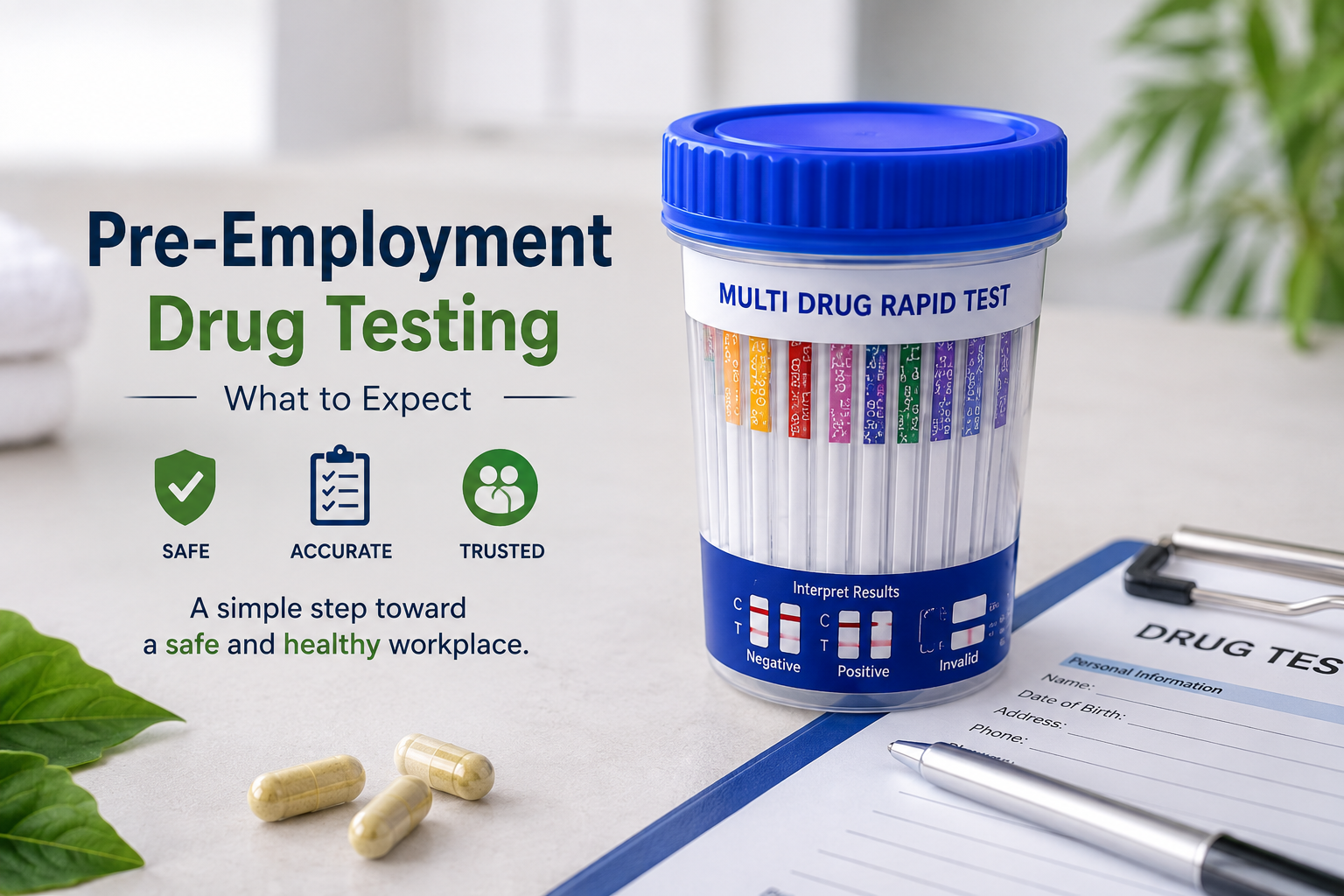
This Pre-Employment Drug Testing Guide explains what to expect from the initial testing request through specimen collection, laboratory testing, possible Medical Review Officer (MRO) review, and reporting of the final result.
Important: Drug-testing laws and workplace policies vary by state, employer, and occupation. This guide provides general information and should not be treated as legal advice.
What Is a Pre-Employment Drug Test?
A pre-employment drug test is a drug screening performed as part of an employer’s hiring process.
An employer may require an applicant to complete testing before beginning work, particularly when the position involves safety-sensitive duties, regulated activities, company drug-free workplace requirements, or other circumstances where testing is permitted or required.
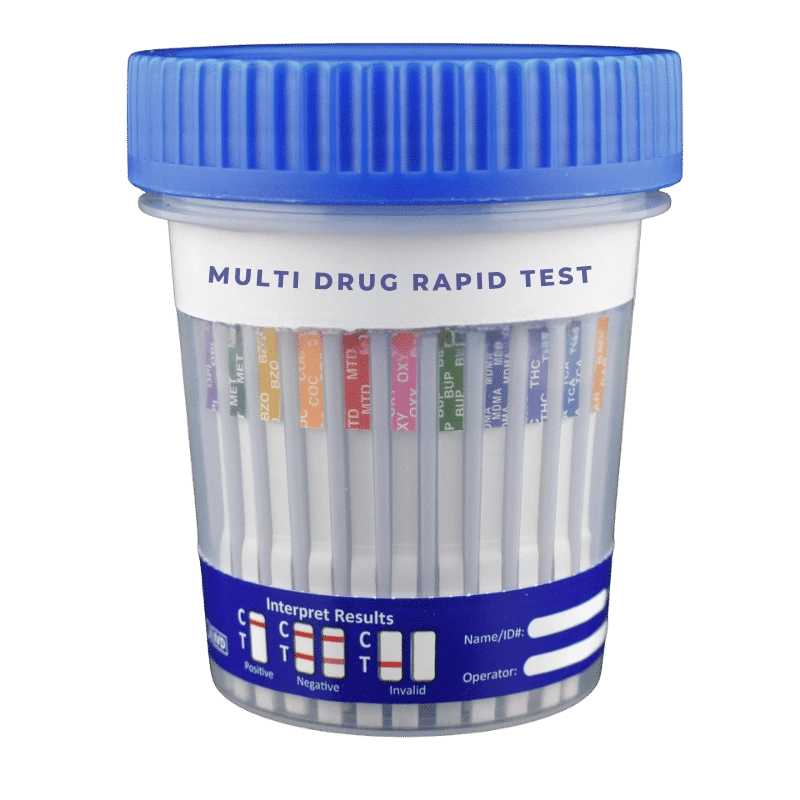
The test generally involves collecting a biological specimen and analyzing it for specified substances or their metabolites.
Depending on the testing program, the specimen may be:
- Urine
- Oral fluid or saliva
- Hair
- Blood in certain circumstances
- Breath or another approved specimen for alcohol testing
The employer determines the testing requirements unless a federal, state, local, or industry-specific rule establishes additional requirements.
The Americans with Disabilities Act (ADA) specifically distinguishes tests for illegal drug use from medical examinations. The Equal Employment Opportunity Commission explains that a test for illegal drug use is not considered a medical examination under the ADA.
Why Do Employers Conduct Pre-Employment Drug Testing?
Employers may use drug testing for several reasons, including:
- Workplace safety
- Safety-sensitive job requirements
- Compliance with federal regulations
- Drug-free workplace programs
- Employer policies
- Risk management
- Workplace accident prevention
- Client or contractor requirements
- Industry-specific requirements
Not every employer conducts pre-employment drug testing, and not every position is subject to the same testing requirements.
For federally regulated workplaces, SAMHSA provides resources covering federal drug-free workplace programs, testing requirements, laboratory information, and related guidance.
When Does Pre-Employment Drug Testing Happen?
The timing depends on the employer and applicable rules.
You may be asked to complete a drug test:
- During the hiring process
- After receiving a conditional job offer
- Before your first day of work
- Before transferring into a safety-sensitive position
- As part of a regulated employment program
For DOT-regulated safety-sensitive transportation positions, pre-employment testing must occur before an applicant performs the covered safety-sensitive function.
The ADA also has specific rules concerning disability-related medical inquiries and examinations. Employers generally cannot require disability-related medical examinations before making a conditional job offer, although testing for illegal drug use is treated differently under the ADA.
What Does a Pre-Employment Drug Test Look For?
There is no single drug panel used by every employer.
The substances included depend on the test panel selected by the employer or testing program.
Commonly screened substances can include:
- Marijuana or THC
- Cocaine
- Amphetamines
- Methamphetamine
- Opioids
- Opiates
- Phencyclidine (PCP)
Expanded panels may test for additional substances, such as certain prescription or synthetic drugs.
For example, DOT-regulated drug testing currently includes marijuana, cocaine, amphetamines, PCP, and opioids, with specific substances included within some categories.
However, a standard employment test ordered by a private employer does not necessarily use the same panel as a DOT test.
Always check the testing instructions or ask the employer/testing provider which panel is being used.
What Is a 5-Panel Drug Test?
A 5-panel drug test is a common type of drug screening designed to detect five major drug categories.
The exact configuration can vary depending on the testing program, but the traditional employment panel is commonly associated with:
- Marijuana/THC
- Cocaine
- Amphetamines
- PCP
- Opiates/opioids
The important point is that the name of a panel does not automatically tell you every substance that a particular laboratory will include.
Testing programs can be updated, and regulated programs may have their own federally specified testing panels.
5-Panel vs. 10-Panel Drug Test
A 10-panel test is generally designed to screen for a broader range of substances than a basic 5-panel test.
| Test type | General purpose |
|---|---|
| 5-panel | Basic/common drug screening |
| 10-panel | Broader drug screening |
| Expanded/custom panel | Employer-specific or specialized screening |
A 10-panel test may include drug categories that are not included in a basic 5-panel test.
Because laboratories and employers can configure panels differently, the best way to determine exactly what will be tested is to review the order or testing authorization.
What Type of Drug Test Is Used for Employment?
Employment drug testing can use several specimen types.
Urine Drug Testing
Urine is one of the most commonly encountered specimens for workplace drug screening.
The specimen is collected under a controlled process and then analyzed by a laboratory when laboratory-based testing is required.
For DOT drug testing, current federal rules authorize urine and oral-fluid specimens for drug testing, with specimens sent to certified laboratories.
Oral Fluid or Saliva Testing
Oral-fluid testing uses a saliva sample collected from inside the mouth.
It can be useful when an employer or regulated testing program uses oral-fluid testing.
DOT rules now recognize oral fluid and urine as authorized specimen types for DOT drug testing.
Hair Drug Testing
Hair testing can provide a longer historical window than some other specimen types.
Some private employers use hair testing, but it is not interchangeable with every federal testing program.
Blood Testing
Blood testing can detect substances in the bloodstream and is used in certain medical, forensic, or specialized circumstances.
It is not the default specimen for every employment drug screen.
Alcohol Testing
Alcohol testing is separate from many standard drug panels.
Depending on the program, alcohol can be tested using breath or oral-fluid methods.
DOT alcohol testing has its own requirements and approved testing procedures.
How Does a Pre-Employment Urine Drug Test Work?
If you are scheduled for a urine drug test, the process generally follows several stages.
1. Receive testing instructions
Your employer or testing provider may give you:
- Testing authorization
- Appointment information
- Collection-site details
- Identification requirements
- Deadline for completing the test
Read the instructions carefully because missing the testing window can create delays or additional requirements.
2. Go to the collection site
You may need to schedule an appointment or visit an approved collection facility.
Some facilities accept walk-ins, while others recommend or require appointments.
3. Verify your identity
The collector may request government-issued identification.
This helps ensure that the specimen is correctly associated with the person being tested.
4. Complete the collection process
The collector provides instructions for producing the specimen.
Collection procedures are designed to protect specimen integrity and reduce the possibility of contamination or substitution.
5. Specimen labeling and sealing
After collection, the specimen is handled according to the applicable testing procedure.
Documentation and specimen identification are important parts of the chain-of-custody process.
6. Laboratory testing
The specimen may undergo an initial screening test.
If a result requires additional analysis, confirmatory testing may be performed according to the applicable testing program.
7. Medical Review Officer review
When an MRO is involved, the MRO reviews certain laboratory results and may contact the donor when additional information is needed to verify a result.
8. Result reporting
The verified result is reported through the applicable testing process to the party authorized to receive it.
What Should You Bring to a Pre-Employment Drug Test?
Before leaving for your appointment, check your employer’s instructions.
You may need:
- Government-issued photo ID
- Employer testing authorization
- Appointment confirmation
- Testing paperwork
- Any other documents specified by the collection facility
Do not assume that every testing center follows exactly the same administrative procedure.
If your employer provided a testing authorization or electronic confirmation, keep it accessible.
What Happens During Drug Test Collection?
A typical collection process involves identity verification, instructions, specimen collection, labeling, documentation, and secure handling of the specimen.
Depending on the testing program, the collector may ask you to follow procedures intended to protect specimen integrity.
For regulated testing, collection procedures can be very specific.
DOT guidance, for example, includes detailed requirements for collection-site security and specimen handling.
The purpose of these procedures is not to make the process uncomfortable; it is to ensure that the specimen tested belongs to the correct donor and has not been compromised.
What Is Chain of Custody in Drug Testing?
Chain of custody refers to the documented handling of a drug-test specimen from collection through laboratory testing and reporting.
A simplified chain may look like:
Donor → Collection Site → Specimen Sealing → Transport → Laboratory → Testing → Review → Reporting
Documentation helps establish who handled the specimen and what happened to it during the testing process.
Maintaining specimen integrity is particularly important in regulated testing programs and situations where test results may have significant employment or legal consequences.
How Long Does a Pre-Employment Drug Test Take?
The collection appointment itself may be relatively brief, but the complete process can take longer.
The total time depends on:
- Type of test
- Collection facility
- Laboratory workload
- Whether confirmation is required
- Whether MRO review is needed
- Employer reporting procedures
- Whether the specimen is valid
A simple negative laboratory result may move through the system faster than a result requiring additional review.
Because processing times vary, there is no universal number of hours or days that applies to every employment drug test.
How Long Does a Urine Drug Test Go Back?
One of the most common questions is:
“How far back can a urine drug test show?”
There is no single lookback period that applies to every drug or person.
Detection depends on factors such as:
- The substance
- Dose
- Frequency of use
- Pattern of use
- Individual metabolism
- Hydration and other biological factors
- Test sensitivity
- Laboratory cutoff levels
- Specimen type
A urine test generally provides a different detection window from hair or oral-fluid testing.
For this reason, online claims that a particular drug will always be detected for exactly a certain number of days should be treated cautiously.
What Is a Drug Test Cutoff Level?
A cutoff level is a predefined concentration used by a testing program to determine how a laboratory finding is classified.
A result below a particular cutoff may be reported differently from a result at or above the applicable threshold.
Cutoffs are important because simply detecting a microscopic amount of a substance does not necessarily mean the test will automatically be reported as positive.
The exact cutoff depends on the testing program, substance, specimen type, and applicable regulations.
What Happens If a Drug Test Is Positive?
A positive initial screening result does not necessarily mean that the employer immediately receives a final verified positive result.
Depending on the testing program, the process can involve:
Initial screening → Confirmation → MRO review → Verified result → Employer action
Confirmatory testing helps distinguish an initial screening finding from a confirmed laboratory result.
An MRO may also evaluate whether there is a legitimate medical explanation for a result when the applicable program requires MRO review.
The exact process varies between DOT-regulated and non-DOT testing.
What Is a Medical Review Officer (MRO)?
A Medical Review Officer, commonly called an MRO, is a qualified medical professional who reviews certain drug-testing results.
The MRO’s role can include:
- Reviewing laboratory findings
- Evaluating relevant medical explanations
- Communicating with the donor when appropriate
- Verifying applicable results
- Reporting the verified result through the authorized process
MRO review is especially important when a laboratory result could have a legitimate medical explanation.
If you take a prescription medication, do not stop taking it simply because you have an upcoming drug test. Follow your prescriber’s instructions and provide information through the appropriate testing/MRO process if requested.
Can Prescription Medications Cause a Positive Drug Test?
Some medications can produce findings that require additional evaluation.
A laboratory screening result does not automatically establish that someone has illegally used a drug.
This is one reason confirmation and MRO review can be important.
The EEOC explains that drug testing for illegal drug use is treated differently from general medical examinations under the ADA, and employers must also comply with applicable federal, state, and local requirements.
If a testing provider or MRO asks about medication that could explain a result, provide accurate information and follow the instructions you receive.
Does Marijuana Show Up on a Pre-Employment Drug Test?
Yes, marijuana or THC can be included in an employment drug test.
However, whether an employer tests for marijuana and what employment consequences may follow can depend on:
- Employer policy
- State law
- Local law
- Job duties
- Federal requirements
- Whether the position is safety-sensitive
- Whether the employer is subject to DOT or another federal testing program
DOT-regulated testing specifically includes marijuana as one of the drug categories tested.
The fact that marijuana is permitted under a state’s law does not automatically mean every employer must ignore a positive test. Employment protections and testing requirements vary significantly by jurisdiction and job type.
Does a Medical Marijuana Card Protect You From a Positive Drug Test?
Not necessarily.
A medical marijuana program, state cannabis law, and workplace drug-testing policy can interact differently depending on the jurisdiction and employer.
For federally regulated safety-sensitive positions, federal testing requirements can be particularly important.
If you are concerned about cannabis testing, check the law applicable to your location and the specific requirements of your job rather than relying on a general statement about marijuana legalization.
Can an Employer Legally Require a Pre-Employment Drug Test?
There is no single nationwide rule saying that every private employer must or must not conduct the same type of pre-employment drug test.
The answer can depend on:
- Federal law
- State law
- Local law
- Employer policy
- Industry
- Job duties
- Safety-sensitive responsibilities
- Government contracts
- DOT or other federal regulations
The ADA does not generally prohibit testing for current illegal drug use. However, employers still have obligations concerning disability-related inquiries, medical information, confidentiality, and applicable employment laws.
Because state cannabis and employment laws change, applicants with a specific legal concern should consult current state guidance or qualified employment counsel.
Pre-Employment Drug Testing and the ADA
The ADA creates important distinctions between drug testing and disability-related medical examinations.
According to the EEOC, tests for illegal drug use are not considered medical examinations under the ADA. At the same time, employers generally cannot make disability-related inquiries or require medical examinations before a conditional job offer.
After a conditional offer, employers may generally require medical examinations or disability-related inquiries when the requirements apply consistently to people entering the same job category.
Medical information obtained through covered examinations and inquiries must be kept confidential and maintained separately from ordinary personnel records.
What Is the Difference Between DOT and Non-DOT Drug Testing?
This distinction is important.
DOT Drug Testing
DOT testing applies to covered safety-sensitive transportation positions.
DOT regulations establish specific requirements for:
- Who is tested
- When testing occurs
- Specimen collection
- Laboratory testing
- MRO procedures
- Refusals
- Reporting
- Return-to-duty procedures
- Follow-up testing
DOT states that Part 40 provides department-wide procedures, while individual DOT agencies establish additional industry-specific requirements.
Non-DOT Drug Testing
Non-DOT testing is conducted under an employer’s own program and applicable federal, state, or local law.
The employer may choose a different panel, specimen type, testing frequency, or policy, subject to applicable legal requirements.
Therefore, you should never assume that a non-DOT employment test follows exactly the same rules as a DOT test.
What Drugs Are Tested for in a DOT Drug Test?
Current DOT drug testing includes:
- Marijuana
- Cocaine
- Opioids
- PCP
- Amphetamines
The opioid and amphetamine categories include specified substances under the DOT testing rules.
DOT drug testing may use urine or oral-fluid specimens that are sent to certified laboratories. Instant-result devices are not authorized for DOT drug testing.
What Jobs Commonly Require Pre-Employment Drug Testing?
Drug testing requirements vary by employer, but testing may be encountered in industries such as:
- Trucking
- Transportation
- Aviation
- Railroads
- Construction
- Manufacturing
- Energy
- Warehousing
- Healthcare
- Government contracting
- Public safety
- Other safety-sensitive industries
Some jobs are subject to federal testing rules, while others are tested because of company policy or state-specific requirements.
For example, DOT regulations identify safety-sensitive transportation functions that are subject to federal drug and alcohol testing requirements.
Who Pays for a Pre-Employment Drug Test?
Payment arrangements vary.
Many employers arrange and pay for testing directly, but applicants should follow the instructions provided by their employer and testing facility.
If a testing site asks you for payment and that conflicts with the instructions you received, contact the employer before paying.
Also be cautious about employment scams. A request to purchase prepaid cards or send money through unusual payment methods to “cover” a drug-testing fee can be a warning sign.
How Do You Know If You Passed a Pre-Employment Drug Test?
Applicants may not always receive a simple message saying “passed.”
Depending on the employer and testing program, you might receive:
- No direct result because the employer handles communication
- A negative result notification
- A request for additional information
- Contact from an MRO
- A request for another specimen
- A hiring update from the employer
A negative test generally means the result did not meet the applicable criteria for a positive finding.
However, the exact reporting process varies.
What Does a Negative Drug Test Mean?
A negative drug test means the test did not produce a reportable positive result under the applicable testing criteria.
It does not necessarily mean that no substance has ever been present in the person’s body.
Drug tests are designed around specific substances, specimen types, cutoff levels, and testing procedures.
A negative result also does not guarantee that an employer will hire an applicant because hiring decisions can involve many other factors.
What Does a Positive Drug Test Mean?
A positive or verified positive result means the testing process determined that the specimen met the applicable criteria for the substance tested.
The consequences depend on:
- Employer policy
- Job requirements
- State law
- Federal regulations
- Whether the job is DOT-regulated
- Whether MRO review applies
A positive result does not automatically have the same employment consequence in every workplace.
What Happens If You Refuse a Pre-Employment Drug Test?
Refusing a test can have serious consequences, but the exact outcome depends on the testing program.
An employer may treat refusal as failure to satisfy a hiring condition.
DOT-regulated testing has specific rules defining refusal and its consequences. DOT guidance also distinguishes certain situations involving pre-employment tests from tests performed after employment begins.
If you cannot complete the test for a legitimate reason, contact the employer or testing provider immediately rather than simply failing to appear.
Can a Drug Test Be Wrong?
No testing system is completely independent of laboratory procedures, specimen quality, and interpretation.
However, regulated testing programs use multiple safeguards designed to improve accuracy and specimen integrity.
These may include:
- Chain-of-custody documentation
- Initial screening
- Confirmatory testing
- Cutoff levels
- Laboratory quality controls
- Specimen validity testing
- MRO review
If you believe a result is incorrect, ask the employer or testing program what review or retesting procedures are available to you.
What Is a Dilute or Invalid Specimen?
A specimen may sometimes be reported as:
- Dilute
- Invalid
- Rejected
- Adulterated
- Substituted
These terms do not all mean the same thing.
A dilute specimen generally means that the specimen’s characteristics indicate it contains an unusually low concentration of certain components.
An invalid result means the laboratory cannot properly interpret or report the specimen under the applicable criteria.
The next step depends on the specific testing program.
For DOT testing, the MRO and employer follow specific procedures for certain dilute and invalid results.
Can You Be Asked to Take Another Drug Test?
Yes, another test may sometimes be required.
Possible reasons include:
- Invalid specimen
- Certain dilute results
- Collection problems
- Testing error
- Required confirmation
- Employer policy
- Regulated testing requirements
The appropriate response depends on why another test was requested.
If you receive instructions for a recollection, follow them promptly.
How Should You Prepare for a Pre-Employment Drug Test?
The safest preparation is straightforward:
- Read your employer’s instructions carefully.
- Confirm the testing deadline.
- Bring the required identification.
- Bring your authorization or appointment information.
- Follow the collection site’s instructions.
- Provide accurate information if the testing process requires it.
- If you take prescription medication, continue following your healthcare provider’s instructions and use the appropriate MRO process if contacted.
- Contact the employer if you cannot attend your scheduled test.
There is no legitimate preparation method that guarantees a particular drug-test result.
Avoid products or online schemes claiming that you can reliably “detox” or manipulate a specimen.
What Should You Avoid Before a Drug Test?
You should not attempt to interfere with the testing process.
Avoid:
- Substituting a specimen
- Adding substances to a specimen
- Tampering with collection equipment
- Providing false information
- Attempting to manipulate the laboratory result
Such actions can create additional problems and may be treated as a refusal or specimen-integrity issue under applicable testing rules.
For regulated DOT testing, refusal rules specifically address certain forms of non-cooperation and interference with the testing process.
Pre-Employment Drug Testing Laws by State
One of the most important things to understand is that drug-testing law is not identical across all U.S. states.
States may have different rules involving:
- Applicant testing
- Cannabis use
- Medical marijuana
- Employer notice requirements
- Testing procedures
- Adverse employment actions
- Privacy
- Safety-sensitive positions
- Government employers
Federal requirements can also override or interact with state rules in certain regulated industries.
Therefore, an article that says “all employers can test applicants” or “employers cannot test for marijuana” would be too broad.
Always verify the current rules applicable to your state, employer, and occupation.
What Is SAMHSA’s Role in Workplace Drug Testing?
The Substance Abuse and Mental Health Services Administration (SAMHSA) provides federal workplace drug-testing resources, guidance, laboratory information, forms, and materials related to drug-free workplace programs.
SAMHSA’s current resources include the 2026 Model Plan for a Comprehensive Drug-Free Workplace Program and federal workplace drug-testing materials.
SAMHSA also provides access to the Federal Custody and Control Form and current HHS Mandatory Guidelines for federal workplace drug-testing programs.
It’s important to understand that SAMHSA’s federal workplace guidance is not automatically the rule for every private employer in every state.
What Is the Difference Between a Drug Screen and a Drug Test?
The terms are often used interchangeably, but they can describe different stages or contexts.
A drug screen commonly refers to an initial test designed to identify potential drug findings.
A confirmatory drug test uses a more specific analytical method to establish whether the suspected substance is actually present according to the applicable testing criteria.
In everyday employment discussions, however, “drug test,” “drug screen,” and “drug screening” are often used to describe the overall testing process.
How Long Do Pre-Employment Drug Test Results Take?
Turnaround time varies.
A straightforward negative result may be processed without additional review.
A result requiring:
- Confirmation
- MRO contact
- Additional documentation
- Specimen review
- Recollection
may take longer.
Your employer or testing provider is the best source for the expected turnaround time for your specific test.
Can Alcohol Be Included in a Pre-Employment Drug Test?
Yes, some employers conduct drug and alcohol testing together.
However, alcohol testing is not identical to a standard drug panel.
For example, DOT programs have separate rules for drug testing and alcohol testing. DOT alcohol testing can involve approved breath or saliva screening procedures, with breath testing used for confirmation.
Whether a non-DOT employer tests for alcohol depends on its policy and applicable law.
Frequently Asked Questions About Pre-Employment Drug Testing
Does everyone get a pre-employment drug test?
No. Drug testing depends on the employer, job, industry, company policy, and applicable law.
What is the most common pre-employment drug test?
Urine testing is widely used in employment drug screening, but employers can use different specimen types depending on their testing program.
What does a pre-employment drug test test for?
It depends on the panel. Common substances may include THC/marijuana, cocaine, amphetamines, opioids, and PCP, while expanded panels may include additional substances.
How far back does a urine drug test show?
There is no universal detection period. Detection depends on the drug, frequency of use, metabolism, specimen type, cutoff level, and other factors.
How long does a pre-employment drug test take?
The collection itself may be relatively quick, but laboratory processing and reporting can take longer depending on the test and whether additional review is required.
Do pre-employment drug tests test for marijuana?
Many do, but not every employer uses the same panel. State law and job-specific federal requirements can also affect cannabis testing.
Can prescription medications affect a drug test?
Some medications can result in findings that require additional evaluation. If contacted by an MRO, provide accurate medication information and follow the review process.
What happens if my drug test is positive?
Depending on the program, a positive initial screen may require confirmation and MRO review before a verified result is reported. Employment consequences depend on the employer and applicable law.
Can I fail a drug test because of a prescription medication?
A laboratory finding does not necessarily mean illegal drug use. When MRO review applies, the MRO may evaluate whether there is a legitimate medical explanation.
What happens if I refuse a drug test?
The consequences depend on the employer and testing program. In regulated DOT testing, refusal is governed by specific federal rules.
Who pays for a pre-employment drug test?
Payment arrangements vary. Many employers arrange testing directly, but applicants should follow the instructions supplied by their employer and testing provider.
How do I know if I passed a pre-employment drug test?
The employer or testing program may notify you, or the employer may receive the result directly. The communication process varies.
Can a drug test be wrong?
Testing programs use safeguards such as laboratory procedures, confirmation testing, chain-of-custody controls, and MRO review to improve reliability. If you dispute a result, ask what review or retesting options apply.
Is a 5-panel drug test the same everywhere?
Not necessarily. The exact substances and testing requirements depend on the specific laboratory, employer, and applicable testing program.
Does a pre-employment drug test include alcohol?
It can, but alcohol testing is separate from many standard drug panels and has its own procedures.
Final Takeaway
A pre-employment drug test is a screening step that some employers use before hiring or placing applicants into certain positions.
The most important thing to remember is that there is no single drug-testing process for every workplace.
Your experience can vary based on:
- Employer policy
- Drug-testing panel
- Specimen type
- Laboratory
- Job duties
- State law
- Federal regulations
- DOT requirements
- Whether MRO review is required
For most applicants, the process is straightforward: receive instructions, visit the collection site, verify your identity, provide the requested specimen, and allow the testing laboratory and applicable review process to handle the result.
If the position is DOT-regulated or otherwise subject to federal testing requirements, follow the specific rules for that program. DOT provides current guidance for employees and employers, while SAMHSA maintains federal workplace drug-testing resources and HHS guidelines.
Most importantly, don’t rely on generic internet claims about detection windows, “detox” products, or guaranteed ways to pass a drug test. Testing procedures and legal requirements vary, and accurate information from your employer, testing provider, applicable government agency, or qualified professional is more reliable.