How to Get a CLIA Waiver Certificate for Your Facility
How to Get CLIA Waived Certificate
To get a CLIA Certificate of Waiver, a facility that performs only waived tests completes Form CMS-116, submits it to its CLIA State Agency, pays the biennial certificate fee — $248 for two years under the current CMS fee schedule — and, once the certificate arrives, performs every waived test exactly according to the manufacturer’s instructions. There is no inspection to pass and no laboratory director credential to earn at this tier. The Certificate of Waiver is the simplest CLIA certificate, and for clinics, treatment centers, and workplace testing sites running waived devices such as rapid drug test cups, it is the legal basis for testing anyone other than yourself.
CLIA — the Clinical Laboratory Improvement Amendments of 1988 — regulates every facility in the United States that tests human specimens for diagnosis, prevention, treatment, or health assessment. CMS administers the program, the FDA assigns each test a complexity category (waived, moderate, or high), and the CDC provides scientific support. Waived tests are so simple and low-risk when performed correctly that Congress exempted them from most CLIA requirements — but not from certification itself. If your facility runs even one waived test on other people, it needs a certificate.
Who Needs a CLIA Certificate of Waiver — and Who Does Not
The certificate belongs to the facility, not to a person, and it is required before the first test is performed on anyone else’s specimen. Facilities that typically operate under a Certificate of Waiver include:
- Physician offices, urgent care centers, and community clinics running rapid point-of-care tests
- Substance-use treatment centers and behavioral health programs performing on-site urine drug screening that informs treatment decisions
- Workplace and occupational health testing sites whose results feed into clinical or program decisions
- Nursing facilities, home health agencies, school clinics, and health departments running waived tests for the people they serve
Just as important is who does not need one. An individual testing themselves — a home drug test, a home pregnancy test — is not a laboratory under CLIA and needs no certificate. Testing performed purely for forensic or employment purposes, where results are never used for diagnosis, treatment, or health assessment, generally falls outside CLIA’s scope as well. The line is crossed the moment results guide care: a treatment center deciding a client’s level of care from a cup result is doing CLIA testing. If your program sits near that line, confirm your status with your State Agency before you start — the certificate is inexpensive insurance against testing without authority.
How to Get a CLIA Waiver Certificate: Step by Step
The application runs through your state, not directly through CMS. Each state has a CLIA State Agency — usually inside the health department’s Survey & Certification division — that takes the application; CMS then issues the certificate and the facility’s 10-character CLIA identification number. The CMS CLIA program page links to the application and the state agency directory.
| Step | What to do | Key detail |
|---|---|---|
| 1. Confirm waived status | Verify every test your facility will run is categorized as waived | Check the exact test system — not just the test type — in the FDA’s CLIA categorization records or the manufacturer’s package insert. One non-waived test disqualifies a Certificate of Waiver. |
| 2. Complete Form CMS-116 | Fill out the CLIA Application for Certification | Lists the facility’s legal name, address, ownership, the person responsible for the site, hours of operation, and the waived tests to be performed. |
| 3. Submit to your State Agency | Send the signed CMS-116 to your state’s CLIA State Agency | Submission method varies by state (mail, email, or portal). Keep a copy of everything you file. |
| 4. Pay the certificate fee | Pay when the fee notice arrives | $248 for a two-year Certificate of Waiver under the current CMS fee schedule, paid through pay.gov. Do not send payment before the notice — the fee coupon carries your CLIA number. |
| 5. Receive your certificate | Wait for the Certificate of Waiver and CLIA ID to arrive | Testing may begin only after the certificate is in hand. Post it where testing is performed. |
| 6. Renew every two years | Pay the renewal fee before the expiration date | CMS sends a renewal fee notice ahead of expiration. A lapsed certificate means testing must stop until it is reinstated. |
Two sequencing errors cause most application problems. Facilities order supplies and start screening while the application is “in process” — legally, there is no in-process status; without the certificate, the testing is uncertified. And facilities pay a fee amount found in an old article instead of waiting for the official fee notice, which delays processing. File early, and build the certificate timeline into your launch plan.
What Compliance Actually Requires After You Are Certified
A Certificate of Waiver carries exactly one core federal obligation: follow the manufacturer’s instructions for every waived test, exactly as written, with no modifications. Everything else flows from that sentence.
- No modifications, ever. Changing a step, a read time, a specimen type, or a storage condition converts the test into a high-complexity procedure by regulation — and a Certificate of Waiver does not authorize high-complexity testing. If the insert says read at 5 minutes and discard after 10, that window is a federal requirement, not a suggestion.
- Trained personnel, documented. Waived testing has no federal personnel license requirements, but every operator must be trained on each test they perform. Keep a simple training file per employee: test name, date trained, trainer’s initials. Surveyors ask for it, and it is your defense if a result is ever challenged.
- Quality control as the insert specifies. Run built-in procedural controls on every device, and external controls on a new lot or shipment, or whenever the insert requires them — and log them. A failed control means no results from that device until the problem is resolved.
- Keep the state informed. Notify your State Agency of changes — facility name, address, ownership, the responsible person, or the tests you perform — within the timeframe your state specifies. Certificates are site-specific: a second location needs its own, with only limited exceptions for mobile and multi-site operations, so confirm multi-site arrangements with your State Agency rather than assuming coverage.
- Allow inspection. Waived facilities are not routinely surveyed, but CMS and state surveyors may inspect in response to a complaint, and the certificate obliges you to admit them.
The CDC’s CLIA resources for waived testing publish practical good-practice guidance — self-assessment checklists and QC logs — that most small facilities adopt as their operating procedure. It is the difference between results that hold up and results that get argued about.
State Variations: New York, Washington, and State Licensing
Two states operate laboratory programs that CMS has approved as exempt from CLIA, and facilities there apply to the state instead of through the federal route. New York facilities obtain a clinical laboratory permit through the state’s Clinical Laboratory Evaluation Program (CLEP), which applies its own categories and requirements to waived testing. Washington facilities obtain a Medical Test Site license from the state Department of Health. If your facility is in New York or Washington, start with the state program — a federal Certificate of Waiver is not the operative document there.
Elsewhere, some states layer their own registration or licensing on top of the federal certificate. The federal certificate is the floor, not the ceiling: check your State Agency’s CLIA page for state-specific requirements before you file.
Running Waived Drug Test Cups Under Your Certificate
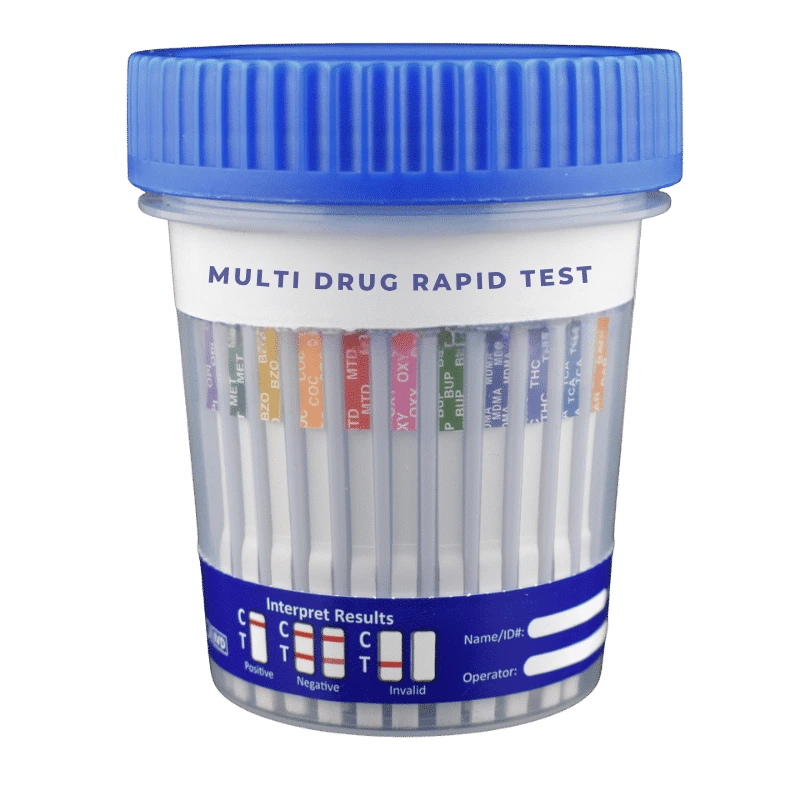
Urine drug screening is one of the most common reasons facilities seek a Certificate of Waiver. Multi-panel cups are categorized as waived test systems under the FDA’s CLIA categorization framework, which means a certified facility can collect, run, and read them on site in minutes instead of shipping every specimen to a reference laboratory.
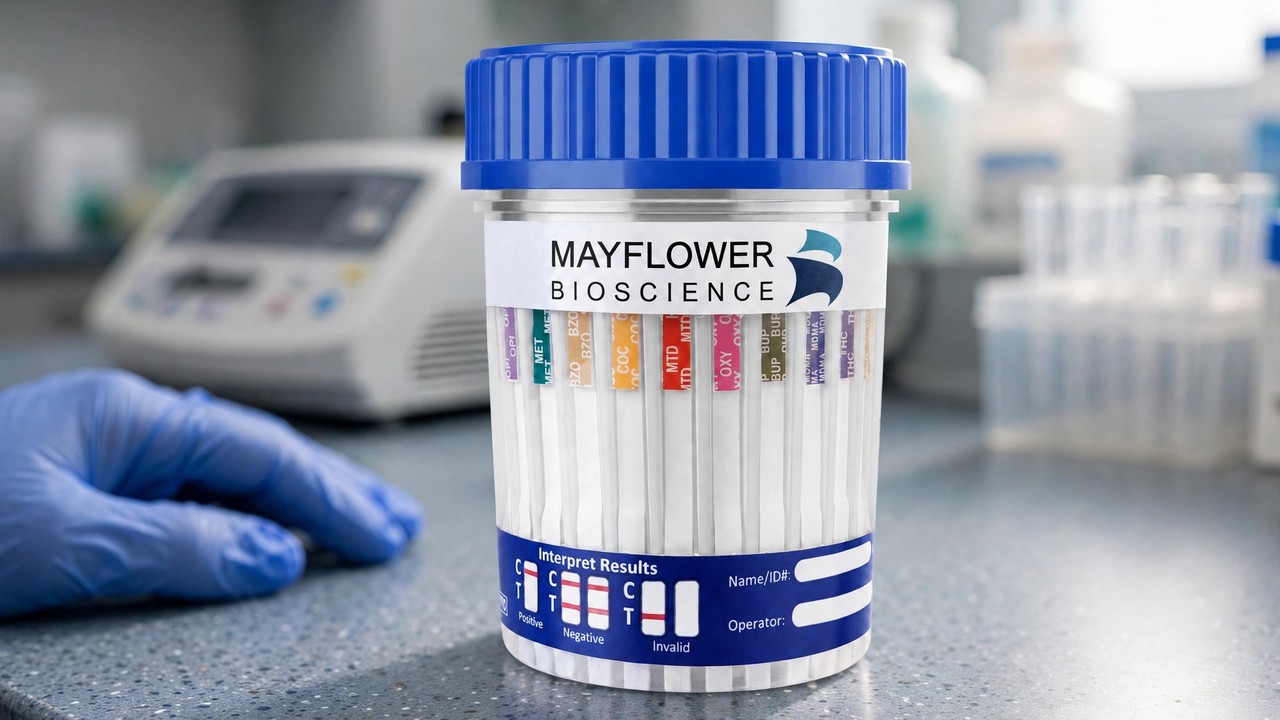
MayFlower‘s CLIA waived drug test cups are built for exactly this setting: the 12 panel, 14 panel, and 16 panel configurations are waived devices with built-in temperature strips and the printed control/test interpretation legend, read at 5 minutes per the package insert. Operating them compliantly is the discipline this guide describes — trained collectors, the insert’s read window, controls logged, results recorded against the donor’s ID — and our guide on how to read a drug test cup covers the routine step by step. The pre-employment drug testing guide explains how point-of-care screening and laboratory confirmation fit together.
One boundary to respect: a waived cup result is a presumptive screen. When a result will drive a consequential decision — a treatment change, a sanction, a hiring withdrawal — send the specimen for laboratory GC-MS or LC-MS/MS confirmation. The certificate authorizes the screen; it does not turn a screen into a confirmation. Facilities stocking up can standardize on one cup configuration — such as the 12 panel drug test cup — through wholesale drug test cups, keeping the CMS-116 test menu, training files, and QC logs consistent across every site.
Common Mistakes That Put a Certificate at Risk
- Testing before the certificate arrives. The single most common violation. Application submitted is not application approved.
- Modifying the procedure. Extending a read window, using a different specimen, or pooling samples voids the waived categorization — the test legally becomes high complexity.
- Adding a non-waived test to the menu. The certificate covers waived tests only; a moderate-complexity test requires a different certificate type before it is run, not after.
- Assuming one certificate covers every site. Certificates are issued per location. A sister clinic across town needs its own.
- Letting renewal lapse. The certificate expires every two years. Testing on an expired certificate is uncertified testing.
- No paper trail. Missing training records and QC logs turn a simple complaint inspection into a finding.
Frequently Asked Questions
How do I get a CLIA Certificate of Waiver?
Confirm that every test your facility performs is categorized as waived, complete Form CMS-116 (the CLIA Application for Certification), submit it to your state’s CLIA State Agency, and pay the certificate fee when the official fee notice arrives. Once the Certificate of Waiver and your 10-character CLIA number are issued, you may begin testing — following each manufacturer’s instructions exactly.
How much does a CLIA Certificate of Waiver cost?
The federal certificate fee is $248 for a two-year period under the current CMS fee schedule. The same fee recurs at each renewal. Some states add their own registration or licensing fees, and facilities in New York and Washington pay their exempt state programs instead, so confirm the total with your State Agency.
How long does it take to get a CLIA waiver certificate?
Timing varies by state and application volume, but most facilities receive their certificate within a few weeks of submitting a complete CMS-116 and paying the fee notice promptly. The most common delays are incomplete applications and fees sent before the official notice arrives. Testing cannot legally begin until the certificate is in hand, so apply before your program launch date.
Who needs a CLIA Certificate of Waiver?
Any facility that tests human specimens — for diagnosis, prevention, treatment, or health assessment — using only waived tests: physician offices, urgent care centers, treatment programs, occupational health sites, nursing facilities, and similar settings. The certificate is issued to the facility and the testing location, not to an individual practitioner.
Does a CLIA Certificate of Waiver expire?
Yes. The certificate is valid for two years and must be renewed by paying the biennial fee before it expires — CMS sends a renewal fee notice ahead of the expiration date. If the certificate lapses, all testing must stop until it is reinstated, and results produced while uncertified can be challenged.
Can I run drug test cups with a CLIA Certificate of Waiver?
Yes, provided the cup is an FDA-categorized waived test system and your facility follows the package insert exactly — specimen handling, read time, controls, and documentation. Multi-panel urine drug test cups are waived devices, which is why clinics and treatment programs can screen on site under a Certificate of Waiver and send presumptive positives to a laboratory for confirmation.
What happens if I modify a waived test procedure?
Any modification to the manufacturer’s instructions — a different specimen type, altered steps, or a changed read time — reclassifies the test as high complexity by regulation. A Certificate of Waiver does not authorize high-complexity testing, so the modified test falls outside your certification until the facility obtains the appropriate certificate and meets its personnel and quality requirements.
Do I need a separate CLIA certificate for each location?
Generally, yes. CLIA certificates are site-specific, so each physical location where testing is performed needs its own Certificate of Waiver. Limited exceptions exist for mobile units and certain multi-site operations conducted under a single organization and home base — confirm your arrangement with your State Agency before relying on one.
Are there states where I do not apply through the federal CLIA process?
Yes. New York and Washington operate laboratory programs that CMS has approved as exempt from CLIA. New York facilities apply for a clinical laboratory permit through the state’s Clinical Laboratory Evaluation Program (CLEP), and Washington facilities obtain a Medical Test Site license from the state Department of Health. Facilities in those states follow the state program’s application, fees, and rules.
Do I need a CLIA waiver to test myself at home?
No. CLIA regulates facilities that test other people’s specimens; an individual performing a test on themselves is not a laboratory and needs no certificate. The requirement begins when a facility tests patients, clients, employees, or program participants and uses the results for health assessment, treatment, or program decisions.