How Long Do Benzodiazepines Stay in Your System?
How Long Do Benzodiazepines Stay in Your System?
Most benzodiazepines stay detectable in urine for about 1 to 7 days after a single dose, and up to 30 days with regular or long-term use — but the real answer depends on which benzodiazepine was taken, because urine tests detect the drug’s metabolites, and short-acting and long-acting benzodiazepines clear at very different speeds. A single dose of alprazolam (Xanax) or lorazepam (Ativan) typically clears within 1–5 days, while diazepam (Valium) and its long-lived metabolite nordiazepam can remain detectable for two to four weeks after chronic use. Knowing which window applies matters for treatment programs, employers, and supervision agencies that must decide when to test — and how to read the result.
Benzodiazepines are a class, not a single drug. They share a mechanism — enhancing the calming neurotransmitter GABA — but their half-lives range from a few hours to several days, and it is the half-life, more than the dose, that sets the detection window.
Short Answer: Benzodiazepine Detection Windows by Specimen
Detection windows vary by specimen type because each matrix holds metabolites differently:
| Specimen | Typical window | What it is used for |
|---|---|---|
| Urine | 1–7 days (single dose); up to 30 days (chronic use) | Standard for workplace, treatment, and supervision testing |
| Blood | 6–48 hours | Impairment assessment and emergency toxicology |
| Saliva | 12 hours–4 days | Roadside and rapid on-site screening |
| Hair | Up to 90 days | Long-term history, not recent use |
Urine is the specimen nearly every program uses, so the rest of this guide focuses on urine windows. The full cross-drug picture sits on our drug detection times chart.
Why Urine Tests Detect Metabolites, Not the Drug Itself
Most benzodiazepines are broken down by the liver before they leave the body, so the parent drug rarely appears in urine in meaningful amounts. What urine tests actually detect are metabolites — the chemical leftovers of that breakdown. Diazepam, for example, is converted to nordiazepam, temazepam, and oxazepam, and nordiazepam itself has a half-life of 36–200 hours. That is why a drug taken for a few days can still test positive weeks later: the body keeps excreting a slow-clearing metabolite long after the parent drug is gone.
This also explains why benzodiazepine screens are class-level tests. A standard benzodiazepine strip detects the shared metabolite oxazepam and its relatives, not one specific drug. A positive screen says “a benzodiazepine (or something cross-reactive) is present” — it cannot say which one, or how much. Only laboratory confirmation by GC-MS or LC-MS/MS identifies the specific drug and metabolite, which is why confirmation is mandatory before any consequential decision.
Urine Detection Windows by Drug: Single Dose vs Chronic Use
The single most useful table for anyone interpreting a benzodiazepine result is the one that separates a one-time dose from ongoing use, because accumulation changes everything. A single dose clears in days; daily use builds a reservoir of long-lived metabolites that can take weeks to fall below the cutoff.
| Benzodiazepine | Class | Single dose (urine) | Chronic / regular use (urine) |
|---|---|---|---|
| Alprazolam (Xanax) | Short-acting | 1–5 days | Up to 7 days |
| Lorazepam (Ativan) | Short-acting | 1–5 days | Up to 7 days |
| Temazepam (Restoril) | Short-acting | 1–5 days | Up to 7 days |
| Triazolam (Halcion) | Short-acting | 1–3 days | Up to 5 days |
| Clonazepam (Klonopin) | Intermediate | 3–7 days | Up to 14–28 days |
| Diazepam (Valium) | Long-acting | Up to 7 days | Up to 30 days |
| Chlordiazepoxide (Librium) | Long-acting | Up to 7 days | Up to 30 days |
| Clorazepate (Tranxene) | Long-acting | Up to 7 days | Up to 30 days |
Two cautions on this table. First, clonazepam is the exception that proves the metabolite rule: standard benzodiazepine screens detect it poorly because its main metabolite, 7-aminoclonazepam, cross-reacts weakly with most screening antibodies. A clonazepam user can test negative on a standard screen and positive on confirmation — a known gap programs should know about. Second, all windows assume the common screening cutoff of 300 ng/mL for benzodiazepines; a lower laboratory cutoff extends every window. Our cutoff levels guide explains how cutoffs shape results.
What Extends (or Shortens) the Window
Half-life sets the baseline, but several factors move an individual result well outside it:
Dose and frequency. Higher doses and daily use extend the window most. Long-acting benzodiazepines accumulate with repeated dosing, so a patient on daily diazepam carries a much longer tail than someone who took one tablet.
Liver function and age. Benzodiazepines are metabolized in the liver, so liver disease, older age, and drugs that inhibit liver enzymes (such as some antifungals and antidepressants) slow clearance and lengthen detection. Younger, healthy adults with normal liver function clear faster.
Body composition. Benzodiazepines are fat-soluble, so they distribute into adipose tissue and leach back slowly — one reason chronic users test positive long after stopping.
Urine pH and dilution. Acidic urine speeds excretion of some benzodiazepines; alkaline urine slows it. Dilute urine can push metabolite levels below the cutoff and produce a negative despite recent use — which is why collectors check creatinine and specific gravity. Our dilute results guide explains what collectors do when a specimen looks diluted.
Hydration and timing. Heavy fluid intake before collection dilutes the sample; testing too early after a dose can also miss the window, since metabolites take hours to appear in urine.
False Positives: What Else Triggers a Benzodiazepine Screen
Benzodiazepine screens are among the most cross-reactive in the panel. The best-documented false positives come from oxaprozin (a nonsteroidal anti-inflammatory sold as Daypro) and sertraline (Zoloft), both of which have produced presumptive positives on standard immunoassays. Other reported cross-reactants include certain antihistamines and muscle relaxants. A presumptive positive in a patient taking sertraline or oxaprozin should never be acted on without confirmation — and a medication list taken at collection is the cheapest protection a program has. This is the same confirmation discipline our how to read a drug test cup guide insists on: a screen is presumptive, never final.
The Program Angle: Which Panel and When to Test for Benzodiazepines
For treatment programs, workplace programs, and supervision agencies, benzodiazepine testing has three practical traps:
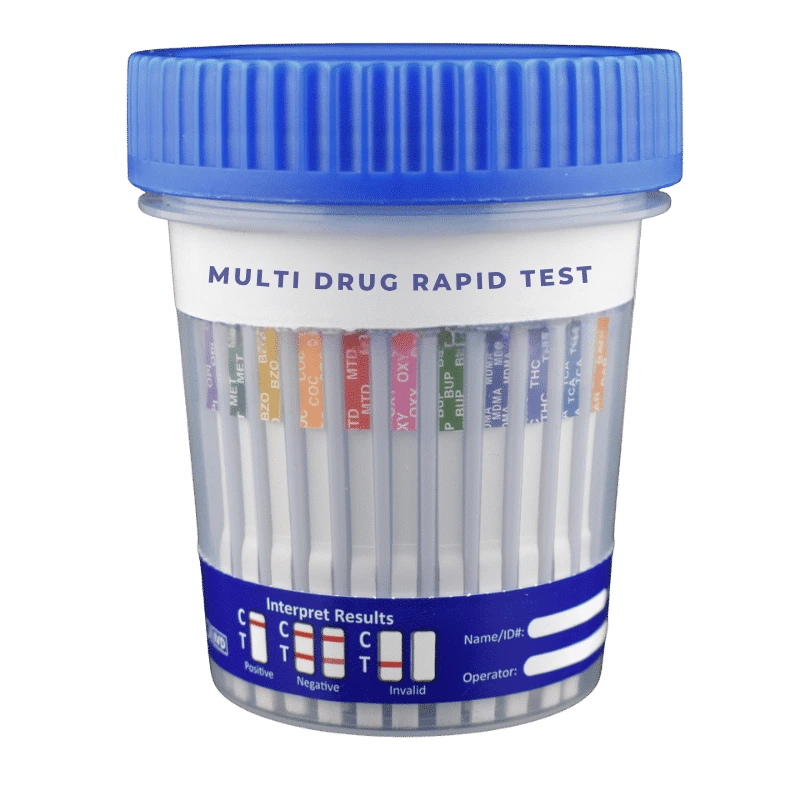
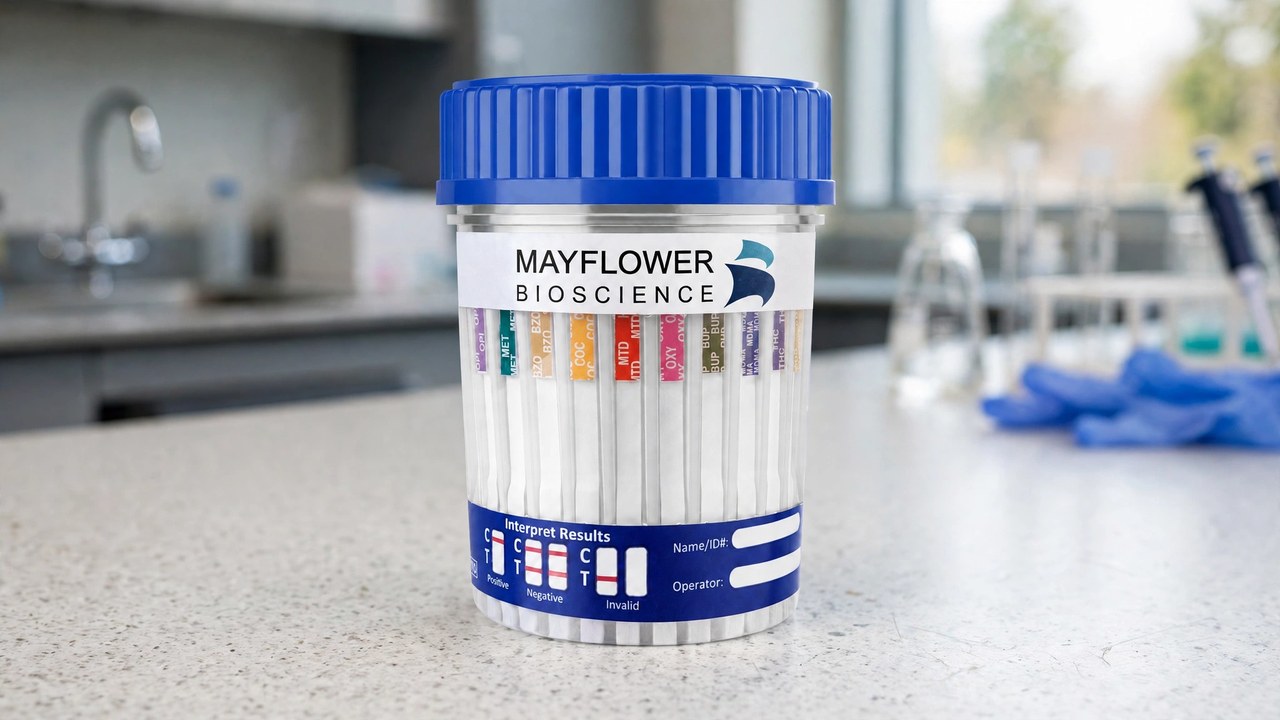
First, standard opiate strips do not cover benzodiazepines. Benzodiazepines are a separate drug class with their own strip. A basic 5-panel-style screen built around opiates, cocaine, amphetamines, PCP, and marijuana will miss benzodiazepine use entirely. Any program where sedative misuse is a concern needs a panel that explicitly includes a benzodiazepine strip — MayFlower’s 12-panel, 14-panel, and 16-panel cups all include one, and volume programs standardize through wholesale drug test cups.
Second, timing must match the drug. Testing weekly catches chronic long-acting use easily but can miss a single short-acting dose taken days earlier. Programs monitoring for intermittent use should test more frequently or use random scheduling, and should remember that a negative result means “below cutoff on this day,” not “never used.”
Third, clonazepam needs special handling. Because standard screens detect clonazepam poorly, programs with known clonazepam misuse should confirm negatives by laboratory testing when clinical suspicion is high, or use a laboratory assay that specifically targets 7-aminoclonazepam.
Prescribed vs Misuse: A Positive Does Not Mean Abuse
Benzodiazepines are among the most widely prescribed medicines in the United States — for anxiety, insomnia, seizures, and alcohol withdrawal — so a positive benzodiazepine result frequently reflects legitimate therapeutic use. A prescribed patient taking lorazepam as directed will test positive, exactly as a misuser would. The screen cannot distinguish the two, and neither can the cutoff level.
The correct program response is a process, not a verdict: collect a medication disclosure at testing, route every presumptive positive to laboratory confirmation, and have a medical review officer (or qualified clinician) compare the confirmed drug and metabolite against the disclosed prescription before any action. Acting on an unconfirmed screen against a prescribed patient is both unfair and legally risky. Confirmation also resolves the cross-reactivity problem — GC-MS and LC-MS/MS identify the actual molecule, so sertraline and oxaprozin never survive confirmation.
For readers comparing detection windows across drug classes, the drug detection times chart covers every major substance, and our guides on how long THC stays in your system and how long cocaine stays in your system use the same single-dose versus chronic structure.
Choosing the Right Cup for Benzodiazepine Testing
Match the panel to the population: any program testing for sedatives needs a benzodiazepine strip, and programs already screening for fentanyl or kratom should not lose the benzo strip when they upgrade panels. MayFlower’s 12, 14, and 16-panel cups all carry benzodiazepine screening alongside the core menu, so upgrading for fentanyl or EtG never means dropping benzo coverage. Browse the range at MayFlower Bioscience or stock up through wholesale drug test cups.
External references: the MedlinePlus drug testing overview explains screening versus confirmation, SAMHSA sets the federal framework many testing programs follow, and NIDA summarizes drug testing’s role in treatment and justice programs.
Frequently Asked Questions
How long do benzodiazepines stay in your system?
Most benzodiazepines are detectable in urine for 1 to 7 days after a single dose and up to 30 days with regular or long-term use. Short-acting drugs like alprazolam and lorazepam clear in 1 to 5 days, while long-acting drugs like diazepam can remain detectable for up to 30 days in chronic users. Blood windows are 6 to 48 hours, saliva 12 hours to 4 days, and hair up to 90 days.
How long does Xanax (alprazolam) stay in urine?
A single dose of alprazolam is typically detectable in urine for 1 to 5 days, and up to about 7 days with regular use. Alprazolam is short-acting, so it clears much faster than long-acting benzodiazepines like diazepam, though higher doses and frequent use extend the window.
How long does Valium (diazepam) stay in your system?
Diazepam can be detected in urine for up to 7 days after a single dose and up to 30 days with chronic use. The long window comes from its metabolite nordiazepam, which has a half-life of 36 to 200 hours and keeps being excreted long after the parent drug is gone.
Do urine drug tests detect benzodiazepine metabolites or the drug itself?
Urine tests detect metabolites. The liver breaks benzodiazepines down before excretion, so the parent drug rarely appears in urine in meaningful amounts. Diazepam, for example, is detected through its metabolites nordiazepam, temazepam, and oxazepam. This is also why benzodiazepine screens are class-level tests that cannot identify which specific drug was taken.
Can a drug test tell which benzodiazepine you took?
No, a standard cup screen cannot. Benzodiazepine strips are class-level immunoassays that detect shared metabolites such as oxazepam, so a positive screen only shows that a benzodiazepine is present. Laboratory confirmation by GC-MS or LC-MS/MS is needed to identify the specific drug and metabolite.
Does clonazepam (Klonopin) show up on a drug test?
Clonazepam is detected poorly by standard benzodiazepine screens because its main metabolite, 7-aminoclonazepam, cross-reacts weakly with most screening antibodies. A clonazepam user can test negative on a screen and positive on laboratory confirmation. Programs concerned about clonazepam should confirm results by a laboratory assay that specifically targets 7-aminoclonazepam.
What can cause a false positive for benzodiazepines?
The best-documented false positives come from oxaprozin (Daypro, an anti-inflammatory) and sertraline (Zoloft, an antidepressant), both of which have triggered presumptive positives on standard immunoassays. Other reported cross-reactants include certain antihistamines and muscle relaxants. A presumptive positive should always be confirmed by GC-MS or LC-MS/MS before any action is taken.
Does a prescribed benzodiazepine make you fail a drug test?
A prescribed benzodiazepine taken as directed will produce a positive screen, because the test cannot distinguish therapeutic use from misuse. The correct process is to disclose the prescription at collection, confirm the presumptive positive by laboratory testing, and have a medical review officer compare the confirmed drug against the prescription before any decision is made.
Do standard opiate drug tests detect benzodiazepines?
No. Benzodiazepines are a separate drug class with their own test strip, and standard opiate strips do not detect them. A panel must explicitly include a benzodiazepine strip to catch benzodiazepine use. MayFlower’s 12-panel, 14-panel, and 16-panel cups all include a benzodiazepine strip.
How long do benzodiazepines stay in hair and saliva?
Benzodiazepines are detectable in saliva for about 12 hours to 4 days and in hair for up to 90 days. Hair testing reflects long-term history rather than recent use, while saliva testing is suited to detecting recent use, such as roadside or rapid on-site screening.