Drug Detection Times Chart: How Long Do Drugs Stay in Your System?
Drug Detection Times Chart
Last updated October 2026 · Reviewed against SAMHSA cutoffs
Drug detection times describe how long a substance — or its metabolites — remains measurable in the body after use. For urine testing, the method used by workplace, clinical, and justice programs, most drugs are detectable for 2–4 days, while THC can remain detectable for up to 30 days in chronic users and PCP for up to 14 days. This chart compiles urine, blood, saliva, and hair detection windows for every analyte on modern multi-panel drug test cups, with the cutoff concentrations that define a positive result.
Detection windows are not fixed numbers. Dose, frequency of use, metabolism, hydration, body composition, and the test cutoff all shift the window — which is why testing programs design collection schedules around these ranges rather than a single day count. Programs sourcing wholesale drug test supplies use these ranges to set collection cadence and panel configuration.
Urine Drug Detection Times Chart
The chart below shows typical maximum urine detection windows. Urine is the reference specimen for point-of-care cups because it combines a multi-day window with non-invasive collection and on-site results in about 5 minutes.
Maximum typical urine detection windows after last use. Individual windows vary with dose, frequency, metabolism, and cutoff level.
Full Detection Windows by Specimen Type
Each specimen type trades window length against collection practicality. Hair offers the longest retrospective window (about 90 days) but cannot detect very recent use and requires laboratory processing. Blood detects hours to a couple of days and is used mainly in clinical and forensic settings. Saliva captures very recent use. Urine remains the program standard — the specimen every 12 panel drug test cup and expanded configuration is built around.
| Substance | Drug class | Urine | Blood | Saliva | Hair | Urine cutoff |
|---|---|---|---|---|---|---|
| THC (marijuana) | Cannabinoid | 3–30 days | 1–2 days | 1–3 days | 90 days | 50 ng/mL |
| Cocaine | Stimulant | 2–4 days | 1–2 days | 1–2 days | 90 days | 300 ng/mL |
| Amphetamines | Stimulant | 2–4 days | ~1 day | 1–2 days | 90 days | 1,000 ng/mL |
| Methamphetamine | Stimulant | 2–4 days | 1–3 days | 1–2 days | 90 days | 1,000 ng/mL |
| MDMA (ecstasy) | Stimulant | 2–4 days | 1–2 days | 1–2 days | 90 days | 500 ng/mL |
| Opiates (morphine, codeine, heroin metabolite) | Opioid | 2–3 days | <1–1 day | 1–2 days | 90 days | 300 ng/mL |
| Oxycodone | Opioid | 1–3 days | <1 day | 1–2 days | 90 days | 100 ng/mL |
| Fentanyl | Opioid (synthetic) | 1–3 days | <1–2 days | 1–2 days | 90 days | 20 ng/mL |
| Benzodiazepines — therapeutic use | Sedative-hypnotic | 3 days | 1–2 days | 1–3 days | 90 days | 300 ng/mL |
| Benzodiazepines — chronic use | Sedative-hypnotic | 4–6 weeks | 1–2 days | 1–3 days | 90 days | 300 ng/mL |
| Barbiturates — short-acting | Sedative-hypnotic | 2 days | 1–2 days | 1–2 days | 90 days | 300 ng/mL |
| Barbiturates — long-acting (e.g. phenobarbital) | Sedative-hypnotic | up to 15 days | 1–2 days | 1–2 days | 90 days | 300 ng/mL |
| Methadone | Opioid | 3–7 days | 1–2 days | 1–2 days | 90 days | 300 ng/mL |
| Buprenorphine | Opioid (partial agonist) | 3–6 days | 1–2 days | 1–3 days | 90 days | 10 ng/mL |
| PCP (phencyclidine) | Dissociative | 7–14 days (chronic up to 30) | 1–2 days | 1–3 days | 90 days | 25 ng/mL |
| Alcohol (ETG metabolite) | Alcohol metabolite | up to ~80 hours | ethanol: hours | ethanol: hours | 90 days (hair ETG) | 300 ng/mL |
| Kratom (mitragynine) | Atypical — mitragynine | 3–7 days | ~1 day | ~1 day | 90 days | dedicated KRA strip |
| LSD | Hallucinogen | 1–4 days | <1 day | <1 day | Not routinely tested | Lab only — not on standard cups |
| Cotinine (nicotine metabolite) | Nicotine metabolite | 2–4 days | 2–4 days | 2–4 days | 90 days | 200 ng/mL |
Windows are typical ranges compiled from clinical laboratory references; SAMHSA’s federal workplace drug testing resources describe the cutoff-based framework these ranges assume.
Urine Drug Detection Times
Urine is the reference specimen for program testing and the specimen every row of the combined chart is anchored to. The table below isolates the urine window and the urine cutoff for each substance, including the split benzodiazepine and barbiturate rows and the LSD and cotinine rows that general reference charts carry.
| Substance | Urine window |
|---|---|
| THC (marijuana) | 3–30 days (cutoff: 50 ng/mL) |
| Cocaine | 2–4 days (cutoff: 300 ng/mL) |
| Amphetamines | 2–4 days (cutoff: 1,000 ng/mL) |
| Methamphetamine | 2–4 days (cutoff: 1,000 ng/mL) |
| MDMA (ecstasy) | 2–4 days (cutoff: 500 ng/mL) |
| Opiates (morphine, codeine, heroin metabolite) | 2–3 days (cutoff: 300 ng/mL) |
| Oxycodone | 1–3 days (cutoff: 100 ng/mL) |
| Fentanyl | 1–3 days (cutoff: 20 ng/mL) |
| Benzodiazepines — therapeutic use | 3 days (cutoff: 300 ng/mL) |
| Benzodiazepines — chronic use | 4–6 weeks (cutoff: 300 ng/mL) |
| Barbiturates — short-acting | 2 days (cutoff: 300 ng/mL) |
| Barbiturates — long-acting (e.g. phenobarbital) | up to 15 days (cutoff: 300 ng/mL) |
| Methadone | 3–7 days (cutoff: 300 ng/mL) |
| Buprenorphine | 3–6 days (cutoff: 10 ng/mL) |
| PCP (phencyclidine) | 7–14 days (chronic up to 30) (cutoff: 25 ng/mL) |
| Alcohol (ETG metabolite) | up to ~80 hours (cutoff: 300 ng/mL) |
| Kratom (mitragynine) | 3–7 days (cutoff: dedicated KRA strip) |
| LSD | 1–4 days (cutoff: Lab only — not on standard cups) |
| Cotinine (nicotine metabolite) | 2–4 days (cutoff: 200 ng/mL) |
Blood Drug Detection Times
Blood windows are the shortest of the four specimens — hours to a couple of days — because blood carries the parent drug rather than the metabolites urine screens target. Blood testing is used mainly in clinical and forensic settings where very recent use is the question.
| Substance | Blood window |
|---|---|
| THC (marijuana) | 1–2 days |
| Cocaine | 1–2 days |
| Amphetamines | ~1 day |
| Methamphetamine | 1–3 days |
| MDMA (ecstasy) | 1–2 days |
| Opiates (morphine, codeine, heroin metabolite) | <1–1 day |
| Oxycodone | <1 day |
| Fentanyl | <1–2 days |
| Benzodiazepines — therapeutic use | 1–2 days |
| Benzodiazepines — chronic use | 1–2 days |
| Barbiturates — short-acting | 1–2 days |
| Barbiturates — long-acting (e.g. phenobarbital) | 1–2 days |
| Methadone | 1–2 days |
| Buprenorphine | 1–2 days |
| PCP (phencyclidine) | 1–2 days |
| Alcohol (ETG metabolite) | ethanol: hours |
| Kratom (mitragynine) | ~1 day |
| LSD | <1 day |
| Cotinine (nicotine metabolite) | 2–4 days |
Saliva (Oral Fluid) Drug Detection Times
Saliva (oral fluid) captures very recent use — typically the last 1–3 days — with observed, non-invasive collection. Its short window makes it a recent-use tool rather than a program-monitoring specimen.
| Substance | Saliva window |
|---|---|
| THC (marijuana) | 1–3 days |
| Cocaine | 1–2 days |
| Amphetamines | 1–2 days |
| Methamphetamine | 1–2 days |
| MDMA (ecstasy) | 1–2 days |
| Opiates (morphine, codeine, heroin metabolite) | 1–2 days |
| Oxycodone | 1–2 days |
| Fentanyl | 1–2 days |
| Benzodiazepines — therapeutic use | 1–3 days |
| Benzodiazepines — chronic use | 1–3 days |
| Barbiturates — short-acting | 1–2 days |
| Barbiturates — long-acting (e.g. phenobarbital) | 1–2 days |
| Methadone | 1–2 days |
| Buprenorphine | 1–3 days |
| PCP (phencyclidine) | 1–3 days |
| Alcohol (ETG metabolite) | ethanol: hours |
| Kratom (mitragynine) | ~1 day |
| LSD | <1 day |
| Cotinine (nicotine metabolite) | 2–4 days |
Hair Drug Detection Times
Hair offers the longest retrospective window — about 90 days for most substances on a standard segment — because metabolites are deposited into the hair shaft as it grows. Hair cannot detect use from the past several days and requires laboratory analysis, so programs reserve it for look-back questions.
| Substance | Hair window |
|---|---|
| THC (marijuana) | 90 days |
| Cocaine | 90 days |
| Amphetamines | 90 days |
| Methamphetamine | 90 days |
| MDMA (ecstasy) | 90 days |
| Opiates (morphine, codeine, heroin metabolite) | 90 days |
| Oxycodone | 90 days |
| Fentanyl | 90 days |
| Benzodiazepines — therapeutic use | 90 days |
| Benzodiazepines — chronic use | 90 days |
| Barbiturates — short-acting | 90 days |
| Barbiturates — long-acting (e.g. phenobarbital) | 90 days |
| Methadone | 90 days |
| Buprenorphine | 90 days |
| PCP (phencyclidine) | 90 days |
| Alcohol (ETG metabolite) | 90 days (hair ETG) |
| Kratom (mitragynine) | 90 days |
| LSD | Not routinely tested |
| Cotinine (nicotine metabolite) | 90 days |
What Changes a Detection Window?
Frequency and dose. A single use clears fastest. Repeated use loads fat-soluble substances such as THC and PCP into tissue stores, which then release metabolites for days or weeks — the reason chronic THC users can test positive for a month.
Cutoff concentration. A test only reports positive above its cutoff. A lower cutoff (for example fentanyl at 20 ng/mL) lengthens the effective window; a higher cutoff shortens it. Two tests given on the same day can disagree purely because their cutoffs differ.
Metabolism and body composition. Age, liver function, body fat percentage, and activity level all change clearance rates, especially for lipophilic drugs. Hydration dilutes urine concentration and can push a borderline specimen below the cutoff — one reason programs verify specimen validity and temperature at collection.
The metabolite being measured. Tests rarely detect the parent drug alone. Cocaine screens target benzoylecgonine; alcohol screens target ethyl glucuronide (ETG); fentanyl screens also catch norfentanyl. Metabolites usually outlast the parent compound, and their clearance defines the practical window.
Drug Half-Life: Why Detection Windows Differ
A drug’s half-life is the time the body takes to reduce its concentration by half; as a rule of thumb, a substance is effectively cleared after about five half-lives. Half-life is the single best predictor of a detection window. Cocaine’s half-life is only about 1 hour, so even though its metabolite benzoylecgonine extends urine detection to 2–4 days, cocaine clears faster than almost any other panel drug. At the other extreme, PCP’s half-life averages about 21 hours and THC’s metabolite THC-COOH is released slowly from fat stores, which is why both remain detectable in urine for one to four weeks. Two drugs taken on the same day can therefore sit weeks apart on this chart — the window is pharmacology, not effort or hydration.
Designing a Testing Schedule Around Detection Windows
Programs read this chart as a scheduling tool. Short-window substances — cocaine, opiates, fentanyl (1–4 days) — require frequent, unpredictable collection to maintain deterrence; a Monday-only schedule misses weekend use entirely. Long-window substances — THC and PCP — remain detectable across weekly or biweekly random testing. Alcohol abstinence monitoring works because the ETG alcohol panel stretches the alcohol window from hours to about 80 hours.
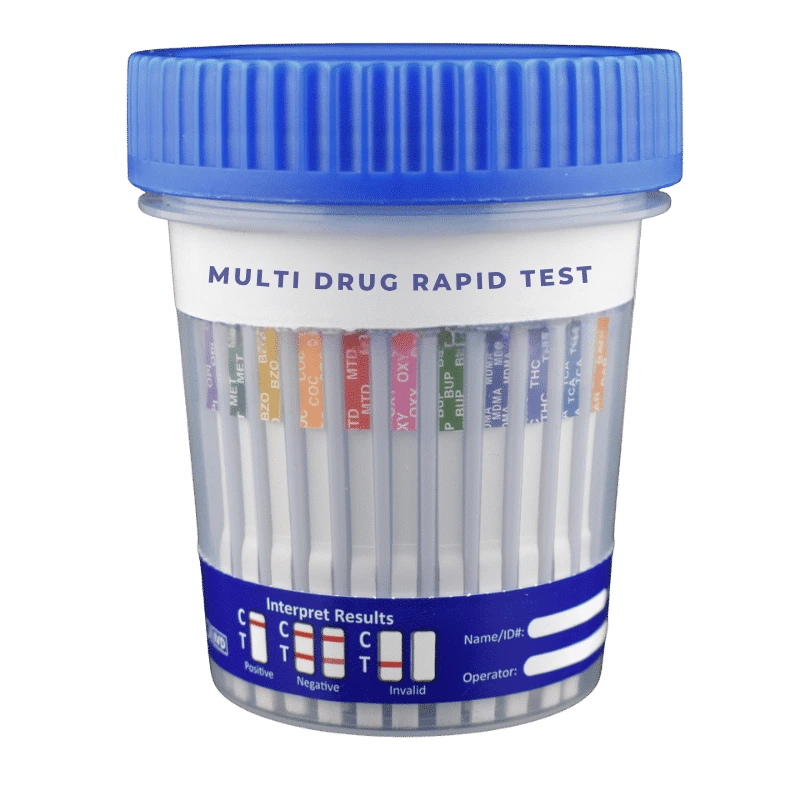
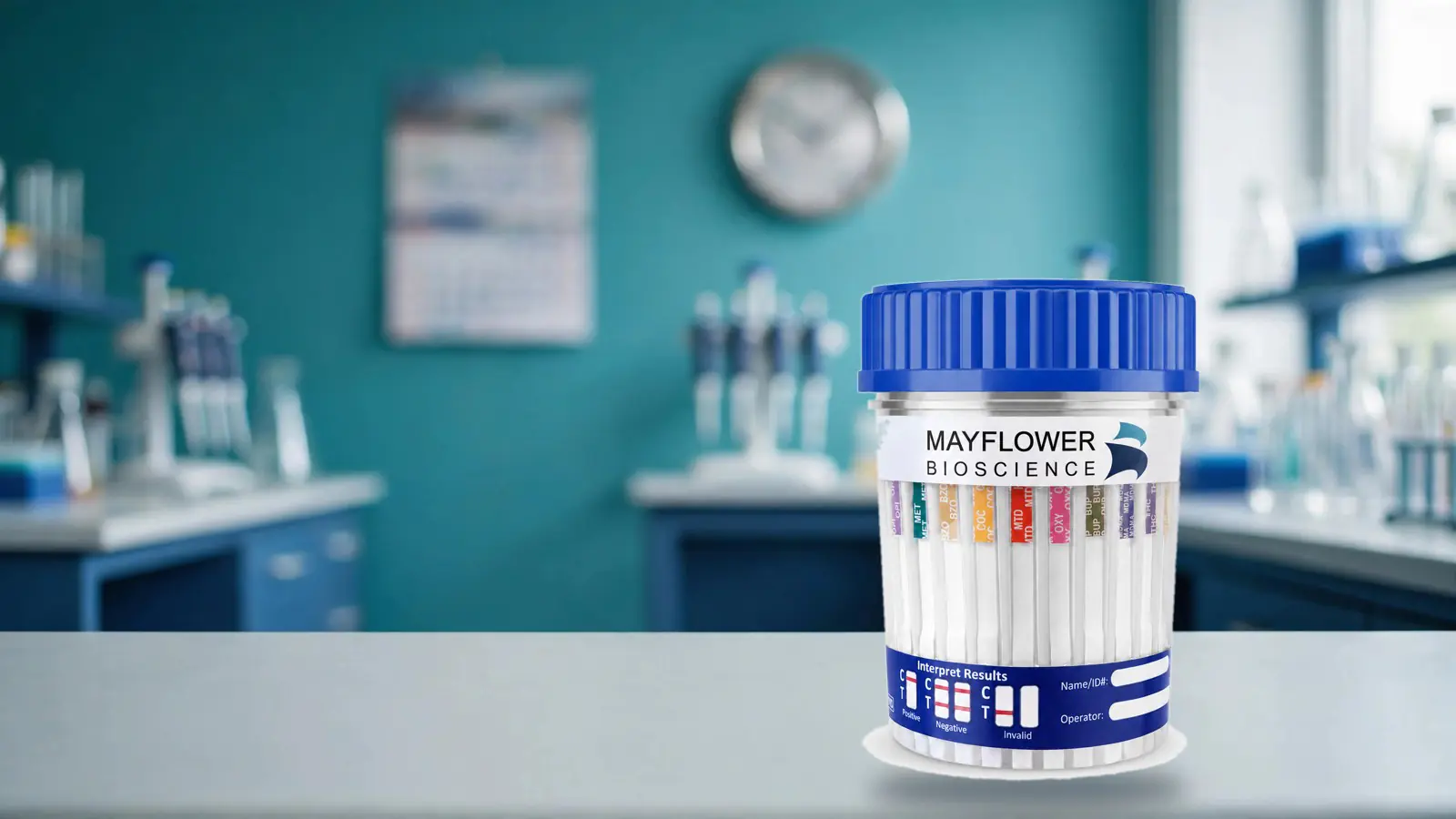
Configuration matters as much as cadence. A panel only detects what it includes: fentanyl requires a dedicated FEN strip that standard opiate strips miss, and kratom requires the KRA strip found on the 16 panel drug test cup. A 14 panel drug test cup covers the standard analytes plus PCP, ETG alcohol, and fentanyl depth in a single collection. MayFlower’s 12, 14, and 16 panel configurations cover every substance in this chart in a single collection, with results in about 5 minutes and wholesale volume pricing for programs testing at scale.
Detection Window Guides by Substance
Each guide below goes deeper on one substance — windows by use pattern, the factors that extend or shorten detection, and the cutoffs and panels that apply:
- How long does THC stay in your system? — windows by use pattern, from a single use to daily use
- How long does cocaine stay in your system? — benzoylecgonine windows in urine, blood, saliva, and hair
- How long does PCP stay in your system? — why PCP has one of the longest urine windows
- Fentanyl drug testing guide — tests, detection, and results explained
- How long does alcohol show up in a urine test? — ethanol vs. ETG windows
- Kratom drug testing guide — mitragynine and 7-OH detection
Frequently Asked Questions
What is a drug detection window?
A detection window is the period after use during which a drug or its metabolites remain measurable in a specimen at or above the test cutoff. Windows differ by substance and specimen type: most drugs clear urine in 2–4 days, THC can remain for up to 30 days in chronic users, and hair testing extends the retrospective window to about 90 days.
How long do drugs stay in your urine?
Most commonly tested drugs stay in urine for 2–4 days: cocaine 2–4 days, amphetamines 2–4 days, opiates 2–3 days, and fentanyl 1–3 days. The long exceptions are THC (3–30 days depending on use pattern), PCP (7–14 days), benzodiazepines (3–7 days), and the alcohol metabolite ETG (up to about 80 hours). See the full chart on this page for all substances and specimen types.
Does drinking water shorten a detection window?
Drinking excess water dilutes urine and can lower metabolite concentration below the cutoff in borderline cases, but it does not speed up metabolism or truly shorten the window. Dilute specimens are flagged by validity checks (temperature, and in laboratory testing creatinine and specific gravity) and are typically recollected under program policy.
Do cutoff levels change how long a drug is detectable?
Yes. A result is positive only when concentration is at or above the cutoff, so a more sensitive test (lower cutoff) detects use for longer. Fentanyl at a 20 ng/mL cutoff, for example, stays detectable longer than it would at 100 ng/mL. Comparing results across programs is only meaningful when cutoffs match.
Why does THC stay in your system longer than other drugs?
THC is fat-soluble (lipophilic). It is stored in fatty tissue and released gradually, so its metabolite THC-COOH is excreted over days to weeks. Occasional users clear in about 3 days, while daily users can remain above the 50 ng/mL urine cutoff for 30 days or more. Our THC detection guide breaks the window down by use pattern.
How often should a program test to catch short-window drugs?
Short-window substances such as cocaine, opiates, and fentanyl (1–4 days) need frequent, random collection — at least weekly, with unpredictable days — so use cannot be timed around the schedule. Long-window substances like THC and PCP remain detectable under weekly or biweekly testing. This cadence logic is why courts and treatment programs test on randomized schedules.
How long does it take to get drug test results?
Point-of-care cups give a preliminary result on site in about 5 minutes. Laboratory screening typically returns results in 1–2 days, and GC-MS or LC-MS/MS confirmation of a preliminary positive adds a further 1–3 days, with Medical Review Officer (MRO) review adding time in regulated programs. The rapid result is why programs screen with cups and confirm only the positives in the laboratory.
Can a drug test be false positive or false negative?
Yes — screening immunoassays can do both. A false positive happens when a cross-reacting medication, supplement, or food triggers the strip; a false negative happens when a specimen is dilute, below the cutoff, or collected outside the detection window. As MedlinePlus notes, a positive screening result is therefore usually followed by a more accurate confirmatory test (GC-MS or LC-MS/MS) before any consequence follows.
Do poppy seeds cause a false positive drug test?
They can. Poppy seeds carry trace amounts of morphine and codeine from the poppy plant, and eating poppy-seed foods can produce a genuine low-level opiate positive on a sensitive screen — which is why federal workplace opiate cutoffs were raised and why MedlinePlus advises avoiding poppy-seed foods before a test. Confirmation testing and MRO review distinguish dietary exposure from drug use; poppy seeds do not produce the heroin metabolite 6-acetylmorphine (6-AM).
Which drug test cup covers all the substances in this chart?
Coverage depends on configuration. MayFlower 12 panel cups cover the standard workplace analytes; the 14 panel adds PCP, ETG alcohol, and fentanyl depth; and the 16 panel cup adds kratom and TCA for the broadest single-collection coverage. Programs order at wholesale pricing with free shipping on 100+ cups.