How Much Does a Drug Test Cost? Cup vs Lab Breakdown
How Much Does a Drug Test Cost? Cup vs Lab Breakdown
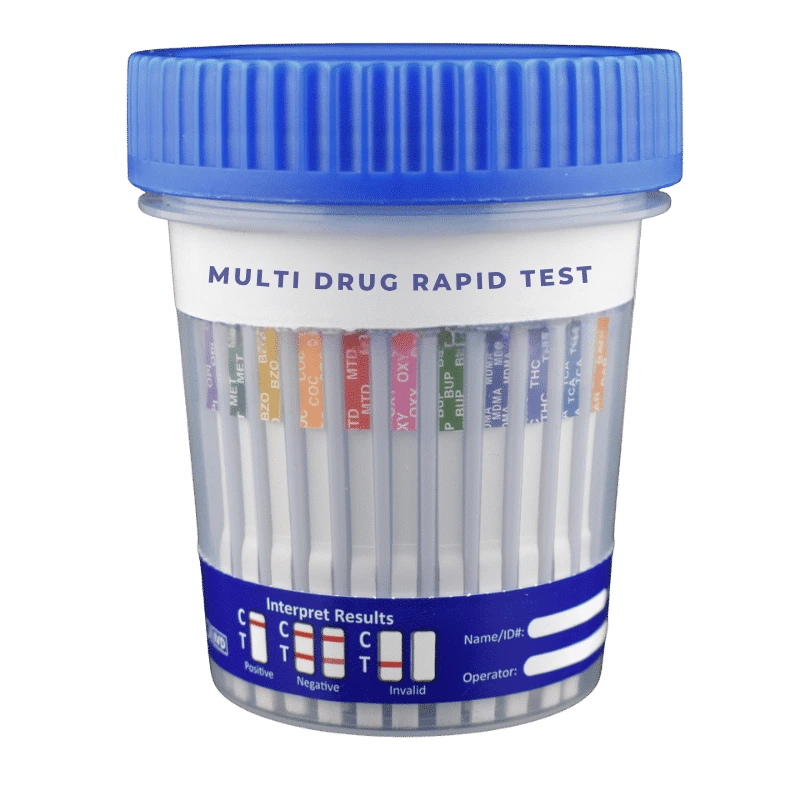
A drug test costs anywhere from a few dollars to a few hundred dollars, and the gap is almost entirely about where the testing happens. A multi-panel urine drug test cup used in-house typically costs a few dollars per cup at wholesale volume — a single retail kit runs roughly $2 to $10 — while the same urine screen sent to a laboratory typically costs $30 to $110, and a laboratory test with mass-spectrometry confirmation can reach $100 to $200 or more. The cup is not a cheaper version of the lab test; it is a different step in the process. The cup screens, the lab confirms, and the cheapest defensible program uses each where it belongs. This guide breaks down cup vs lab costs, what drives each price, and how a program’s monthly bill actually adds up.
Most price guides answer with one number. That is misleading, because “a drug test” can mean five different services: a rapid cup read in your own office, a laboratory immunoassay screen, a confirmation by GC-MS or LC-MS/MS, a hair or blood test, or a full DOT collection with chain of custody and medical review. Each has its own price, and a program that compares only the cup price against the lab price is comparing a screen against a screen-plus-confirmation. The honest comparison is total cost per decision: what you pay, per test, to reach a result you can act on.
Cup vs Lab: The Price Table
The table below gives typical US market ranges as of 2026, drawn from published lab and supplier price guides. Prices vary by region, volume, and provider — treat these as planning ranges, not quotes, and confirm the final figure with your supplier or laboratory before budgeting.
| Test route | Typical cost per test | What you get |
|---|---|---|
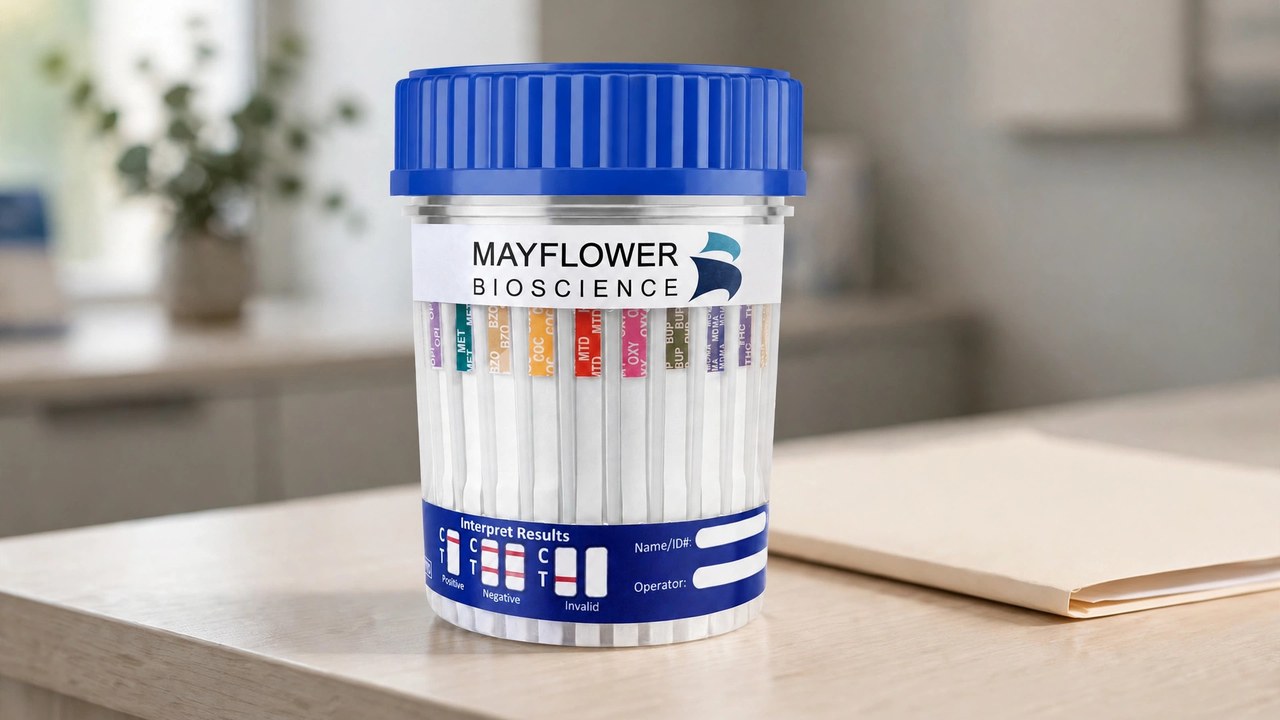
| Multi-panel cup, in-house (wholesale volume) | A few dollars per cup | Presumptive screen for 12, 14, or 16 drugs in about 5 minutes, read on site. Bulk buying through wholesale drug test cups brings the price well below retail. |
| Single retail cup / at-home kit | About $2 to $10 | The same presumptive screen, bought one at a time. Convenient, but the worst per-test price a program can pay. |
| Laboratory urine screen | About $30 to $110 | Lab-run immunoassay screen, usually with chain of custody and formal reporting. |
| Laboratory screen + confirmation | About $100 to $200+ | Screen plus GC-MS or LC-MS/MS confirmation of any non-negative result — the step that makes a result defensible. |
| DOT urine test (collection + lab + MRO) | About $60 to $100 | Federally regulated collection, laboratory analysis, and medical review officer review. See our DOT drug testing guide. |
| Saliva / oral fluid lab test | About $50 to $120 | Short-window testing for recent use; harder to adulterate, narrower window than urine. |
| Hair follicle test | About $100 to $300+ | Up to roughly 90 days of history. Right for patterns of use, wrong for recent use — and the most expensive routine option. |
| Blood test | About $100 to $400 | Best for current impairment questions, but invasive, short-window, and costly. |
The headline ratio: a laboratory urine screen costs roughly ten times an in-house cup screen. That ratio is the economic case for cups — but only if the program still confirms its non-negatives. A cup program that never confirms buys cheap, indefensible results.
What a Cup Actually Costs a Program
The cup itself is the smallest line item. The real per-test cost of an in-house cup program has four parts: the cup (a few dollars at wholesale volume, more at retail); staff time (a trained collector spends a few minutes per test on collection, reading, and documentation); consumables and space (gloves, handling, a private collection area, secure result storage); and confirmation — every non-negative result that will drive a decision must go to a laboratory for GC-MS or LC-MS/MS confirmation, priced like a lab test, not a cup test.
Two cost traps hide in cup programs. One is panel choice: a 16-panel cup bought where 12 panels suffice wastes money on every test, while a 12-panel cup that misses fentanyl or EtG alcohol wastes far more — a missed detection defeats the purpose of testing. Compare exact drug lists, not panel numbers: MayFlower’s 12-panel drug test cups, 14-panel drug test cups, and 16-panel drug test cups differ in which drugs they add, and the right panel is the one that matches the program’s policy. The other trap is retesting: dilute, invalid, or temperature-failed specimens need a recollection, and every recollection is another cup plus another block of staff time. Our cutoff levels guide explains why cutoffs and validity checks decide how often retests happen.
What a Laboratory Test Actually Costs
A laboratory bill bundles more than chemistry. The analyzer screen is the base cost; on top of it sit collection (a trained collector, a certified site, or a mobile collector for post-accident testing), chain-of-custody documentation, specimen validity testing, confirmation of non-negatives by mass spectrometry, and, in regulated programs, medical review officer (MRO) review. Some providers price each layer separately and others bundle them, which is why two labs can quote very different totals for the same test: always ask whether the quote includes collection, confirmation, and MRO review, or only the screen.
Confirmation is where lab pricing surprises people. A screen says a drug class “may be present”; confirmation identifies the specific drug and its concentration. It is needed only for non-negatives, so a program’s average lab cost depends on its non-negative rate — and this is why the cup-plus-confirmation model is so economical: the cup screens 100 specimens cheaply, and only the handful of non-negatives incur lab confirmation pricing.
The Program Math: 100 Tests a Month
Abstract ranges become concrete with a worked example. Assume a program testing 100 people a month, with a 5% non-negative rate, and confirmation at $100 per non-negative result.
| Model (100 tests/month) | Screen cost | Confirmation (5 × $100) | Monthly total |
|---|---|---|---|
| All tests to the laboratory ($70 average) | $7,000 | Included | About $7,000 |
| In-house cups (about $4 per cup, wholesale) | $400 | $500 | About $900, plus staff time |
| In-house cups, retail kits (about $8 each) | $800 | $500 | About $1,300, plus staff time |
The gap is not subtle: the cup-first model costs roughly one-seventh to one-eighth of the all-lab model here, even after paying for every confirmation. Staff time narrows the gap but rarely closes it. The breakeven question is volume: at a handful of tests a month, the lab’s bundled service wins on simplicity; at program volumes (dozens and up), the cup-first model wins on cost, provided the program invests in trained collectors and a written confirmation protocol.
Frequency multiplies everything. A program testing weekly for six months runs about 26 tests per person — roughly $1,800 per person at lab pricing, against roughly $230 cup-first (cups plus confirmations). That is why courts, probation departments, and treatment programs are the heaviest cup users — and why our drug detection times chart matters to budgeting too: testing more often than a drug’s detection window adds cost without adding information.
Hidden Costs Most Price Guides Miss
First, the cost of a wrong result. A false negative that misses fentanyl or alcohol use can cost a program its credibility or an employer a safety incident — orders of magnitude more than any per-test saving. A false positive acted on without confirmation can cost a wrongful termination lawsuit. Confirmation is the insurance that makes cheap screening safe to act on.
Second, the cost of delay. A cup gives a result in minutes; a lab result takes days. For a hire waiting to start, a post-accident investigation, or a treatment admission, those days have a price — idle headcount, an unresolved safety question, a bed left empty. Programs that count only the invoice miss this entirely.
Third, the cost of the wrong specimen. Hair testing looks comprehensive, but at $100 to $300+ per test it cannot show recent use, and its 90-day window answers a question most programs are not asking week to week. Blood testing is likewise misused when a urine cup would answer the question for a tenth of the price. Match the specimen to the question: urine cups for routine screening, lab confirmation for non-negatives, hair or blood only for the questions they alone can answer.
How to Cut Cost Without Cutting Quality
Start with panel discipline: buy the panel your policy names, no wider, no narrower. Standardize on one supplier and one panel per program, so collectors learn one reading pattern — our guide to how to read a drug test cup shows how consistent reading reduces errors. Buy at wholesale volume, confirm only non-negatives, and confirm them all: partial confirmation is the worst of both worlds. Finally, audit quarterly — non-negative rate, retest rate, confirmation turnaround, cost per decision. A rising retest rate usually means a collection problem cheaper to fix than to keep paying for.
What not to cut: collector training, chain-of-custody paperwork, temperature and validity checks, and confirmation. Each looks like overhead until a result is challenged — then it is the entire value of the program. The SAMHSA workplace drug testing resources and the MedlinePlus drug testing guide set out the federal framework for a defensible process.
Who Pays?
Employers absorb pre-employment, random, and post-accident testing as a safety expense. Courts and probation programs typically charge the tested person, which is why weekly testing at lab prices becomes a burden and a compliance risk: a fee the participant cannot pay is a test that does not happen. Clinics bill through insurance where medical necessity supports it (see our companion guide to drug test CPT codes, staged alongside this post in the same cluster). Individuals paying out of pocket should ask whether the quoted price includes confirmation — a cup screen plus lab confirmation is usually cheaper than a straight lab panel.
The bottom line: a drug test costs a few dollars when a cup screens it and $30 to $110 when a laboratory screens it, with confirmation adding $100 or more per non-negative result. The cheapest program screens with cups, confirms every non-negative, and never pays lab prices for a specimen a cup could have cleared. Browse the range at MayFlower Bioscience, and price your program by cost per decision, not cost per cup.
Frequently Asked Questions
How much does a drug test cost at a lab?
A laboratory urine drug screen typically costs $30 to $110, depending on the panel, the collection arrangements, and whether confirmation and medical review are included. A lab screen plus mass-spectrometry confirmation of a non-negative result typically reaches $100 to $200 or more in total.
How much does a drug test cup cost?
A single retail cup or at-home kit typically costs $2 to $10. At wholesale volume, a multi-panel cup costs a few dollars per cup, which is why programs that test regularly should buy in bulk rather than one cup at a time.
Is an at-home drug test cheaper than a lab test?
Yes, for the screen itself: an at-home cup costs a few dollars against $30 to $110 for a lab screen. But a cup result is presumptive, not final — any non-negative result that will drive a decision still needs laboratory confirmation, so the fair comparison is cup plus confirmation against lab plus confirmation.
How much does a DOT drug test cost?
A standard DOT urine drug test commonly costs $60 to $100, covering regulated collection, laboratory analysis, and medical review officer review. Post-accident or mobile collections cost more, because dispatch and on-site collection add fees on top of the standard process.
How much does a court-ordered drug test cost?
A standard court-ordered urine test typically runs $30 to $80, with hair tests at $100 to $300 or more and blood tests at $85 to $280. Because courts often require weekly or random testing for months, the per-test price matters less than the total program cost — which is where cup-first screening saves the most.
Why is a hair drug test so expensive?
Hair testing requires specialized laboratory preparation and analysis — washing, digestion, extraction, and mass spectrometry on a small, complex sample — and it covers up to 90 days of history rather than a few days. The longer window and the lab work behind it explain the $100 to $300+ price, and why hair is the wrong routine tool for weekly monitoring.
Does the quoted price include confirmation testing?
Not always — and this is the most common pricing surprise. Some quotes cover only the screen, with GC-MS or LC-MS/MS confirmation billed separately per non-negative result. Always ask whether collection, confirmation, and medical review are included before comparing two providers’ prices.
Does insurance cover drug testing?
Insurance may cover drug testing when it is medically necessary — for example, prescription monitoring in pain management or substance-use treatment — and billed with the correct diagnosis and procedure codes. Employment, court-ordered, and DOT testing are generally not covered by health insurance and are paid by the employer, the program, or the tested person.
What is the cheapest accurate way to run a drug testing program?
Screen in-house with wholesale multi-panel cups, and send every non-negative result to a laboratory for GC-MS or LC-MS/MS confirmation. This cup-first model typically costs a fraction of sending every specimen to the lab, while keeping every acted-on result fully defensible.
Does a wider panel cost more?
Yes, a wider panel costs more per cup than a narrower one, but the difference is small compared with the cost of missing a drug your policy covers. The right comparison is cost per decision: a 16-panel cup that catches fentanyl and EtG alcohol is cheaper than a 12-panel cup plus separate fentanyl and alcohol tests, and far cheaper than a missed detection.