False Positive Drug Test: Causes and What Happens Next
False Positive Drug Test: Causes and What Happens Next
A false positive drug test is a presumptive immunoassay screen that flags a substance the person did not actually use — and it is not a final result. The screen reacts to a look-alike compound, a food, or a legitimate medication whose chemistry resembles the target drug, and the result only becomes a verified finding after laboratory confirmation and, in workplace and justice programs, review by a Medical Review Officer (MRO). This guide is written for the people who run testing programs — employers, clinics, treatment programs, and supervision agencies — and explains what causes false positives, how confirmation resolves them, what should happen next, and how a written policy prevents most of the damage a false alarm causes.
That framing matters because a cup result is always a screen, never a verdict. Programs that treat a preliminary positive as proof risk an unfair sanction or a lost hire; programs that build confirmation into the workflow get on-site speed without sacrificing fairness. The drug detection times chart and our how to read a drug test cup guide cover what each strip detects and how to read it; this guide covers what happens when the read is wrong.
What a False Positive Actually Means on a Cup Test
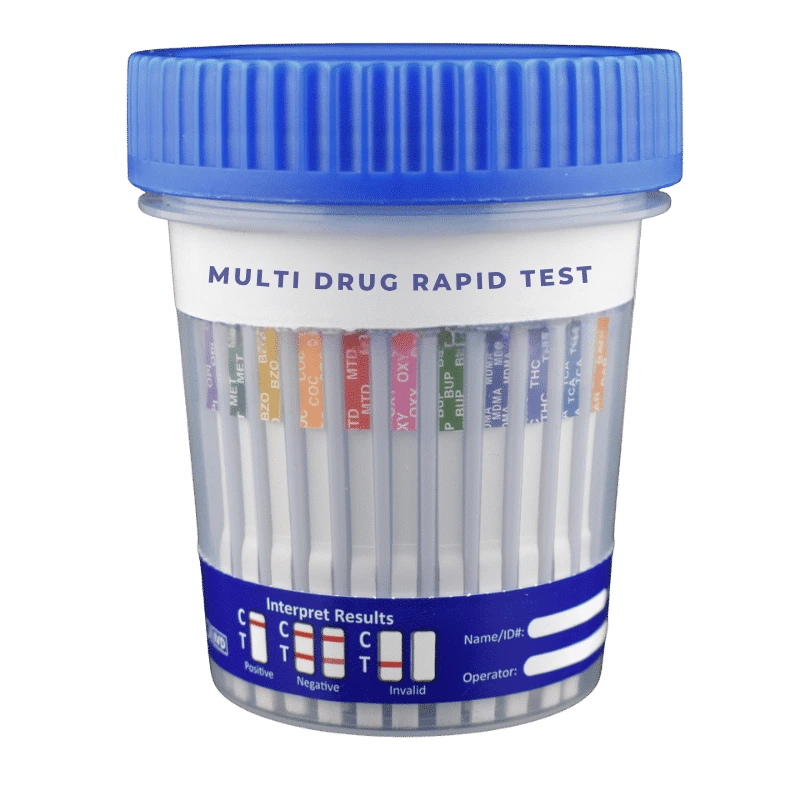
Multi-panel urine cups use immunoassay technology: antibodies on each strip bind to a target drug or its metabolite, and a missing test line signals a positive screen. Immunoassays are deliberately sensitive — they catch as much true use as possible in minutes — but an antibody that grabs its target eagerly can also grab a structurally similar molecule. That cross-reaction is the main engine of false positives, and a property of screening chemistry, not a defect in one brand of cup.
Three distinctions keep programs out of trouble. A presumptive positive is what the cup shows; a confirmed positive is what laboratory mass spectrometry reports after identifying the exact molecule. A true positive for a legitimate medication is not a false positive — a prescription explains it, which is what MRO review sorts out. A false positive that confirmation overturns is a screening artefact: no target drug at or above the confirmation cutoff, so the result cannot stand. False positives are uncommon relative to screening volume, and concentrate in amphetamines and opiates.
Why Immunoassays Cross-React
An antibody recognises a molecular shape, not a product name. Pseudoephedrine shares a backbone with amphetamine and methamphetamine; sertraline can trouble benzodiazepine assays; quetiapine has been reported on some methadone assays; diphenhydramine on some methadone and opioid assays. None of this means those medicines “are” the illegal drug — the screening antibody cannot reliably tell close cousins apart.
Dose, timing, assay brand, and specimen condition shift the risk. A single low dose rarely trips a strip; sustained use is more likely to cross a cutoff. A very dilute specimen, an expired cup, or a read outside the manufacturer’s window can also produce a hard-to-interpret line. Our dilute results guide explains why validity checks belong in the same conversation. This is general program information, not medical advice for any individual.
Common Cross-Reactants by Panel Strip
Common cross-reactants by strip — a prompt for the MRO conversation and for confirmation, not proof for or against any individual result:
| Panel strip | Commonly reported cross-reactants | Program note |
|---|---|---|
| Amphetamine / methamphetamine | Pseudoephedrine, ephedrine, bupropion, some prescribed stimulants | Most cross-reactive strip; confirm every denied positive |
| Opiates / opioids | Poppy seeds, rifampin, quinine, some cough preparations | Poppy-seed levels are real opiate molecules; cutoffs decide |
| Benzodiazepines | Sertraline, some other antidepressants | Check antidepressants in the MRO interview first |
| THC | Unrefined hemp and CBD products with trace cannabinoids | “THC-free” labelling is not a laboratory result |
| PCP | Dextromethorphan in high doses, tramadol in reported cases | Isolated PCP screens are rare; confirm promptly |
| Methadone | Quetiapine, diphenhydramine in reported cases | Cross-check prescribed antipsychotics and sleep aids |
| EtG alcohol | Kombucha, fermented foods, ethanol hand sanitiser, mouthwash | Needs a written incidental-exposure policy first |
| Cocaine | Coca tea and coca-containing herbal products | Genuine coca alkaloids; confirmation plus history resolves |
Cutoff Levels: Why the Threshold Is the Safety Valve
Every strip has a cutoff concentration — below it, the screen reports negative even if a trace of a cross-reacting compound is present. Cutoffs keep everyday exposures, like a poppy-seed bagel, below the reporting line while catching drug use at meaningful levels. Near-cutoff results are most vulnerable to cross-reactivity and reading error.
Our cutoff levels guide explains how screening and laboratory confirmation cutoffs differ, and why the two can legitimately disagree. Never lower a cutoff informally, never treat a faint line as stronger than a bold one — a faint line on most cups still means negative — and send any denied positive to confirmation first.
The Confirmation Workflow: GC-MS, LC-MS/MS, and MRO Review
Confirmation has two stages. First, the laboratory applies GC-MS or LC-MS/MS, which identifies the exact molecule by mass and fragmentation pattern rather than antibody shape. A cross-reacting look-alike fails because it is a different molecule — why confirmation overturns most genuine false positives.
Second, a Medical Review Officer — a licensed physician trained in drug-test interpretation — reviews the confirmed result with the donor’s medical explanation, checking prescription and pharmacy evidence. The SAMHSA Medical Review Officer Guidance Manual sets out this interview process for federal programs, and SAMHSA’s workplace drug testing resources describe the certified-laboratory framework; non-federal programs borrow the same structure. MedlinePlus’s overview gives a plain-language version programs can share with donors.
| Step | What happens | Who acts |
|---|---|---|
| 1. Screen | Cup shows a positive pattern; recorded as presumptive only | Collector |
| 2. Confirm | GC-MS or LC-MS/MS identifies the exact compound | Certified laboratory |
| 3. MRO interview | Donor’s prescriptions and medicines reviewed with evidence | Medical Review Officer |
| 4. Determination | Verified positive, verified negative, or cancelled | Medical Review Officer |
| 5. Split specimen | Sealed split (B) specimen tested at a second laboratory if requested | Donor, via the MRO |
| 6. Final report | Only the MRO-verified result is reported as final | MRO to program |
Confirmation takes days, not minutes, so policy must say what happens in between: usually, no adverse action until the MRO reports.
What Happens Next: For the Person Tested
Stay engaged: refusing the MRO interview removes the mechanism designed to clear the result. List everything taken before the test — prescriptions with doses, over-the-counter medicines, supplements, relevant foods — with pharmacy records where possible. The MRO can only credit a documented explanation.
Confirm confirmation is happening, and ask about the split specimen: the sealed portion collected at the same time can be tested independently at another certified laboratory, and a failure to confirm there cancels the original result. In the federal model the request comes within 72 hours of the MRO interview, so raise it promptly, and keep copies of the custody form and final verified report.
What Happens Next: For the Program
A presumptive positive triggers a holding pattern, not a punishment. Pause consequential action — hiring withdrawal, sanction, phase demotion, termination — until the MRO-verified result arrives, unless a written safety policy requires a temporary step. Document chain of custody throughout, and notify only those who need to know.
When the verified result arrives, act on that result alone. If the MRO cancels or overturns it, remove or annotate the presumptive entry per retention policy. If verified positive, follow the graduated response schedule rather than improvising a harsher penalty; consistency makes a program defensible. Our DOT drug testing guide explains how regulated programs structure the same protection.
How Programs Reduce False Positives Before They Happen
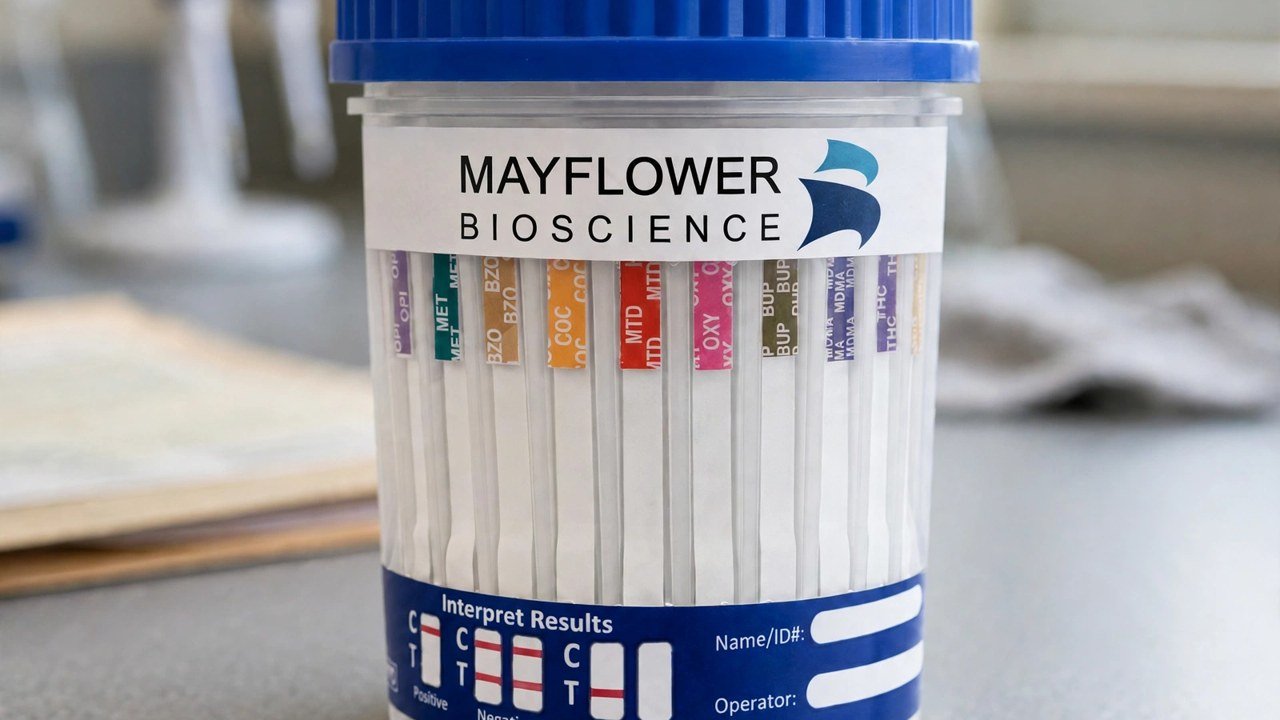
Confirmation catches false positives; good design prevents most of the rest. Test for the substances the program’s population actually uses, at cutoffs matched to its purpose. MayFlower’s 12-panel, 14-panel, and 16-panel drug test cups cover that ladder — fentanyl on the 14-panel, EtG alcohol and kratom on the 16-panel — and standardising on one configuration keeps training consistent. Volume programs procure through wholesale drug test cups for the same reason.
- Write the confirmation policy before the first test. Every non-negative screen goes to confirmation and MRO review before a consequential decision.
- Collect medication disclosure at intake, not at crisis. A routine, confidential form before testing lets the MRO work faster.
- Enforce cutoff and reading discipline. Train collectors on read windows, faint-line rules, and expiry checks.
- Use split specimens and chain of custody on every consequential test. A sealed split turns a dispute into a laboratory question.
- Publish the incidental-exposure policy. EtG, poppy seeds, and hemp need written rules before they produce a positive.
- Review patterns, not just cases. If one strip or lot produces unconfirmed screens, investigate the assay first.
Done this way, a false positive becomes a routine step — screen, confirm, review, decide — protecting the person tested and the perceived fairness that drives compliance (NIDA research). The MayFlower Bioscience range serves that routine with fast, consistent on-site screening.
Frequently Asked Questions
What is a false positive drug test?
A false positive is a presumptive immunoassay screen that flags a substance the person did not use, because a look-alike compound, food, or legitimate medication cross-reacted with the test strip. It is not a final result: laboratory confirmation with GC-MS or LC-MS/MS, plus MRO review, is what determines whether the finding stands.
What is the most common cause of a false positive drug test?
Cross-reactivity is the most common cause, especially on amphetamine strips, where decongestants such as pseudoephedrine share a chemical backbone with amphetamines. Prescription medicines, over-the-counter products, poppy seeds, and hemp products are the other frequent contributors, along with specimen or reading errors.
Can poppy seeds really cause a false positive drug test?
Yes, poppy seeds contain trace amounts of morphine and codeine, so eating them can produce a low-level opiate screen. Cutoffs are set to reduce this risk, and laboratory confirmation plus a consumption history usually resolve whether the level reflects food exposure or drug use.
Can prescription medication cause a false positive drug test?
Yes. Sertraline has been reported on some benzodiazepine assays, quetiapine on some methadone assays, and bupropion and decongestants on amphetamine assays, among others. Disclose all prescriptions to the MRO with pharmacy evidence, so a legitimate explanation can be verified rather than guessed at.
How long does it take to confirm a false positive drug test?
Laboratory confirmation typically takes several business days from when the laboratory receives the specimen, plus time for the MRO interview and review. Split-specimen testing at a second laboratory takes longer, often several weeks, so programs should plan timelines and interim steps in their written policy.
What is GC-MS confirmation, and why does it overturn false positives?
GC-MS (gas chromatography-mass spectrometry) and LC-MS/MS identify the exact molecule by its mass and fragmentation pattern, rather than by antibody shape. A cross-reacting look-alike is a different molecule, so it fails confirmation even though it fooled the immunoassay screen.
What does a Medical Review Officer do about a false positive?
The MRO, a licensed physician, interviews the donor, reviews prescription and pharmacy evidence, and decides whether a legitimate medical explanation accounts for the confirmed laboratory finding. The MRO can report the result as verified positive, verified negative, or cancelled, and only that verified result should drive program decisions.
Can I request a retest after a false positive drug test?
Yes, in most structured programs you can ask for confirmation testing and, where split specimens were collected, for testing of the sealed split (B) specimen at a second certified laboratory. In the federal model the split-specimen request comes within 72 hours of the MRO interview, so raise the request promptly.
Does a false positive drug test stay on my record?
An unconfirmed screen should not be recorded as a positive finding. Once the MRO cancels or overturns a result, the program should remove the presumptive entry from the active record or annotate it as overturned, following its retention policy, so later decision-makers do not act on it.
How can a program prevent false positive drug tests?
Programs reduce false positives by standardising on one panel and cutoff set, confirming every non-negative screen by GC-MS or LC-MS/MS with MRO review, collecting medication disclosures at intake, enforcing read-window and chain-of-custody discipline, using split specimens, and publishing an incidental-exposure policy for EtG, poppy seeds, and hemp products.