What Does a 5 Panel Drug Test Test For? The SAMHSA-5 Guide
What Does a 5 Panel Drug Test Test For?
A 5 panel drug test screens one urine specimen for the five foundational drug groups — amphetamines, cocaine, marijuana (THC), opiates, and PCP. It is the original workplace panel: the five groups the federal government standardized for employee testing, and still the baseline configuration for DOT-regulated testing and most pre-employment programs. Each drug reports against its own ng/mL cutoff, and a rapid cup returns all five results in about 5 minutes.
This guide lists exactly what a 5 panel drug test tests for, the cutoff and detection window for each group, how the rapid cup differs from the DOT laboratory panel, and — just as important — what the 5 panel leaves out, because fentanyl, ETG alcohol and oxycodone are not on it.
The 5 Drug Groups: Cutoffs and Detection Windows
The table below puts all three cutoff sets side by side, because this is where most confusion starts. The rapid-cup column is where the familiar cocaine value of 300 ng/mL comes from; in the federal laboratory panel this post is framed around, the SAMHSA screening cutoff for cocaine is 150 ng/mL with a 100 ng/mL confirmatory cutoff. The two numbers describe different devices — neither is a typo.
| Drug group | Abbreviation | Rapid-cup screen | SAMHSA screen | SAMHSA confirmatory | Typical urine window |
|---|---|---|---|---|---|
| Amphetamines | AMP | 1,000 ng/mL | 500 ng/mL | 250 ng/mL | 1–3 days |
| Cocaine | COC | 300 ng/mL | 150 ng/mL | 100 ng/mL | 2–4 days |
| Marijuana | THC | 50 ng/mL | 50 ng/mL | 15 ng/mL | 3–7 days* |
| Opiates | OPI | 2,000 ng/mL | 2,000 ng/mL | 2,000 ng/mL | 1–3 days |
| Phencyclidine | PCP | 25 ng/mL | 25 ng/mL | 25 ng/mL | 7–14 days |
Federal values are the HHS Mandatory Guidelines cutoffs for federal workplace testing — the same cutoffs DOT applies under 49 CFR Part 40. Two footnotes complete the federal picture: the laboratory amphetamine group also covers MDMA/MDA (500 ng/mL screen / 250 ng/mL confirmatory), and the federal opioid group extends beyond codeine/morphine to hydrocodone/hydromorphone (300 / 100 ng/mL), oxycodone/oxymorphone (100 / 100 ng/mL) and the heroin metabolite 6-acetylmorphine, or 6-AM (10 / 10 ng/mL). A rapid cup’s single OPI strip does not reproduce that opioid detail — one more reason the lab panel and the cup are not interchangeable.
*THC varies the most of any analyte on any panel: a single use can clear in about 3 days, while daily users can test positive for 30 days or longer. See the drug detection times chart for windows by drug and specimen type.
Typical maximum urine detection windows at standard screening cutoffs.
The SAMHSA-5: Why These Five Drugs?
The five groups come from the federal workplace model administered under SAMHSA’s drug-free workplace program: marijuana, cocaine, amphetamines, opioids and phencyclidine were the drug classes of concern when mandatory federal testing was established, and they remain the regulated core today. The five are also still widely known as the NIDA-5 — the name of the original National Institute on Drug Abuse panel from which the federal workplace panel descends. The amphetamine group covers amphetamine and methamphetamine (and, in the laboratory panel, MDMA/MDA); the opioid group in the current federal panel extends beyond morphine and codeine to hydrocodone, hydromorphone, oxycodone and oxymorphone — a distinction that matters when comparing a lab panel to a rapid cup, as the National Institute on Drug Abuse notes in its overview of workplace testing.
Rapid 5 Panel Cup vs. DOT Laboratory Test
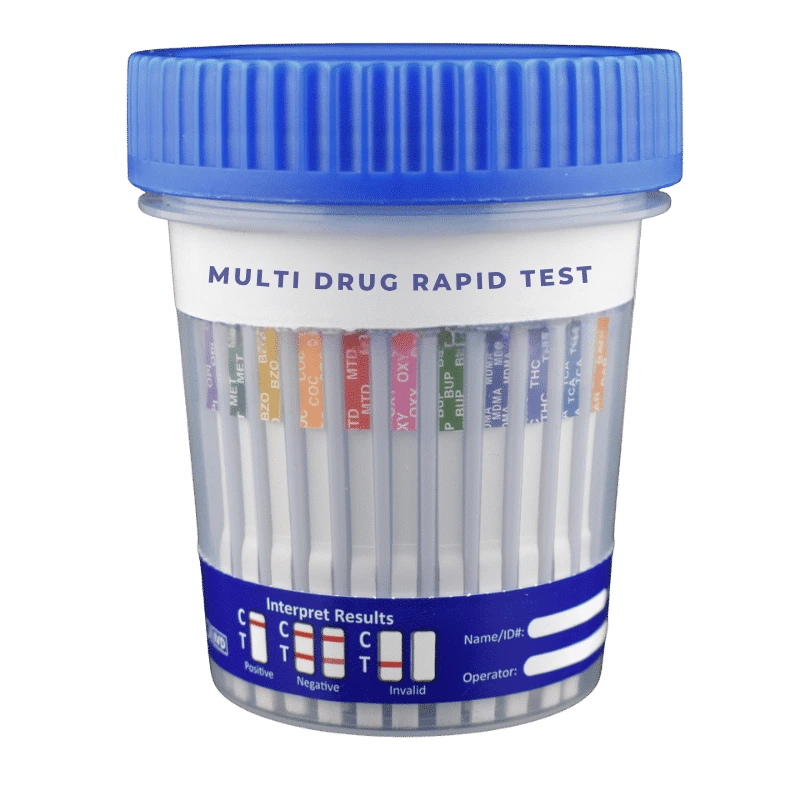
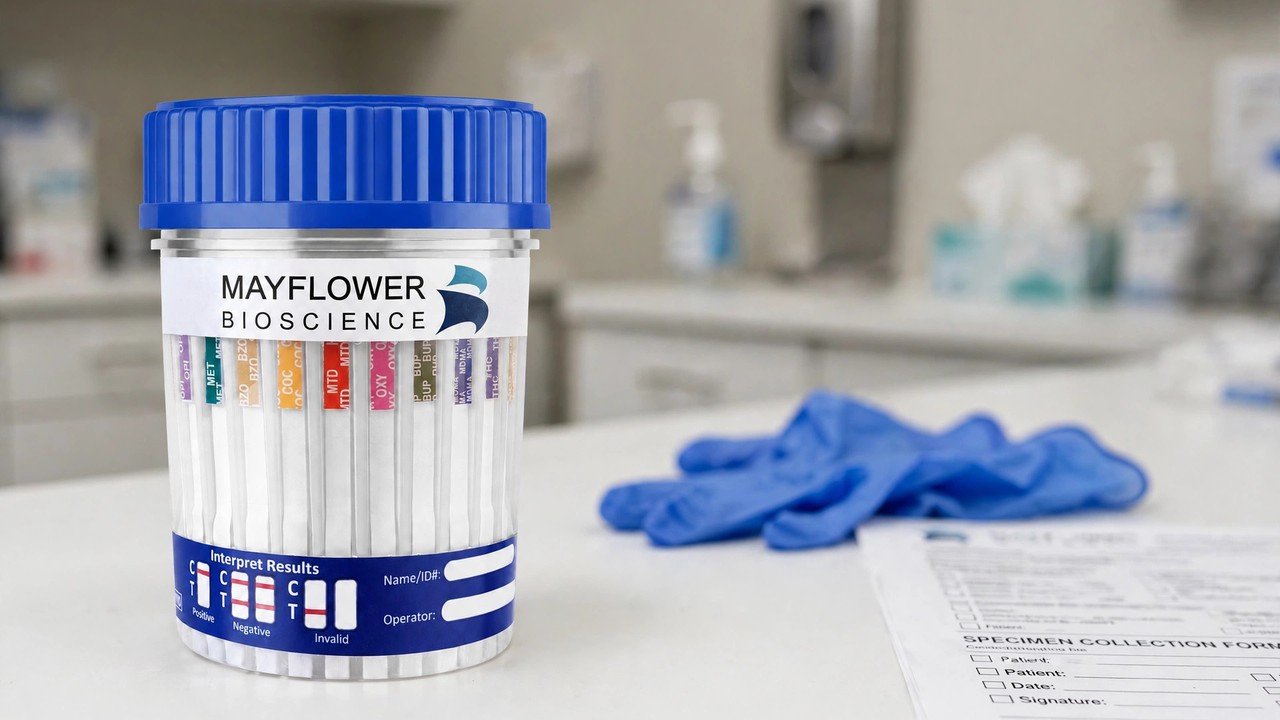
Same five groups, different machinery. A DOT test is a laboratory panel run under 49 CFR Part 40: split-specimen collection, SAMHSA-certified lab screening and GC-MS/LC-MS/MS confirmation, and MRO review of every positive. The DOT program is administered agency by agency — FMCSA (trucking), FAA (aviation), FRA (rail), FTA (transit), PHMSA (pipeline and hazmat) and the US Coast Guard each run Part 40 testing for their own workforces, all on this same five-group panel. A rapid 5 panel cup is an immunoassay screen a trained collector reads on site in minutes — ideal for non-regulated hiring and program screening, with any non-negative result sent out for confirmation. Neither version detects fentanyl or alcohol; for regulated and unregulated programs alike, that gap is closed by expanded cups such as the 12 panel drug test cups, which add FEN and ETG to the base groups.
Detection Windows by Specimen Type
Urine is the default specimen for the 5 panel, but it is not the only one — and each specimen answers a different question. Urine looks back days, hair looks back about 90 days, oral fluid and blood look back hours to a couple of days and reflect much more recent use. The table below gives typical windows for each of the five groups; the drug detection times chart carries the full multi-drug version.
| Drug group | Urine | Hair | Oral fluid (saliva) | Blood |
|---|---|---|---|---|
| Amphetamines | 1–3 days | Up to ~90 days | 1–2 days | ~12–24 hours |
| Cocaine | 2–4 days | Up to ~90 days | 1–2 days | ~12–24 hours |
| Marijuana (THC) | 3–7 days occasional; 30+ days daily | Up to ~90 days | 24–72 hours | 1–2 days (longer in chronic users) |
| Opiates | 1–3 days | Up to ~90 days | 1–2 days | ~6–24 hours |
| PCP | 7–14 days | Up to ~90 days | 1–3 days | ~1–3 days |
Hair windows reflect a standard 1.5-inch segment (about 90 days of growth) and are laboratory-only — no rapid cup tests hair, and hair cannot detect use from the past several days while metabolites incorporate into the shaft. Oral fluid detects the parent drug rather than metabolites, which is why its window tracks recent use so closely. Blood is the shortest-lived and most invasive specimen, used mainly in clinical and post-accident forensic settings. All windows are typical ranges at standard cutoffs; dose, frequency and individual metabolism move them.
What a 5 Panel Does NOT Cover
The gaps define when to step up. Fentanyl — no cross-reaction with the opiate strip. ETG alcohol — no abstinence verification. Benzodiazepines, barbiturates, methadone — the sedative classes arrive at the 10 panel level. Kratom and synthetic cannabinoids — specialty panels only. Programs in treatment, justice and pain management should read the 14 panel guide before defaulting to five.
When a program steps up, the natural first move is a 12-panel configuration — for example the 12 panel drug test cup with ETG and fentanyl, which keeps the five base groups and adds the fentanyl and alcohol coverage the 5 panel lacks. MayFlower sells only 12, 14 and 16 panel cups — see the full wholesale drug test supplies range — and this guide covers the 5 panel for information only, because it remains the reference panel other configurations are measured against.
Marijuana on the 5 Panel: DOT Rules vs State Law
THC is the one analyte on the 5 panel whose legal status has split in two. Federally, nothing has changed: marijuana metabolites stay on the DOT panel, screened at 50 ng/mL and confirmed at 15 ng/mL under 49 CFR Part 40, and a state legalization law does not remove a safety-sensitive employee — a truck driver, pilot, rail or transit worker — from federal testing. A DOT positive is a DOT positive in every state.
For non-DOT employers, several states now restrict what a marijuana result can be used for. California (Government Code §12954, added by AB 2188 and effective January 1, 2024) makes it unlawful for most employers to discriminate based on off-duty, off-site cannabis use, or on a test that finds only nonpsychoactive cannabis metabolites in urine, hair, blood or other fluids — with exceptions for the building and construction trades, positions requiring a federal background investigation or clearance, and testing that federal law requires. New York (Labor Law §201-d, as amended by the Marijuana Regulation and Taxation Act) treats lawful cannabis as a legal consumable product: Department of Labor guidance says employers generally may not test for cannabis at all unless a §201-d(4-a) exception or a federal requirement applies, and a positive test alone cannot establish impairment. Washington (SB 5123, effective January 1, 2024) bars most employers from discriminating against an applicant in initial hiring based on off-duty cannabis use or a test for nonpsychoactive metabolites, with carve-outs for safety-sensitive and federally regulated positions.
The practical result for panel choice: a non-DOT employer in a protection state often drops THC from its panel, or switches marijuana screening to an oral-fluid test that detects parent THC and recent use rather than the long-lived metabolite a urine 5 panel reads. A DOT-regulated employer changes nothing. This section is general information about how the rules are structured, not legal advice — programs operating across state lines should have their panel and policy reviewed against the law of each state they hire in.
Validity and Confirmation
Check specimen temperature (90–100°F within 4 minutes) and, on cups with adulteration strips, creatinine and pH before reading results. A line beside each drug — even a faint one — is a negative for that drug; a missing test line is a presumptive positive for confirmation, never a final answer on its own, as MedlinePlus emphasizes in its drug testing overview.
Frequently Asked Questions
What does a 5 panel drug test test for?
A 5 panel drug test screens urine for the five classic drug groups: amphetamines (AMP), cocaine (COC), marijuana (THC), opiates (OPI), and PCP. These are the SAMHSA-5 groups that anchor federal workplace testing in the United States.
Is a 5 panel drug test the same as a DOT test?
The DOT panel is a 5-panel configuration, but a DOT test is more than a panel: it follows 49 CFR Part 40 collection procedures, SAMHSA-certified laboratory testing, and Medical Review Officer verification. A rapid 5 panel cup used by an employer outside DOT rules is a non-DOT test even though the drug groups overlap.
Does a 5 panel drug test detect fentanyl?
No. Fentanyl does not cross-react with the opiate strip and needs a dedicated FEN panel. Every expanded MayFlower cup — 12, 14 and 16 panel — includes fentanyl; the 5 panel does not. See fentanyl drug test cups for the configurations that add it.
Does a 5 panel drug test test for alcohol?
No. Alcohol detection requires an ETG metabolite panel, which is standard on 12, 14 and 16 panel cups and absent from the 5 panel configuration.
What are the cutoff levels on a 5 panel drug test?
It depends on the device — see the three-column table at the top of this guide. Rapid-cup screens: AMP 1,000, COC 300, THC 50, OPI 2,000, PCP 25 ng/mL. The SAMHSA laboratory panel screens lower for two groups — AMP 500 and COC 150 ng/mL (THC 50, OPI 2,000, PCP 25) — and confirms at AMP 250, COC 100, THC 15, OPI 2,000 and PCP 25 ng/mL.
How far back does a 5 panel urine test detect drugs?
Cocaine 2–4 days, amphetamines 1–3 days, opiates 1–3 days, PCP 7–14 days, and THC from 3–7 days for occasional use up to 30+ days for daily users. Full windows by specimen are in the drug detection times chart.
Does a 5 panel drug test detect oxycodone?
The DOT laboratory opioid panel includes oxycodone, but a standard rapid 5 panel cup’s opiate strip is morphine-calibrated and usually misses oxycodone. Panels with a dedicated OXY strip — 12 and 14 panel configurations — cover it reliably.
What is the difference between a 5-panel and 10-panel drug test?
A 10 panel keeps the five base groups (AMP, COC, THC, OPI, PCP) and adds five more. On a rapid cup those are typically methamphetamine as its own strip, MDMA, methadone, benzodiazepines and barbiturates; laboratory 10-panels instead define the extra slots with propoxyphene and methaqualone. Neither the 5 panel nor the 10 panel detects fentanyl or ETG alcohol — those arrive on expanded 12, 14 and 16 panel cups. The 10 panel guide lists both configurations in full.
What happens if a 5 panel test is positive?
Treat the rapid result as presumptive: send the specimen for GC-MS or LC-MS/MS confirmation at a certified laboratory, where the exact drug and concentration are verified before any employment or program decision.
When should a program choose more than 5 panels?
When fentanyl, alcohol (ETG), oxycodone, benzodiazepines or kratom matter — treatment, probation, drug courts and pain management almost always do. The 10 panel guide and 14 panel guide show exactly what each step up adds.