What Does a 10 Panel Drug Test Test For? The Complete Analyte Guide
What Does a 10 Panel Drug Test Test For?
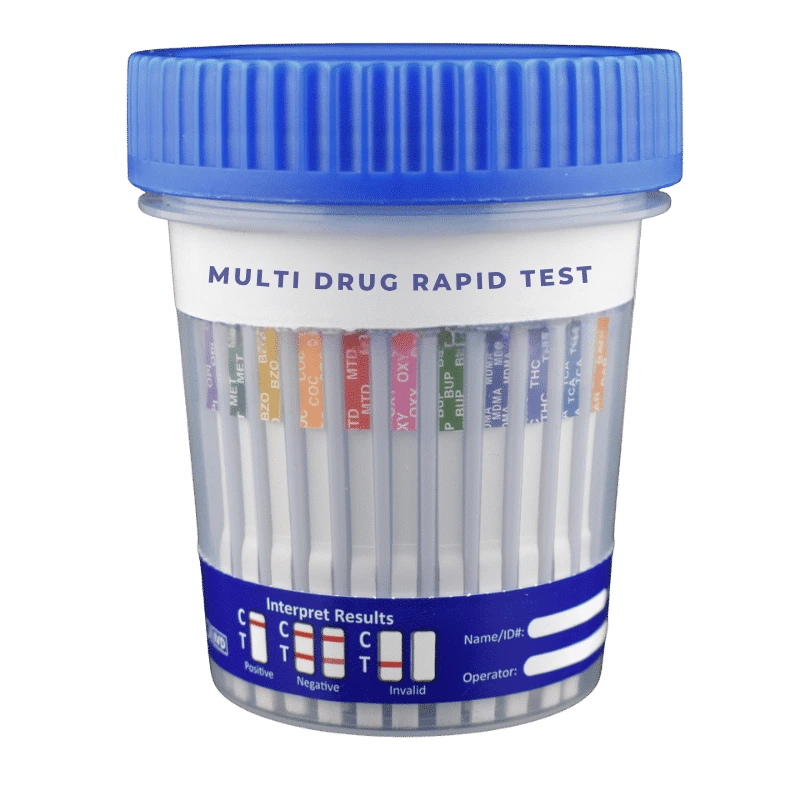
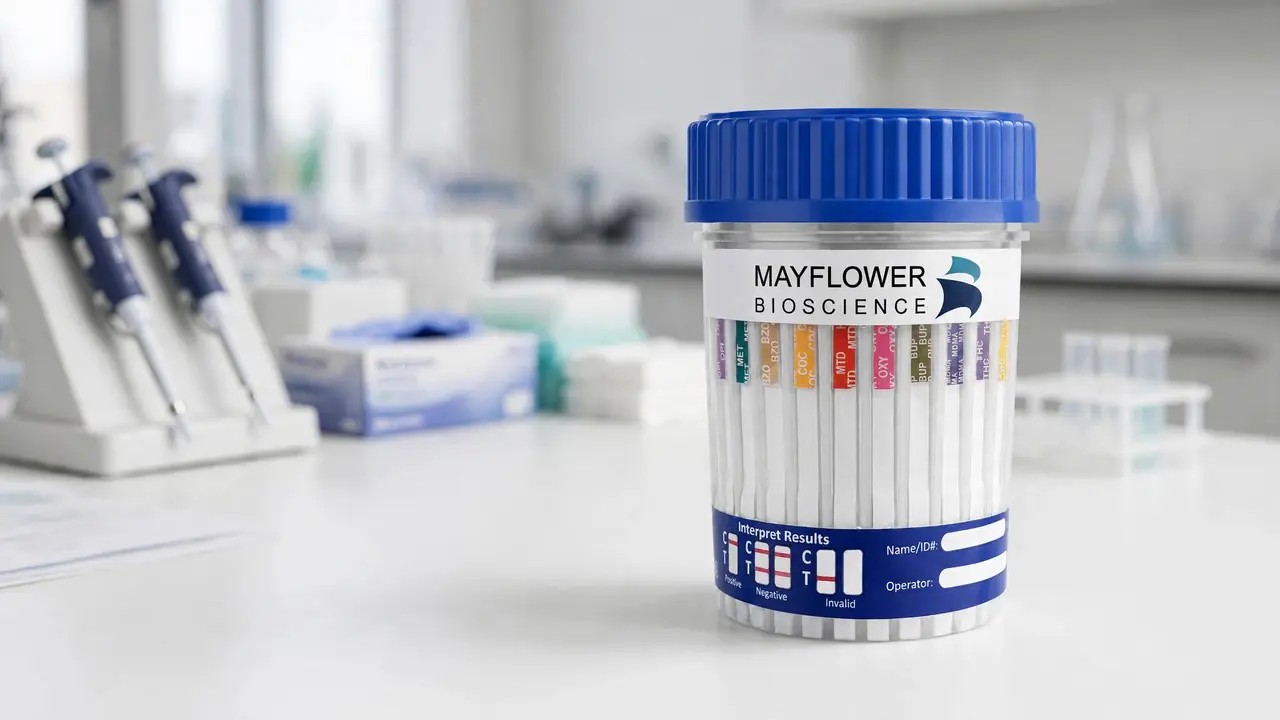
A 10 panel drug test screens one urine specimen for 10 drug classes at the same time — amphetamine, methamphetamine, MDMA, cocaine, THC (marijuana), opiates, methadone, benzodiazepines, barbiturates, and PCP. It doubles the classic 5-panel by adding five more drug groups, which is why it became the standard expanded panel for workplace and pre-employment screening. Each drug has its own screening cutoff in ng/mL, and a rapid urine cup returns all 10 results in about 5 minutes.
This guide lists exactly what a 10 panel drug test tests for, the cutoff for every analyte, how long each drug stays detectable in urine, and where the 10 panel stops short — fentanyl, ETG alcohol and oxycodone are not on it — so a program can tell whether 10 panels are enough or a broader cup is needed.
The 10 Analytes: Cutoffs and Urine Detection Windows
| Drug / metabolite | Abbreviation | Screening cutoff | Typical urine window |
|---|---|---|---|
| Amphetamine | AMP | 1,000 ng/mL | 1–3 days |
| Methamphetamine | MET | 1,000 ng/mL | 2–4 days |
| MDMA (ecstasy) | MDMA | 500 ng/mL | 1–3 days |
| Cocaine | COC | 300 ng/mL | 2–4 days |
| Marijuana | THC | 50 ng/mL | 3–7 days* |
| Opiates | OPI | 2,000 ng/mL | 1–3 days |
| Methadone | MTD | 300 ng/mL | 1–3 days |
| Benzodiazepines | BZO | 300 ng/mL | 1–4 days |
| Barbiturates | BAR | 300 ng/mL | 2–4 days |
| Phencyclidine | PCP | 25 ng/mL | 7–14 days |
*THC is the exception to every short window on this panel: a single use may clear in 3 days, occasional use in 3–7 days, and daily use can keep urine positive for 30 days or longer because THC metabolites store in body fat. For every specimen type and drug, see the drug detection times chart.
About the opiate (OPI) cutoff — why you will see two different numbers: the 2,000 ng/mL figure in the table above is the SAMHSA laboratory screening cutoff for opiates, the standard used by certified labs. Most rapid cups use a more sensitive 300 ng/mL clinical cutoff for the same OPI strip instead — that is the value used on expanded rapid panels, including the configuration in the 14 panel drug test guide. Neither number is a mistake: 2,000 ng/mL is set high in federal lab testing partly to reduce poppy-seed false positives, while 300 ng/mL is set for clinical sensitivity at the point of care. Always read the cutoff printed for the specific test being used.
Typical maximum urine detection windows at standard cutoffs; individual results vary with dose, frequency and metabolism.
Detection Windows by Specimen Type
The table above is for urine, the standard specimen for a 10 panel test. The same drug classes can be screened in other specimens, but the look-back period changes completely:
| Specimen | Typical detection window | Notes |
|---|---|---|
| Urine | 1–4 days for most analytes (THC and PCP longer) | Standard for rapid cups and lab panels; results in minutes on site or 1–3 days from a lab |
| Oral fluid (saliva) | About 24–72 hours | Best for very recent use; observed collection makes substitution difficult |
| Hair | Up to about 90 days | Lab-only; shows a pattern of use over months but misses the most recent ~7 days while hair grows out |
Programs choose the specimen by the question being asked — recent use (oral fluid), current screening (urine), or a long history (hair). Full per-drug windows for every specimen are in the drug detection times chart.
Where the 10 Panel Comes From: SAMHSA-5 Plus Five
The 10 panel is built on the five drug groups of the federal workplace model — marijuana, cocaine, amphetamines, opioids and PCP, the groups described in the SAMHSA workplace drug testing program — and adds methadone, benzodiazepines, barbiturates, MDMA and a separate methamphetamine strip. That structure explains both its popularity and its limits: it covers the sedative and prescription-sedative misuse that a 5-panel misses, which is why the National Institute on Drug Abuse lists drug testing panels of this size as the common middle ground for employers.
Two Different 10 Panels: Lab Panel vs Rapid Cup
“10 panel” names two different drug lists, and confusing them is the most common source of wrong answers about this test. The laboratory 10-panel — the definition used by reference guides such as Testing.com’s 10 panel drug test guide and Drugs.com — was fixed decades ago and still includes two drugs that have essentially disappeared from the US market. The rapid-cup 10-panel sold for on-site screening quietly swapped those legacy slots for drugs people actually use today.
| Laboratory 10-panel (classic definition) | Rapid-cup 10-panel (this guide’s table) | |
|---|---|---|
| Shared core (8) | Amphetamine, methamphetamine, cocaine, THC (marijuana), opiates, methadone, benzodiazepines, barbiturates — plus PCP in most versions of both | |
| Distinguishing slots | Propoxyphene (PPX) and methaqualone (MTQ, Quaaludes) | MDMA (ecstasy) takes one legacy slot; some cup versions swap barbiturates or PCP for buprenorphine (BUP) or oxycodone (OXY) |
| Format | Urine sent to a certified laboratory; immunoassay screen with GC-MS or LC-MS/MS confirmation; results in 1–3 business days | On-site urine cup; visual result in about 5 minutes; non-negatives sent to a lab for confirmation |
Why do propoxyphene and methaqualone still define the laboratory panel? Propoxyphene (Darvon, Darvocet) was withdrawn from the US market in November 2010 after the FDA linked it to serious cardiac rhythm problems, and methaqualone (Quaaludes) was withdrawn in 1983 and placed in Schedule I in 1984 — yet both remain printed on long-standing laboratory test menus, where panels change slowly and forensic or legacy employer orders still reference the classic list. Some laboratory menus split the difference and count methamphetamine as its own class in place of methaqualone, which is why reference lists differ slightly from source to source. The practical takeaway: if an employer’s “10 panel” order was written years ago, it may screen for two drugs almost nobody can obtain — and miss MDMA. Check the actual analyte list, not just the panel count. MayFlower Bioscience does not sell a 10-panel cup in either configuration; this guide exists so programs can compare the 10 panel honestly against the broader 12, 14 and 16 panel cups below.
What a 10 Panel Does NOT Test For
Three gaps matter for modern programs. Fentanyl — the drug behind most current overdose deaths — is not detected by the opiate strip and needs a dedicated FEN panel. ETG alcohol is absent, so a 10 panel cannot verify abstinence the way court and treatment programs require. Oxycodone is missed by the standard morphine-calibrated OPI strip. If any of the three matters, step up: the 14 panel drug test guide shows the expanded configuration analyte by analyte, and the 12 panel drug test cups collection covers the mid-size option that adds fentanyl and ETG to the base ten. Programs that need all three missing analytes in a single cup step up to the 14 panel drug test cup with fentanyl, ETG alcohol and PCP, which adds a dedicated FEN strip, ETG alcohol and oxycodone (OXY) on top of the base panel.
10 Panel vs. DOT and Smaller Panels
A 10 panel is a non-DOT panel: wider than the regulated DOT 5-panel, but run under the employer’s own policy rather than federal Part 40 procedure. Against a 5-panel, the 10 panel adds sedative coverage (benzodiazepines, barbiturates, methadone) that matters in safety-sensitive work. Against 12–16 panel cups, it lacks the synthetic-opioid and alcohol-metabolite panels that justice and treatment settings now treat as essential. Volume buyers standardizing on one cup for mixed programs usually land on 12 or 14 panels; the wholesale drug test cups page breaks down the per-panel cost logic. MayFlower Bioscience supplies only 12, 14 and 16 panel cups, so programs that outgrow the 10 panel standardize on one of those broader configurations rather than adding single-drug tests one at a time.
Reading the Result and Confirming Positives
On a rapid cup, two lines (test + control) mean negative for that drug, one control line only means presumptive positive, and a missing control line means the test is invalid. Specimen validity comes first: temperature within 90–100°F inside 4 minutes, and normal creatinine and pH where the cup includes adulteration strips. Any non-negative screen that carries consequences should be confirmed by GC-MS or LC-MS/MS at a certified laboratory — immunoassay screens are presumptive by design, as MedlinePlus explains in its drug testing overview. A specimen that is too dilute, outside the valid temperature or pH range, or otherwise invalid is reported as inconclusive or invalid rather than negative — the correct response is a recollection under the program’s policy, not a passed test.
Frequently Asked Questions
What does a 10 panel drug test test for?
A standard rapid-cup 10 panel drug test screens one urine specimen for 10 drug classes: amphetamine (AMP), methamphetamine (MET), MDMA/ecstasy, cocaine (COC), marijuana (THC), opiates (OPI), methadone (MTD), benzodiazepines (BZO), barbiturates (BAR), and PCP. A laboratory 10-panel uses a different classic list that includes propoxyphene and methaqualone instead of MDMA — see the lab panel vs rapid cup section above. Both are built on the federal SAMHSA-5 drug groups plus five additions.
Does tramadol show up on a 10-panel drug test?
No. Tramadol is a synthetic opioid that does not cross-react with the standard opiate (OPI) immunoassay, which is calibrated for morphine and codeine. Neither the laboratory nor the rapid-cup 10 panel detects tramadol; testing for it requires a dedicated tramadol assay or an expanded laboratory panel that specifically lists tramadol.
Does a 10 panel drug test detect fentanyl?
Not in the standard configuration. Fentanyl needs its own dedicated strip because it does not cross-react with the opiate (OPI) assay. Programs screening for fentanyl choose an expanded configuration — see the 12, 14 and 16 panel cups on the fentanyl drug test cups page, which add a dedicated FEN panel.
Does a 10 panel drug test test for alcohol?
The standard 10 panel does not include alcohol. Alcohol screening requires an ETG (ethyl glucuronide) panel, which detects drinking for up to about 80 hours. ETG is standard on the 12, 14 and 16 panel cups used by courts, probation and treatment programs.
How far back does a 10 panel urine test detect drugs?
Most analytes are detectable for 1-4 days after use: cocaine 2-4 days, amphetamines 1-3 days, opiates 1-3 days, MDMA 1-3 days, methadone 1-3 days, PCP 7-14 days. THC is the outlier — 3-7 days for occasional users and up to 30 days or more for daily users. The drug detection times chart lists windows by drug and specimen type.
What are the cutoff levels on a 10 panel drug test?
Typical rapid-cup screening cutoffs are: amphetamine 1,000 ng/mL, methamphetamine 1,000 ng/mL, MDMA 500 ng/mL, cocaine 300 ng/mL, THC 50 ng/mL, methadone 300 ng/mL, benzodiazepines 300 ng/mL, barbiturates 300 ng/mL, and PCP 25 ng/mL. Opiates are the exception with two common values: 2,000 ng/mL is the SAMHSA laboratory screening cutoff, while many rapid cups use a more sensitive 300 ng/mL clinical cutoff. A result below the cutoff reports negative even if a trace is present.
Does a 10 panel drug test detect oxycodone?
Usually not. The standard opiate (OPI) strip is calibrated for morphine and codeine and misses semi-synthetic opioids like oxycodone at normal cutoffs. Panels that add a dedicated oxycodone (OXY) strip — such as 12 and 14 panel configurations — are the right choice when prescription opioid misuse is a concern.
Can prescription medications cause a positive result on a 10 panel drug test?
Yes. Legitimate prescriptions that are themselves panel drugs — amphetamine medications such as Adderall or Vyvanse, prescribed benzodiazepines, opioid pain medications and methadone — will screen positive, and some other medicines cross-react on the initial immunoassay, including phentermine (amphetamine assays) and pseudoephedrine in cold medicines. Confirmation testing by GC-MS or LC-MS/MS identifies the exact substance, and in employer programs a Medical Review Officer (MRO) verifies valid prescriptions before a result is reported as positive.
What is a non-DOT 10-panel drug test?
A non-DOT 10-panel drug test is an employer- or program-run panel that follows the organization’s own drug-free workplace policy instead of federal Department of Transportation rules. DOT testing uses only the regulated 5-panel under 49 CFR Part 40, with SAMHSA-certified laboratory confirmation and Medical Review Officer review. A non-DOT 10 panel is broader — ten drug classes instead of five — and lets the employer choose the configuration and cutoffs, but it cannot be used where a DOT test is legally required.
What happens if a 10 panel test is positive?
A non-negative rapid result is presumptive. The specimen should be sent to a certified laboratory for confirmation by GC-MS or LC-MS/MS, which identifies the exact drug and concentration, and in regulated programs a Medical Review Officer (MRO) verifies legitimate prescriptions before the result is final.