Which Drug Test Panels Include Fentanyl?
Which Drug Test Panels Include Fentanyl?
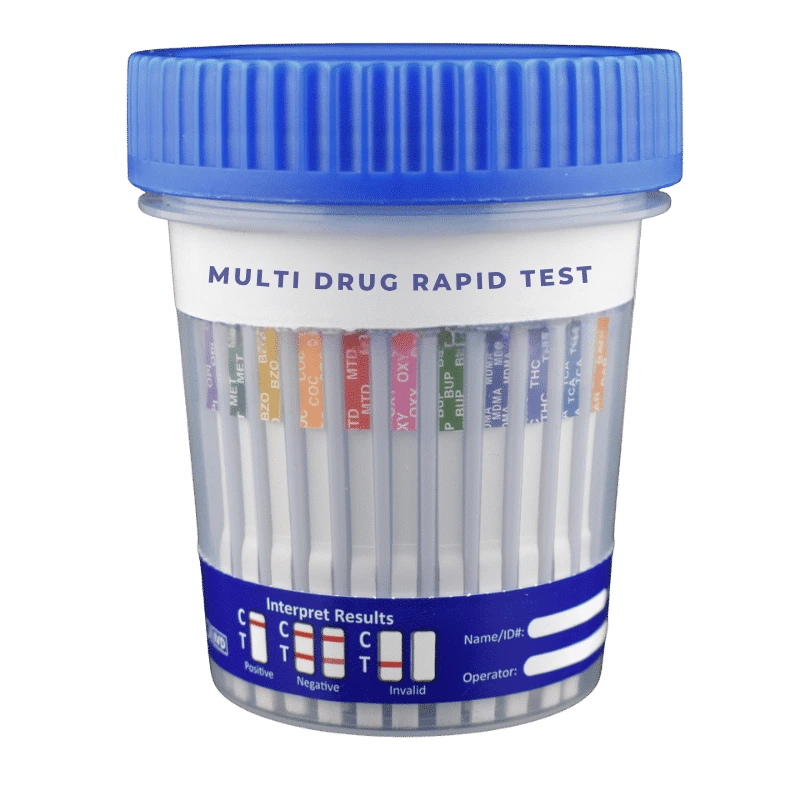
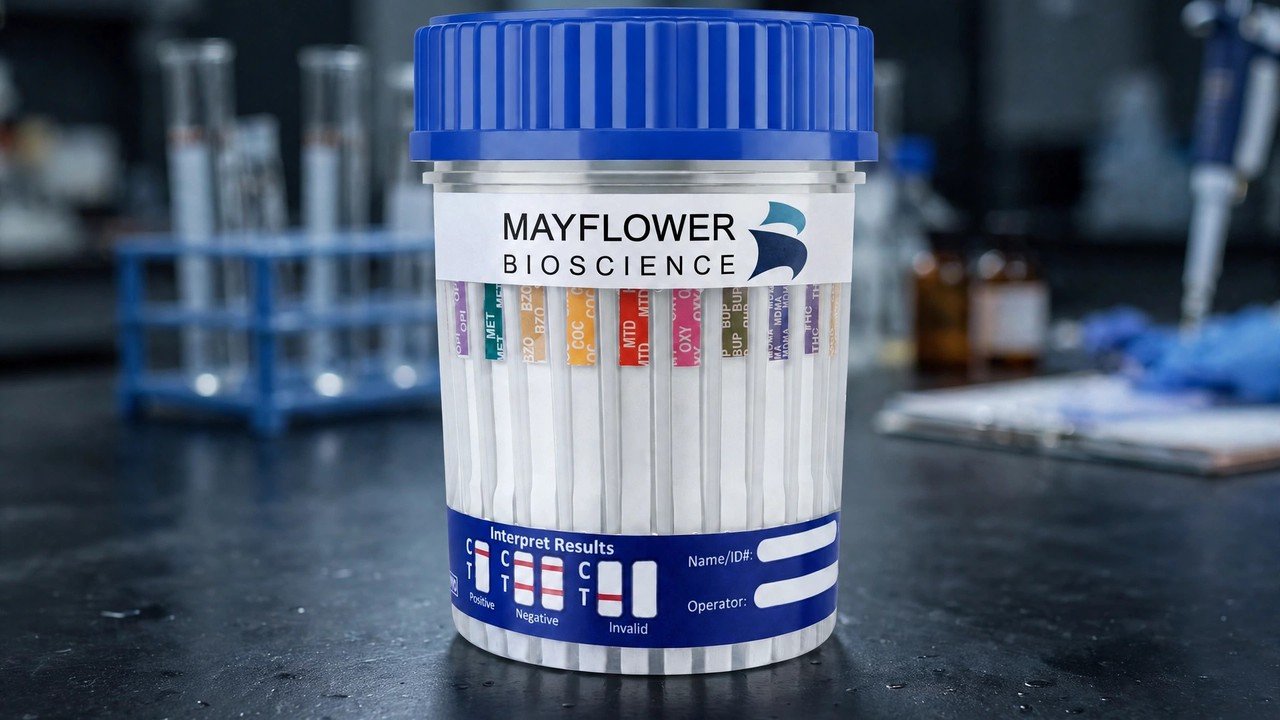
Fentanyl is included only in expanded drug test panels — at MayFlower, the 12 panel, 14 panel and 16 panel cups each carry a dedicated fentanyl (FEN) strip; standard 5 and 10 panel cups do not test for fentanyl at all. That single fact drives panel selection for treatment programs, courts and clinics today, because fentanyl — not heroin or prescription opioids — is now the drug most often involved in overdose deaths, and the regular opiate strip cannot see it.
This guide explains which panels include fentanyl and why, the FEN cutoff and detection window, and how to choose between the 12, 14 and 16 panel configurations that carry it.
Panel by Panel: Where Fentanyl Is Included
| Configuration | Fentanyl | Also added | Typical use |
|---|---|---|---|
| 12 panel cup | Yes — FEN strip | ETG alcohol included | Clinics, employers stepping up from 10 |
| 14 panel cup | Yes — FEN strip | ETG + oxycodone included | Treatment, drug courts, probation |
| 16 panel cup | Yes — FEN strip | ETG + kratom + TCA included | MAT and high-risk monitoring |
| 10 panel cup | No (standard) | No ETG | General workplace |
| 5 panel cup | No | No ETG | DOT-style baseline hiring |
The full configuration list with CLIA-waived and forensic-use variants is on the fentanyl drug test cups page.
Why Fentanyl Needs Its Own Strip
Immunoassay strips detect drugs by antibody shape-matching. The opiate assay is built around the morphine molecule; fentanyl is a fully synthetic opioid with a different structure, so it produces no reaction on the OPI strip — a person using only fentanyl can pass a standard panel clean. A FEN strip uses a fentanyl-specific antibody. Fentanyl screening cutoffs are manufacturer-set: CLIA-waived fentanyl cups commonly use 1 ng/mL, forensic-use cups commonly use 20 ng/mL, and rapid strips exist in both — so the same panel count from two makers can screen fentanyl at very different levels, and the configuration sheet, not the panel number, is what states the cutoff. The toxicology behind fentanyl testing — metabolism to norfentanyl, analog cross-reactivity, confirmation practice — is covered in depth in the fentanyl drug testing guide, and the public-health case for testing is laid out by the National Institute on Drug Abuse.
Fentanyl and the Federal Panel: What Changed in 2025
Until 2025, fentanyl was not on the federal workplace drug testing panel at all — which is why older guidance still says the standard panel “does not test for fentanyl.” That changed for laboratory testing on July 7, 2025, when the U.S. Department of Health and Human Services (HHS), through SAMHSA, put revised Authorized Testing Panels into effect for Federal workplace drug testing programs (published in the Federal Register, January 16, 2025). The revision added fentanyl to both the urine and oral fluid panels and added its metabolite norfentanyl to the urine panel. The federal laboratory cutoffs are 1 ng/mL in urine (initial test 1 ng/mL; confirmatory 1 ng/mL for both fentanyl and norfentanyl) and, in oral fluid, a 4 ng/mL initial test with a 1 ng/mL confirmatory test. The Department of Transportation (DOT) has since issued proposed rulemaking to add fentanyl and norfentanyl to the Part 40 DOT panel at the same cutoffs, harmonising DOT testing with the HHS panels.
The distinction that matters for readers of this guide is rapid cup vs laboratory panel. The HHS change governs specimens analysed by HHS-certified laboratories for federal agency programs — it did not put a fentanyl strip into any rapid cup. So the core answer above still stands exactly as written for point-of-care testing: a rapid 5 panel or 10 panel cup does not detect fentanyl, and never did; only expanded rapid cups with a dedicated FEN strip (12, 14 and 16 panel) do. What changed is the laboratory route: a federal laboratory panel ordered today does include fentanyl and norfentanyl, and a laboratory “expanded opioids” panel can include fentanyl whenever a program orders it. Three routes, three different answers — cup, expanded lab panel, federal lab panel — and confusing them is how the outdated “no panel tests for fentanyl” claim keeps circulating.
Fentanyl Detection Window and Cutoff
In urine, fentanyl is typically detectable for 1–3 days after use, while norfentanyl — the metabolite most laboratory confirmations target — can extend detection to roughly a week, and longer in chronic heavy use. Fentanyl screening cutoffs are manufacturer-set: CLIA-waived fentanyl cups commonly use 1 ng/mL, forensic-use cups commonly use 20 ng/mL, and rapid strips exist in both — so a low-cutoff (1 ng/mL) cup will generally return positives later into the window than a 20 ng/mL forensic cup used on the same donor. Compare windows across drugs and specimens in the drug detection times chart.
Typical urine detection windows after use. The parent drug clears quickly; norfentanyl — the metabolite laboratory confirmations target — is what stretches real-world detection toward a week, and longer in chronic heavy use.
Choosing Between the 12, 14 and 16 Panel Fentanyl Cups
All three include fentanyl and ETG alcohol. The 12 panel drug test cup is the economical step for employers and clinics who mainly need fentanyl and alcohol added to a workplace panel. The 14 panel drug test cup adds oxycodone and PCP coverage suited to courts and treatment — its full analyte list is broken down in the 14 panel configuration guide. The 16 panel drug test cup adds kratom and tricyclic antidepressants (TCA) on top of that, for MAT and high-risk monitoring. SAMHSA’s treatment resources describe why fentanyl monitoring sits at the center of current opioid-use-disorder care — panel choice should follow the population being tested, not habit. All three configurations, in CLIA-waived and forensic-use variants, sit alongside the rest of MayFlower’s wholesale drug test supplies.
Standalone Fentanyl Tests
Not every fentanyl check needs a full panel. Single-analyte fentanyl dip cards and strips run the same FEN immunoassay on its own, and programs use them for high-frequency monitoring between full panels — daily or near-daily checks in early MAT, sober living and drug-court phases, where running a 12, 14 or 16 panel cup at every check would be wasteful. One limit applies to both routes: a cup’s strips are fixed at manufacture, so fentanyl cannot be added to an existing 5 or 10 panel cup after the fact — adding it means choosing a configuration, or a standalone strip, that already carries the FEN strip. The trade-off is scope: a standalone strip answers only the fentanyl question, so a scheduled full panel still has to cover everything else. Standalone strips follow the same cutoff logic as cups — fentanyl screening cutoffs are manufacturer-set, with 1 ng/mL and 20 ng/mL versions both in use — and any presumptive positive still goes to LC-MS/MS confirmation. The fentanyl drug test cups collection is the starting point for comparing formats.
Frequently Asked Questions
Which drug test panels include fentanyl?
On rapid urine cups, fentanyl (FEN) is included in expanded configurations — at MayFlower, the 12 panel, 14 panel and 16 panel cups all carry a dedicated fentanyl strip. Standard 5 and 10 panel configurations do not include it.
Why doesn’t the opiate test catch fentanyl?
Fentanyl is a fully synthetic opioid with a different chemical structure from morphine. The opiate (OPI) immunoassay is calibrated for morphine and codeine, so fentanyl passes through it undetected — a panel must add a fentanyl-specific antibody strip.
Is fentanyl on the DOT/SAMHSA panel?
On the federal laboratory panel, yes. Effective July 7, 2025, HHS/SAMHSA added fentanyl to the authorized urine and oral fluid panels and norfentanyl to the urine panel for Federal workplace drug testing programs, at a 1 ng/mL urine cutoff and 4 ng/mL initial / 1 ng/mL confirmatory cutoffs in oral fluid. DOT has proposed Part 40 rulemaking to add both analytes at the same cutoffs. None of this changes rapid cups: a standard 5 panel cup still has no fentanyl strip — only expanded 12, 14 and 16 panel cups carry one.
What is the fentanyl cutoff on a drug test cup?
Fentanyl screening cutoffs are manufacturer-set. CLIA-waived fentanyl cups commonly use 1 ng/mL, forensic-use cups commonly use 20 ng/mL, and rapid strips exist in both — so two cups with the same panel count can screen fentanyl at very different levels. Laboratory confirmation by LC-MS/MS works at similar or lower levels. Always check the configuration sheet for the exact FEN cutoff of a given cup.
How long does fentanyl stay detectable in urine?
Fentanyl itself is usually detectable for 1–3 days after use; its metabolite norfentanyl extends the window — up to about a week, and longer with heavy chronic use. The deep dive is in the fentanyl drug testing guide.
Does a 10 panel drug test include fentanyl?
Not in the standard configuration. Some manufacturers offer fentanyl as a swap-in strip on custom panels, but a stock 10 panel does not test for it — see the 10 panel guide for its exact analyte list.
Do fentanyl strips detect fentanyl analogs?
Fentanyl immunoassays cross-react with many analogs (such as acetylfentanyl and carfentanil) to varying degrees, but not uniformly — only LC-MS/MS confirmation identifies the specific compound present.
Who needs fentanyl on their panel?
Medication-assisted treatment (MAT) programs, drug courts, probation, pain management, behavioral health and any employer or agency in a high-overdose region. SAMHSA treatment guidance treats fentanyl monitoring as essential because it dominates the current illicit opioid supply.
Is fentanyl testing CLIA-waived?
Fentanyl-inclusive cups are sold in both CLIA-waived and forensic-use-only configurations. CLIA-waived versions suit clinics and workplaces; forensic-use cups are for law-enforcement and justice settings. The fentanyl drug test cups collection separates the two.
What happens if a fentanyl strip is positive?
Treat it as presumptive and confirm by LC-MS/MS, which distinguishes fentanyl from norfentanyl and analogs and reports exact concentrations — the standard a treatment or court program needs before acting.