Probation Drug Testing: Panels, Detection Windows and Schedules
Probation drug testing is usually directly observed urine testing on a 5-panel to 12-panel drug screen, repeated randomly throughout supervision — and a failed screen goes first to the probation officer, not straight to jail. Most probation departments screen the five federal drug classes (marijuana, cocaine, amphetamines, opiates, PCP), and many have moved to 10-panel or 12-panel screens that add benzodiazepines, barbiturates, methadone — and, increasingly, fentanyl and ETG alcohol. Any non-negative screen is sent to a SAMHSA-certified laboratory for GC-MS or LC-MS/MS confirmation and reviewed by a Medical Review Officer before it can count as a violation.
This guide explains the panels probation programs use, the detection windows that determine whether use is actually caught, how testing schedules and random call-in systems work, what an observed collection looks like, and what happens after a positive — plus how agencies fit rapid cups into the workflow. For every substance side by side, see the drug detection times chart.
Which Panel Does Probation Drug Testing Use?
There is no single national probation panel — each federal district, county, and state department sets its own based on the caseload. In practice, programs cluster around three choices: the 5-panel screen, the expanded 10-panel, and the 12-panel. Judicial systems commonly select tests with five, ten, or twelve panels, and the analytes beyond the federal five reflect what the local population actually uses.
| Panel | Drug classes covered | Where it is used |
|---|---|---|
| 5-panel | THC, cocaine metabolite (benzoylecgonine), amphetamines/methamphetamine, opiates (codeine/morphine), PCP | Baseline screen in federal and many state supervision programs |
| 10-panel | Everything in the 5-panel, plus benzodiazepines, barbiturates, methadone, methaqualone, propoxyphene | The most common expanded court and probation panel |
| 12-panel | Everything in the 10-panel, plus two program-chosen analytes — most often tramadol and fentanyl, or buprenorphine, depending on the cup configuration | Programs in areas hit by the opioid crisis; treatment-oriented supervision |
If the offense involved a specific substance, the court can order targeted testing for it even when it sits outside the standard panel — a DUI case may add ETG alcohol testing, an opioid case may add a dedicated fentanyl strip. Intensive programs go wider still: drug courts, family treatment programs, and medication-assisted treatment monitoring routinely add ETG alcohol, kratom (mitragynine), and oxycodone-specific strips, which is why manufacturers offer 14-panel and 16-panel cups. The program’s written testing policy decides the panel — the device just has to cover it. What each cutoff concentration means is explained in drug test cutoff levels explained (ng/mL).
Probation Drug Detection Windows: Why the Schedule Exists
A testing schedule only works if the interval between tests is shorter than the detection window. Urine is the probation standard because it offers multi-day windows with non-invasive collection — most drugs are detectable for 2–4 days, with a few long-window exceptions that shape policy:
| Drug | Typical urine window | Program note |
|---|---|---|
| THC (marijuana) | ~3 days single use; up to 30 days chronic | Longest window on the panel — drives monthly schedules |
| Cocaine | 2–4 days | Needs twice-weekly or random testing to catch reliably |
| Amphetamines / meth | 2–4 days | Same scheduling pressure as cocaine |
| Opiates | 2–3 days | Heroin marker 6-AM clears fastest |
| PCP | 7–14 days | Caught by almost any schedule |
| Benzodiazepines | 3–7 days (chronic up to 30) | Common prescription-abuse target |
| Fentanyl | 2–4 days | Only on panels that name it — see fentanyl drug test cups |
| ETG alcohol | Up to ~80 hours | Only on ETG panels — see ETG alcohol drug test cups |
Full window data is in the MedlinePlus drug testing reference and the detection times chart.
How Often Does Probation Drug Test You?
After an intake baseline test at the first visit, frequency is set by the assessed risk level — not by the calendar. Probation departments use structured risk assessments weighing criminal history, substance-use history, employment stability, and social support:
| Supervision level | Typical testing cadence |
|---|---|
| Low risk | Monthly or less; may taper to quarterly |
| Moderate risk | Every 2–4 weeks |
| High risk / substance-use history | Weekly, sometimes multiple times per week |
The core mechanism is random testing — unpredictability is the point. Many programs run a daily call-in or “color line” system: if your number is drawn, you report the same day, including weekends and holidays. A clean record can earn reduced frequency; any positive or missed test ratchets it back up. Drug courts — a separate intensive program, not standard probation — test participants randomly at least twice per week with urine for nearly the entire program.
What an Observed Collection Looks Like
Federal probation and pretrial procedures set the strictest template, and many state programs follow it closely. Expect:
- Chain-of-custody paperwork — you sign a form verifying the sample is yours and unadulterated.
- Medication disclosure — you are asked about prescription and over-the-counter drugs taken in the past 72 hours, and must report new prescriptions immediately.
- Preparation — wash hands, remove coats and bulky clothing that could interfere with observation.
- Direct observation — a same-gender officer observes the sample being provided. This is the part people ask about most: yes, it is uncomfortable, and yes, it is standard — it prevents substitution and adulteration.
- Minimum volume — federal procedures require at least 30 mL; if you cannot provide it, you wait on site until you can.
- Validity checks on the spot — the collector reads the temperature strip (valid range 90–100°F, the same reading process used with rapid cups) and screens for dilution; an out-of-range temperature or a dilute sample means you stay and provide another.
Refusing to provide a specimen, or failing to produce an acceptable one, is itself treated as a violation in most programs — it is not a way to run out the clock.
What Happens After a Positive Probation Drug Test
A positive on a cup or dip screen is presumptive, not final. Due process for drug testing in supervision follows a fixed chain: the non-negative specimen goes to a SAMHSA-certified laboratory for GC-MS or LC-MS/MS confirmation, a Medical Review Officer reviews the result, and you get the chance to present valid prescriptions before anything is reported to the court. This mirrors the confirmation discipline used in SAMHSA’s drug-free workplace testing programs — the screen finds candidates, the laboratory and the MRO decide.
A confirmed positive is a violation, but rarely means revocation on its own. Most programs use graduated sanctions: more testing, more office visits, curfew or community service, treatment referral, or modified conditions. Revocation typically follows a pattern of repeated violations or failure to complete ordered treatment. You can also challenge a screening result — some programs allow a split-specimen retest at the probationer’s expense, and confirmation testing can distinguish a prescribed opioid from an illicit one in the same drug class.
Marijuana and Alcohol on Probation
Two substances cause most of the confusion. Marijuana: even where legal, standard probation conditions prohibit it — a court order, not a workplace policy — and with a 30-day chronic-use window it is the easiest positive for programs to catch. Some treatment courts grant new enrollees a short grace period for residual cannabinoids; standard probation generally does not. Alcohol: only detected when specifically ordered — the standard 5-panel excludes it. Programs that test use ETG urine screens (up to ~80 hours) or breath tests for recent use, typically in DUI, domestic-violence, or treatment caseloads. NIDA’s criminal justice research covers how testing fits into broader supervision outcomes.
How Agencies Use Rapid Drug Test Cups in Probation Workflows
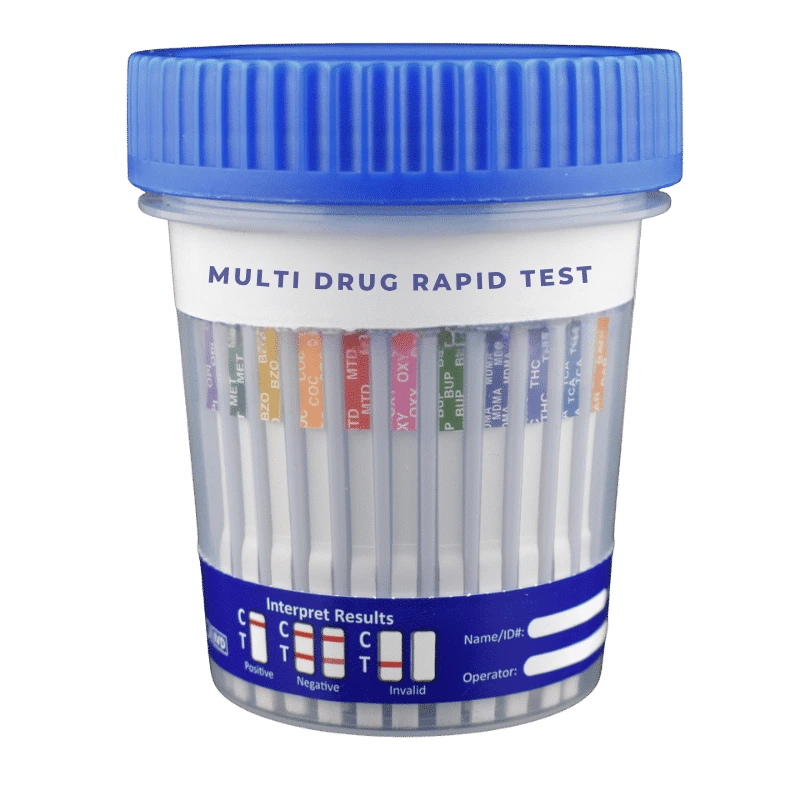
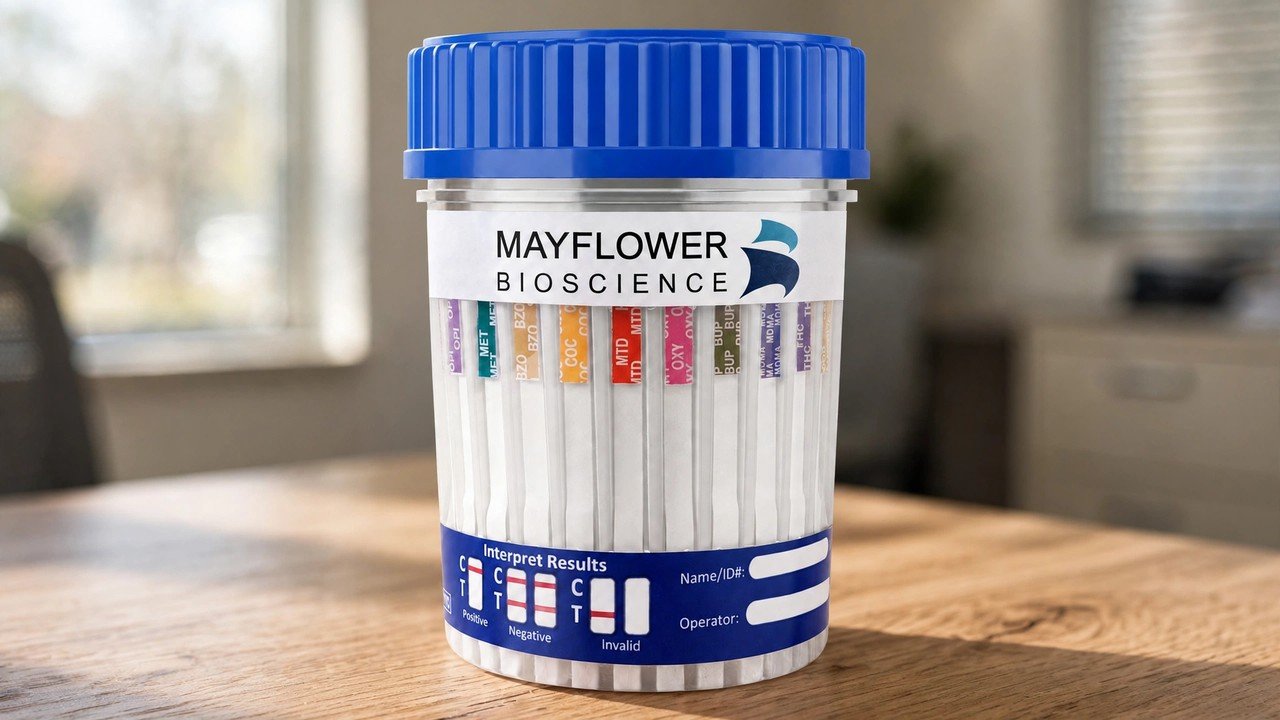
For probation departments and court-services agencies, the cup is the front door of the process, not the verdict. A typical agency workflow runs like this: the probationer reports under a random call-in, collection is observed, and the officer runs a rapid cup on site — results in about five minutes, with the temperature strip and validity indicators read the same way as any immunoassay screen, as explained in how to read a drug test cup. Negatives are logged and the person is on their way; non-negatives are sealed under chain of custody and sent to the contracted laboratory for confirmation. A cup never decides a violation on its own — it decides which specimens earn the cost of a lab confirmation.
Two economics drive agency device choice. First, volume: departments running hundreds of collections a month buy at wholesale pricing, where the per-cup cost of a presumptive screen is a fraction of a lab test. Second, panel breadth: as opioid-crisis caseloads forced fentanyl and ETG alcohol onto more probation panels, programs needed wider cups — MayFlower sells 12, 14 and 16 panel cups covering fentanyl, ETG alcohol, kratom and the rest of the extended menu on one device, with forensic-use configurations for justice settings. For programs comparing regulated and non-regulated testing, the DOT drug testing guide explains where federal rules apply and where agency policy governs instead.
Frequently Asked Questions
What kind of drug test does probation use?
Urine drug testing is the standard — about 90% of probation and pretrial programs use it. Collection is usually directly observed by a same-gender officer, sealed under chain of custody, and screened on site or at a laboratory. Hair testing is used selectively when use is suspected but urine screens keep coming back negative; blood and saliva are rare in routine supervision.
How many panels is a probation drug test?
Most commonly 5, 10, or 12 panels. The 5-panel screens the five federal drug classes (THC, cocaine, amphetamines, opiates, PCP); the 10-panel adds benzodiazepines, barbiturates, methadone, methaqualone and propoxyphene; the 12-panel typically adds tramadol and fentanyl or buprenorphine. Courts can also order targeted testing for a specific substance, such as ETG alcohol in DUI cases.
How often do you get drug tested on probation?
It depends on your assessed risk level. Low-risk probationers may be tested monthly or less, moderate-risk every few weeks, and high-risk or substance-use-history probationers weekly or more. Testing is usually random — many programs use a daily call-in or color-line system, and tests can fall on weekends and holidays. Frequency increases after any positive or missed test.
Does probation watch you pee during a drug test?
Usually, yes. Federal probation and pretrial procedures require directly observed collection by an officer of the same gender, and many state and county programs follow the same practice. You wash your hands, remove bulky clothing, and provide the sample under observation to prevent substitution or adulteration. The sample is sealed under chain of custody with a temperature and validity check read on the spot.
What happens if you fail a drug test on probation?
The screen is presumptive first — the specimen goes to a SAMHSA-certified laboratory for GC-MS or LC-MS/MS confirmation and Medical Review Officer review before it counts as a violation. A confirmed positive triggers graduated sanctions: more frequent testing, increased reporting, treatment referral, community service, or a violation hearing. Revocation of probation typically follows repeated violations, not a single first positive.
Can you get in trouble for a dilute urine test on probation?
Yes. Dilution is treated as a specimen-validity failure, not a pass. Federal procedures require the sample to fall within an acceptable dilution range, and drinking excessive fluids to water it down is specifically addressed in most programs. A dilute specimen means you stay and provide another — and repeated dilute samples are typically treated as a violation on their own.
How long does probation drug testing last?
For the entire supervision period — which can run from one year to five or more, depending on the sentence. Testing frequency usually starts highest at intake and can taper as the probationer demonstrates compliance, but testing never stops while supervision is active. Early termination of probation ends the testing obligation.
Does probation test for marijuana in legal states?
Yes. Standard probation conditions prohibit marijuana use regardless of state law, because probation is a court order and marijuana remains illegal under federal law. THC also has the longest urine detection window on the panel — up to 30 days for chronic users — so it is the drug most likely to be caught. Some treatment-court programs grant a short grace period for residual positives at enrollment; standard probation generally does not.
Does probation test for alcohol?
Only when the program specifically orders it — a standard 5-panel drug screen does not include alcohol. DUI, domestic-violence, and treatment caseloads commonly add ETG urine alcohol testing (detectable up to about 80 hours) or breath testing for recent use. A court can order alcohol testing for a specific case even when it is not part of the standard panel.
What if I take a prescription that shows up on the test?
Disclose it before your first test: give your probation officer a copy of the prescription and keep it current, reporting any new prescription immediately. A valid prescription for a drug like Adderall (amphetamines) or Xanax (benzodiazepines) explains the screen result, and the confirmatory GC-MS/LC-MS/MS test can distinguish prescribed medications from illicit substances within the same drug class. The Medical Review Officer verifies the prescription before the result is reported.